
-
Resources
-
Pricing
The history of interior design traces how people have shaped interior spaces to reflect cultural values, technological progress, social structures, and changing ideas about comfort and beauty. It encompasses ancient domestic architecture, royal courts, religious spaces, industrial innovations, modernist experimentation, and contemporary sustainable design. More Less
Build a timeline like this one in minutes, for free. Start Yours →
1600 - 1699
In the design of 17th-century Indian homes, sculptures depicting ancient texts and events appeared inside palaces, reflecting the integration of narrative art and architectural interiors.
Image source: Architecture of India
1600 - 1814
Throughout the 17th and 18th centuries and into the early 19th century, interior decoration was primarily handled by the homemaker, an upholsterer, or another craftsman advising on artistic style.
Image source: Interior design

1700 - 1899
During the medieval period and later, wall-art paintings became a common feature of palace-like mansions in India, commonly known as havelis.
Image source: Haveli
present
Although most traditional homes were demolished to make way for modern buildings, around 2,000 havelis in Rajasthan's Shekhawati region still display wall-art paintings.
1850 - 1899
In the mid-to-late 19th century, interior design services expanded as the middle class in industrial countries grew wealthier and sought domestic furnishings that demonstrated their new social status.
1850 - 1914
A business model centered on furnishing and decorating services flourished from the mid-century until 1914, when independent and often amateur designers increasingly began to take over the role.
1850 - 1899
Architect Owen Jones became a pivotal figure in popularizing theories of interior design for the middle class and was among the most influential design theorists of the 19th century.
1851
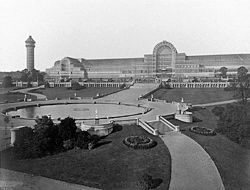
For the Great Exhibition of 1851, Owen Jones decorated Joseph Paxton's gigantic Crystal Palace and arranged the exhibits within it, making the project his first and most important major commission.
Image source: The Crystal Palace
1874
Rhoda Garrett and Agnes Garrett became the first women to train professionally as home decorators, helping establish women's participation in the developing profession.
1882
The London Directory of the Post Office listed 80 interior decorators, documenting the growing visibility of interior decoration as a commercial occupation.
1900
The Illustrated Carpenter and Builder described a change in practice: instead of selecting furniture piece by piece from different dealers, clients increasingly hired a furnishing dealer to survey and coordinate the rooms of an entire house.
1900 - 1909
By the turn of the 20th century, amateur advisors and publications increasingly challenged the control large retail companies had exercised over interior design.
1900 - 1950
The shift toward independent designers helped pave the way for the emergence of professional interior design in the mid-20th century.
1905
Elsie de Wolfe was commissioned to design the interiors of the Colony Club on Madison Avenue. The work gained her recognition almost overnight and established her as a leading professional decorator.
1915
In 1915, the London Directory listed 127 people trading as interior decorators, including 10 women, illustrating the profession's growth and increasing participation by women.
2020
Self-employed designers made up 32 percent of interior designers in 2020 and usually worked the most hours, illustrating the continuing importance of independent practice.
1856
Owen Jones published The Grammar of Ornament, formulating 37 key principles of interior design and decoration in one of the period's most influential design books.
1876
The Garrett sisters' Suggestions for House Decoration in Painting, Woodwork and Furniture spread their ideas about artistic interior design to a broad middle-class audience.
1897
Edith Wharton and architect Ogden Codman published The Decoration of Houses in America, an important manual that influenced the development of modern interior design practice.
Image source: The Decoration of Houses
1899
The Institute of British Decorators was formed in 1899 with John Dibblee Crace as president. It represented almost 200 decorators and encouraged decoration as a separate artistic profession.
1913
Elsie de Wolfe compiled her decorating ideas in The House in Good Taste, a widely read 1913 book that helped popularize professional interior advice.
1938
The American Designers Institute was founded in 1938, contributing to the institutional organization and professional governance of design in the United States.
1949
The Finnish Association of Interior Architects was established in 1949, part of a broader European movement to organize and represent interior design professionals.
1957
The US National Society of Interior Designers was established in 1957, strengthening professional organization and representation for interior designers.
1966
The Interior Decorators and Designers Association was established in the UK in 1966 to represent and organize decorators and interior designers.
1986
The Chartered Society of Designers was established in the UK in 1986 and became one of the organizations governing areas of design practice.
1988
Mary Gilliatt published New Guide to Décorating in 1988, adding a practical reference work to the modern literature of home decoration.
1992
Laura Ashley's Complete Guide Home Decorating was published in 1992 as a guide to furnishing and decorating domestic interiors.
Image source: Laura Ashley
1994
The International Interior Design Association was founded in 1994, extending professional organization for interior design across national boundaries.
1995
Stewart Walton published The Decorator's Encyclopedia in 1995, providing an extensive reference for decorating practice.
1997
In Origins of Graphic Design in America, Ellen Mazur Thomson argued that professional status is achieved through education, self-imposed standards, and professional gate-keeping organizations.
Image source: Graphic design
2017
Chris Grimley, with Mimi Love, published The Interior Design Reference & Specification Book in 2017 as a reference covering information architects and designers need in everyday practice.
2019
Nikki Boyd published Beautifully Organized: A Guide to Function and Style in Your Home in 2019, emphasizing the relationship between organization, function, and domestic style.
2023
Shea McGee published The Art of Home: A Designer Guide to Creating an Elevated Yet Approachable Home in 2023, presenting contemporary guidance on residential interiors.
2025
Caitlin Flemming and Julie Goebel published The Essentials: A Guide to Furnishing, Decorating, and Styling Your Home in 2025, extending the practical home-design guide into the contemporary period.
1900 - 1929
Modern design grew out of the decorative arts, particularly Art Deco, during the early 20th century, transforming ideas about ornament, materials, and interior space.
Image source: Modern architecture
1900 - 1919
Art Deco began in Europe during the early years of the 20th century as Art Nouveau waned, introducing a new decorative language that strongly influenced interiors.
Image source: Art Deco
1925
The term Art Deco was derived from the Exposition Internationale des Arts Décoratifs et Industriels Modernes, the 1925 world's fair held in Paris.
Image source: International Exhibition of Modern Decorative and Industrial Arts
1930
A 1930 showroom designed for a British dressmaking firm used a silver-grey background and black mirrored-glass wall panels, demonstrating the period's modern and highly coordinated commercial interiors.
1950 - 1969
Modern art reached its peak during the 1950s and 1960s. As a result, contemporary designers and decorators often refer to this influential period of modern design as mid-century.
Image source: Mid-century modern
2024
In 2024, red-colored home accessories were popularized on social media and in several design magazines, where they were promoted as enhancing interior design.
Build a timeline like this one in minutes, for free. Start Yours →
Or browse the full history timeline directory, with more than 2,500 topics.
This History of Interior Design timeline was generated with the help of AI, using information found on the internet.
We work hard to keep these timelines accurate, but mistakes do get through. If you spot one, email us at [email protected] and we'll fix it for future visitors.
Generate yours with AI or build it from scratch, for free.
Export your timeline, add your own events, edit or remove AI-generated events, and much more
No credit card required.
15-day money-back guarantee.
You can create an unlimited number of timelines with up to 10 events on each one, customize how they look, export them to PDF, PNG, PowerPoint, CSV, and Excel, and share them with a link. Timelines made with Timeline Maker AI keep every event the generator created, and you can add up to 5 events of your own. Paid plans remove the event limit, add spreadsheet imports and hide Preceden's branding, and the higher-priced plan also adds collaborators, a custom logo and a custom domain.
Yes. You can cancel your subscription from your account page at any time, and you will not be charged again. Your subscription stays active for the rest of the period you already paid for.
Yes. We email you a reminder 15 days before your annual renewal, and we email you a receipt after every payment.
Yes. You can email us within 15 days of any payment, and we will issue you a full refund.
Check out our pricing docs or send us an email anytime: [email protected].