-
Use Cases
-
Resources
-
Pricing
Frederick the Great (Frederick II) ruled Prussia from 1740 to 1786. A brilliant military commander and enlightened absolutist, he expanded Prussian territory through the Silesian Wars and the Partitions of Poland, modernized the bureaucracy and economy, promoted religious tolerance, and cultivated arts and sciences at his court, transforming Prussia into a leading European power. More Less
Jan 24, 1712
% complete
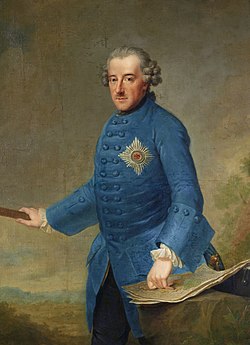
Frederick II was born in Berlin, the son of King Frederick William I of Prussia and Sophia Dorothea of Hanover. He would become one of the most influential monarchs of the 18th century, transforming Prussia into a major European power.
Image source: Frederick the Great
1713 - 1730
% complete
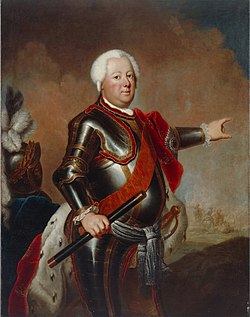
Frederick's father subjected him to a harsh Spartan education focused on military discipline, which clashed with Frederick's love of music, philosophy, and literature, straining their relationship throughout his youth.
Image source: Frederick William I of Prussia
Aug 5, 1730
% complete
The young crown prince attempted to flee to England with his friend Hans Hermann von Katte. The plan failed, and Katte was executed while Frederick was forced to watch, an experience that haunted him for life.
Image source: Frederick V of the Palatinate
Jun 12, 1733
% complete
Under pressure from his father, Frederick married Elisabeth Christine, a union that produced no children. The couple largely lived apart after Frederick became king, though she remained a loyal consort.
Image source: Elisabeth Christine of Brunswick-Wolfenbüttel-Bevern
1734 - 1735
% complete
Frederick served under Prince Eugene of Savoy in the Rhine campaign, gaining practical military experience despite seeing little combat, which informed his later military reforms.
Image source: War of the Polish Succession
May 31, 1740
% complete
Upon the death of his father, Frederick ascended the throne at age 28. He inherited a well-drilled army and full treasury, which he immediately used to pursue ambitious foreign policy goals.
Dec 16, 1740
% complete
Exploiting the death of Emperor Charles VI, Frederick invaded Silesia, a wealthy Habsburg province, violating international law but doubling Prussia's population and economic resources.
Image source: First Silesian War
Apr 10, 1741
% complete
Frederick's first battle ended in a Prussian victory over Austria, though Frederick fled the field early. The win secured Silesian conquests and established Prussia as a formidable military power.
Image source: Battle of Mollwitz
May 17, 1742
% complete
A hard-fought Prussian victory over the Austrians in Bohemia led to the Peace of Breslau, by which Maria Theresa ceded most of Silesia to Prussia.
Image source: Battle of Chotusitz
Jun 11, 1742
% complete
Austria formally ceded nearly all of Silesia to Prussia, confirming Frederick's first great territorial acquisition and marking his emergence as a leading European statesman.
Image source: Treaty of Breslau
Jun 4, 1745
% complete
Frederick won a brilliant victory over combined Austrian and Saxon forces during the Second Silesian War, cementing his reputation as a masterful battlefield commander.
Image source: Battle of Hohenfriedberg
Dec 25, 1745
% complete
Maria Theresa again recognized Prussia's possession of Silesia. Frederick had successfully defended his gains and Prussia was now firmly established among Europe's great powers.
Image source: Treaty of Dresden
1742
% complete
Frederick established the Royal Court Opera in Berlin and invited musicians like Carl Philipp Emanuel Bach and flutist Johann Joachim Quantz, reflecting his deep personal passion for music.
Image source: Berlin State Opera
1747
% complete
Frederick completed his beloved summer palace at Potsdam, designed in Rococo style as a private retreat where he could escape court ceremony and enjoy philosophy and music.
Image source: Sanssouci
Jul 1750 - 1753
% complete
The famous French philosopher Voltaire lived at Frederick's court in Potsdam, engaging in intellectual exchanges before their relationship soured amid disputes, ending with Voltaire's dramatic departure.
1763 - 1778
% complete
Frederick rebuilt his devastated country through agricultural reforms, drainage of marshes, resettlement programs, and promotion of potato cultivation, earning him the nickname 'the Potato King'.
1769 - 1775
% complete
Writing in French, Frederick composed political testaments and essays on government, articulating Enlightenment ideals of the monarch as 'first servant of the state'.
Aug 5, 1772
% complete
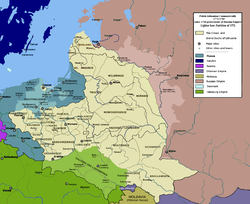
Frederick engineered the first partition of Poland-Lithuania with Russia and Austria, acquiring West Prussia and linking Brandenburg with East Prussia, unifying his realm geographically.
Image source: First Partition of Poland
1785
% complete
Frederick organized German princes into a defensive league to counter Austrian expansionism, demonstrating his continued political influence late in life.
Image source: Fürstenbund
Aug 17, 1786
% complete
Frederick died alone at Sanssouci at age 74, seated in his armchair. He was succeeded by his nephew Frederick William II, leaving behind a transformed Prussia respected across Europe.
Oct 1806
% complete
After defeating Prussia at Jena, Napoleon paid tribute to Frederick by visiting his crypt at Potsdam, remarking to his officers that if Frederick were still alive, they would not be there — testament to his enduring legend.
1756
% complete
Austria allied with its former enemy France against Prussia, while Britain allied with Prussia. Frederick faced encirclement by powerful neighbors determined to partition his kingdom.
Image source: Diplomatic Revolution
Aug 29, 1756
% complete
Striking preemptively, Frederick invaded Saxony to disrupt the coalition forming against him. The bold gambit opened a continental conflict that became the global Seven Years' War.
Image source: Third Silesian War
Nov 5, 1757
% complete
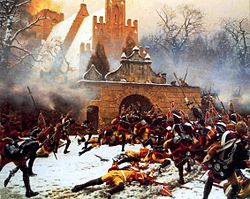
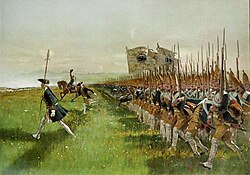
Frederick crushed a Franco-Austrian army in just 90 minutes using innovative oblique tactics, achieving one of the most famous victories in Prussian military history.
Image source: Battle of Rossbach
Dec 5, 1757
% complete
Outnumbered nearly two to one, Frederick decisively defeated the Austrian army in Silesia using a masterful flanking maneuver, restoring Prussian fortunes after early setbacks.
Image source: Battle of Leuthen
Aug 25, 1758
% complete
Frederick fought the Russian army to a bloody stalemate in one of the war's most brutal engagements, with enormous casualties on both sides but no decisive outcome.
Image source: Battle of Zorndorf
Aug 12, 1759
% complete
Frederick suffered his worst defeat against Russo-Austrian forces, losing half his army. He reportedly contemplated suicide, and Prussia's survival seemed doubtful.
Image source: Battle of Kunersdorf
Jan 1762
% complete
The death of Empress Elizabeth of Russia brought her admirer Peter III to the throne, who withdrew Russia from the war and saved Prussia from seemingly certain collapse.
Image source: Miracle of the House of Brandenburg
Feb 15, 1763
% complete
The treaty restored prewar borders, leaving Prussia in control of Silesia. Though exhausted and depopulated, Frederick emerged having survived a coalition of Europe's greatest powers.
Image source: Treaty of Hubertusburg
Jul 1778 - May 13, 1779
% complete
Frederick fought Austria over the Bavarian succession in a mostly bloodless conflict marked by maneuvers and food shortages rather than major battles, securing limited gains via the Peace of Teschen.
Image source: War of the Bavarian Succession
Or browse the full history timeline directory, with more than 2,000 topics.
This Frederick the Great timeline was generated with the help of AI, using information found on the internet.
We work hard to keep these timelines accurate, but mistakes do get through. If you spot one, email us at [email protected] and we'll fix it for future visitors.
Generate yours with AI or build it from scratch, for free.
Export your timeline, add your own events, edit or remove AI-generated events, and much more
No credit card required.
Cancel anytime.
Cancel anytime.
You can create an unlimited number of timelines with up to 10 events on each one, customize how they look, export them to PDF, PNG, PowerPoint, CSV, and Excel, and share them with a link. Paid plans raise the event limit and add features like spreadsheet imports and collaborators.
Yes. You can cancel your subscription from your account page at any time, and you will not be charged again. Your subscription stays active for the rest of the period you already paid for.
Yes. We will email you a reminder before the annual renewal, and we will also email you a receipt.
Yes. You can email us within 15 days of any payment, and we will issue you a full refund.
Check out our pricing docs or send us an email anytime: [email protected].