
-
Resources
-
Pricing
The Great Compromise of 1787 created a bicameral Congress with representation based on population in the House and equal state representation in the Senate. More Less
Build a timeline like this one in minutes, for free. Start Yours →
1787
The Connecticut Compromise, also called the Great Compromise or Sherman Compromise, was an agreement reached during the Constitutional Convention of 1787. It helped define the structure of Congress and established different systems of representation in the House of Representatives and Senate.
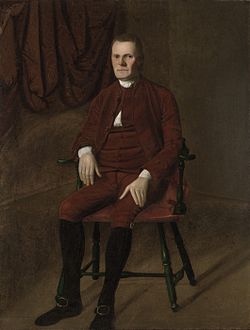
Image source: Connecticut Compromise
Jul 5, 1787
A committee submitted its report on representation. The report became the basis for the Great Compromise by combining proportional representation in one chamber with equal state representation in the other.
Jul 16, 1787
After six weeks of turmoil, North Carolina switched its vote to equal representation per state, while Massachusetts's delegation was divided. The Convention then reached a compromise on a five-to-four vote of the states.
May 29, 1787
Edmund Randolph of Virginia proposed creating a bicameral legislature. His proposal formed part of the Virginia Plan and introduced a two-house Congress as a central element of the emerging constitutional framework.
Image source: Virginia Plan
Jun 15, 1787
William Paterson of New Jersey responded to the Virginia Plan by proposing a legislature consisting of a single house. The New Jersey Plan sought to preserve equal state representation and revise, rather than replace, the existing confederation structure.
Image source: New Jersey Plan
Jun 19, 1787
The delegates rejected the New Jersey Plan and voted to continue discussing the Virginia Plan. This decision kept the Convention focused on a stronger federal government with a bicameral legislature.
Jul 2, 1787
The Convention reached a deadlock over whether each state should receive an equal vote in the upper house. Five states supported equal representation, five opposed it, and one delegation was divided, demonstrating the depth of the dispute between large and small states.
Apr 1904
Max Farrand published an early scholarly article concerning the Constitutional Convention and its records. His work formed part of the foundational historical literature used to study the Convention's debates.
1965
Staughton Lynd published “The Abolitionist Critique of the United States Constitution” in a collection edited by Martin B. Duberman. The work addressed later criticism of constitutional compromises, including compromises connected to slavery.
Jun 1966
Staughton Lynd published “The Compromise of 1787,” a major historical analysis examining the political conflict and agreements that shaped the constitutional settlement.
Oct 1971
Howard A. Ohline published a scholarly article addressing the Constitution and the compromises involved in its creation, contributing to the historical debate over the Convention's decisions.
Jul 1987
Jack N. Rakove published a scholarly study of the Federal Convention and its constitutional compromises. The work contributed to late twentieth-century reassessments of how delegates negotiated the structure of the federal government.
Jul 1987
William E. Nelson published “Reason and Compromise in the Establishment of the Federal Constitution, 1787–1801.” The study placed the Great Compromise within a broader account of constitutional negotiation and early federal development.
1996
Paul Finkelman published a 1996 work included among the scholarship associated with interpretation of the Constitution, compromise, and the Convention's unresolved political issues.
2003
Garry Wills published a 2003 work included in the scholarship surrounding the Constitution and its compromises. It represents a modern interpretation of the political choices made during the founding era.
2011
Todd Estes published “The Connecticut Effect: The Great Compromise of 1787 and the History of Small State Impact on Electoral College Outcomes.” The article connected the Convention's settlement to the later political influence of small states.
Apr 2011
Jonathan Earle published a study of the Great Compromise in OAH Magazine of History, examining the episode for readers of a history-focused scholarly publication.
Apr 2011
Jeremy C. Pope and Shawn Treier published “Reconsidering the Great Compromise at the Federal Convention of 1787: Deliberation and Agenda Effects on the Senate and Slavery.” Their study revisited how deliberation and agenda setting affected the Senate settlement.
Oct 2018
Gordon Ballingrud and Keith L. Dougherty published a scholarly study related to the constitutional compromise and its political implications in the American Journal of Political Science.
2019
Laurence Claus published a scholarly analysis concerning constitutional compromise in the American Journal of Comparative Law, contributing a later legal perspective to interpretation of the Convention's settlement.
Build a timeline like this one in minutes, for free. Start Yours →
Or browse the full history timeline directory, with more than 2,500 topics.
This Great Compromise timeline was generated with the help of AI, using information found on the internet.
We work hard to keep these timelines accurate, but mistakes do get through. If you spot one, email us at [email protected] and we'll fix it for future visitors.
Generate yours with AI or build it from scratch, for free.
Export your timeline, add your own events, edit or remove AI-generated events, and much more
No credit card required.
15-day money-back guarantee.
You can create an unlimited number of timelines with up to 10 events on each one, customize how they look, export them to PDF, PNG, PowerPoint, CSV, and Excel, and share them with a link. Timelines made with Timeline Maker AI keep every event the generator created, and you can add up to 5 events of your own. Paid plans remove the event limit, add spreadsheet imports and hide Preceden's branding, and the higher-priced plan also adds collaborators, a custom logo and a custom domain.
Yes. You can cancel your subscription from your account page at any time, and you will not be charged again. Your subscription stays active for the rest of the period you already paid for.
Yes. We email you a reminder 15 days before your annual renewal, and we email you a receipt after every payment.
Yes. You can email us within 15 days of any payment, and we will issue you a full refund.
Check out our pricing docs or send us an email anytime: [email protected].