-
Use Cases
-
Resources
-
Pricing
Harriet Tubman was an American abolitionist and political activist. Born into slavery, she escaped and subsequently made some 13 missions to rescue approximately 70 enslaved people using the network of antislavery activists and safe houses known as the Underground Railroad. She later served as a scout and spy for the Union Army during the Civil War and was an activist in the movement for women's suffrage. More Less
1808
% complete
Tubman's parents married around 1808 and according to court records had nine children together: Linah, Mariah Ritty, Soph, Robert, Minty (Harriet), Ben, Rachel, Henry, and Moses.
Mar 1822
% complete
Harriet Tubman, born Araminta Ross, was likely born in March 1822. She reported her birth year as 1825, while her death certificate lists 1815 and her gravestone lists 1820. Historian Kate Larson's 2004 biography records the year as 1822 based on a midwife payment and other historical documents.
1840
% complete
After Thompson died, his son followed through with a promise made regarding Tubman's mother Rit in 1840.
1844
% complete
Around 1844, Harriet married John Tubman, a free black man. Their marriage was complicated by her status as an enslaved person.
1845
% complete
Later in the 1840s, Tubman paid a white attorney five dollars (equivalent to $170 in 2025) to investigate the legal status of her mother, Rit.
1849
% complete
In 1849, after becoming ill again which diminished her value to slave traders, Tubman escaped to Philadelphia, only to return to Maryland to rescue her family soon after.
Sep 17, 1849
% complete
Tubman and her brothers, Ben and Henry, escaped from slavery on September 17, 1849. Two weeks later, their owner posted a runaway notice in the Cambridge Democrat offering a reward of up to US$100 each for their capture.
1855
% complete
Her father purchased her mother from Eliza Brodess in 1855, but even when they were both free, the area remained hostile to black residents.
Image source: Harriet Tubman
1850
% complete
Congress passed the Fugitive Slave Act of 1850, which forced law enforcement officials to assist in the capture of escaped slaves even in states that had outlawed slavery. Afterward, Tubman helped guide escapees farther north into British North America (Canada).
Image source: Fugitive Slave Act of 1850
Dec 1850
% complete
In December 1850, Tubman was warned that her niece Kessiah and Kessiah's children would soon be sold in Cambridge, Maryland. Tubman helped them escape safely.
1851 - 1862
% complete
From 1851 to 1862, Tubman returned repeatedly to the Eastern Shore of Maryland, rescuing some 70 enslaved people in about 13 expeditions, including her brothers Henry, Ben, and Robert, their wives and some of their children.
Oct 1, 1851 - Dec 31, 1851
% complete
In late 1851, Tubman returned to Dorchester County for the first time since her escape, hoping to find her husband John, who had remarried. In December 1851 she guided an unidentified group of 11 escapees northward instead.
1857
% complete
In 1857, Tubman received word that her father was at risk of arrest for harboring a group of eight people escaping slavery. She undertook a difficult journey to bring her parents north to safety.
Apr 1858
% complete
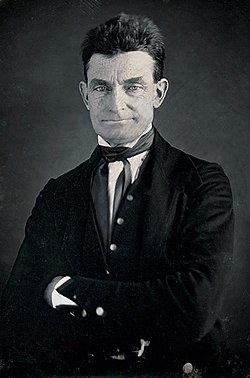
In April 1858, Tubman was introduced to the abolitionist John Brown, an insurgent who advocated the use of violence to destroy slavery in the United States. She helped him plan and recruit supporters for his raid on Harpers Ferry.
Image source: John Brown (abolitionist)
May 8, 1858
% complete
On May 8, 1858, Brown held a meeting in Chatham, Canada, where he unveiled his plan for a raid on Harpers Ferry, Virginia, which Tubman had helped him plan and recruit supporters for.
Image source: John Brown's raid on Harpers Ferry
Oct 1859
% complete
In early October 1859, as Brown and his men prepared to launch the attack on Harpers Ferry, Tubman was ill in New Bedford, Massachusetts, and could not participate.
Nov 1860 - Dec 28, 1860
% complete
In November 1860, Tubman conducted her last rescue mission. Upon returning to Dorchester County, she discovered that her daughter Rachel had died, and rescued other family members instead. They safely reached the home of David and Martha Wright in Auburn on December 28, 1860.
Jan 1, 1859 - Mar 31, 1859
% complete
In early 1859, Frances Adeline Seward, wife of abolitionist U.S. Senator William H. Seward, sold Tubman a seven-acre farm in Fleming, New York, for $1,200 (equivalent to $46,400 in 2025). After the war, she retired there and cared for her aging parents.
Image source: Auburn, New York
Oct 1865
% complete
When a promised appointment to an official military nursing position fell through in July 1865, Tubman decided to return to New York. During a train ride in October 1865, she traveled on a half-fare ticket provided because of her service.
Mar 18, 1869
% complete
Born enslaved in North Carolina, Nelson Davis had served as a private in the 8th United States Colored Infantry Regiment from September 1863 to November 1865. Though he was 22 years younger than Tubman, they were married on March 18, 1869, at the Central Presbyterian Church. They adopted a baby girl named Gertie in 1874.
1873 - 1874
% complete
Paying off the mortgage on her farm in May 1873 exhausted Tubman's savings. In 1874, Representatives Clinton D. Hazelton of Wisconsin introduced a bill to pay her a $2,000 lump sum for services rendered to the Union Army as scout, nurse, and spy, but it was defeated in the Senate.
Feb 1880
% complete
In February 1880, Tubman's wood-framed house burned down, but with the help of her supporters it was quickly replaced with a new brick home.
Oct 14, 1888
% complete
Tubman's husband Nelson Davis died of tuberculosis on October 14, 1888. The Dependent and Disability Pension Act of 1890 subsequently made Tubman eligible for a pension as his widow.
1895
% complete
After documenting her marriage and her husband's service record to the Bureau of Pensions, in 1895 Tubman was granted a monthly widow's pension of $8 plus a lump sum of $500 to cover the five-year delay in approval.
1895 - Jun 23, 1908
% complete
In 1895, Tubman began discussions with AME Zion leaders to create a Harriet Tubman Home for the Aged for 'indigent colored people'. In 1896 she bid $1,215 at auction for a 25-acre adjacent farm. AME Zion took over the property in 1903, and the home opened on June 23, 1908, with Tubman as guest of honor.
Image source: Harriet Tubman National Historical Park
1896 - 1899
% complete
When the National Federation of Afro-American Women was founded, Tubman was the keynote speaker at its first conference in 1896. When it merged into the National Association of Colored Women, she attended that organization's second conference in 1899.
Image source: National Association of Colored Women's Clubs
Feb 1899
% complete
After Sereno E. Payne introduced a bill in December 1897, Congress approved a compromise in February 1899 of $20 per month ($8 from her widow's pension plus $12 for her service as a nurse), but did not acknowledge her as a scout and spy.
1911
% complete
By 1911, Tubman's body was so frail that she was admitted into the rest home named in her honor in Auburn, New York.
Mar 10, 1913
% complete
Surrounded by friends and family members, Tubman died of pneumonia on March 10, 1913, at the rest home bearing her name.
Jan 1862
% complete
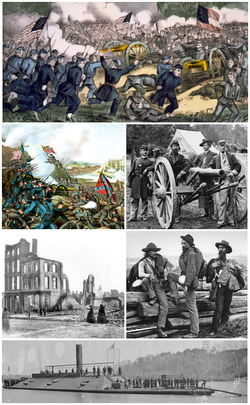
When the Civil War broke out in 1861, Tubman had a vision that the war would lead to the abolition of slavery. In January 1862, she volunteered to support the Union cause and began helping refugees in the camps, particularly in Port Royal, South Carolina.
Image source: American Civil War
Jan 1, 1863 - Mar 31, 1863
% complete
In early 1863, Tubman used her knowledge of covert travel and subterfuge to lead a band of scouts through the land around Port Royal, gathering intelligence for Union forces.
1863 - 1865
% complete
For two more years, Tubman worked for the Union forces, tending to newly liberated people, scouting into Confederate territory, and nursing wounded soldiers in Virginia, continuing for months after the Confederacy surrendered in April 1865. For over three years of service, she received only $200 total.
Mar 1863
% complete
She worked alongside Colonel James Montgomery and provided him with intelligence that aided in the temporary capture of Jacksonville, Florida, in March 1863.
Jul 1863
% complete
In July 1863, Tubman worked with Colonel Robert Gould Shaw at the assault on Fort Wagner, reportedly serving him his last meal before his death in battle.
Image source: Second Battle of Fort Wagner
1868 - 1869
% complete
Instead of writing her own account, Tubman authorized Sarah Hopkins Bradford to combine her personal recollections, journalistic accounts, and letters from friends and supporters to create Scenes in the Life of Harriet Tubman in 1868. The 132-page volume was published in 1869 and brought Tubman some $1,200 in income.
1901
% complete
A final revision of Sarah Hopkins Bradford's biography added an appendix with more stories about Tubman's life in 1901, following the 1886 re-written volume Harriet, the Moses of her People.
1943
% complete
The first full biography of Tubman published after Bradford's was Earl Conrad's Harriet Tubman (1943). Another book-length biography based on original scholarship did not appear until Jean Humez's 2003 work, followed by biographies by Kate Clifford Larson and Catherine Clinton in 2004.
1944
% complete
In 1944, the United States Maritime Commission launched the SS Harriet Tubman, its first Liberty ship named for a black woman.
Image source: SS Harriet Tubman
1978 - 1995
% complete
In 1978, Tubman became the first African-American woman honored on a U.S. postage stamp; she appeared on a second stamp in 1995.
2009
% complete
The first statue of Tubman in the region where she was born was unveiled in Salisbury, Maryland, in 2009.
2019
% complete
Since her life was first dramatized on television in a 1963 episode of The Great Adventure, Tubman has been portrayed in productions such as The Good Lord Bird, Timeless, Underground, and A Woman Called Moses. Cynthia Erivo received an Academy Award nomination for portraying her in the 2019 biographical film Harriet.
Image source: Harriet (film)
2024
% complete
In 2024, the United States Mint issued three Harriet Tubman commemorative coins; each coin depicts her at a different stage of her life.
Nov 11, 2024
% complete
On November 11, 2024, Tubman was posthumously commissioned as a one-star general (brigadier general) in the Maryland Army National Guard in recognition of her military service during the Civil War.
Or browse the full history timeline directory, with more than 2,000 topics.
This Harriet Tubman timeline was generated with the help of AI, using information found on the internet.
We work hard to keep these timelines accurate, but mistakes do get through. If you spot one, email us at [email protected] and we'll fix it for future visitors.
Generate yours with AI or build it from scratch, for free.
Export your timeline, add your own events, edit or remove AI-generated events, and much more
No credit card required.
Cancel anytime.
Cancel anytime.
You can create an unlimited number of timelines with up to 10 events on each one, customize how they look, export them to PDF, PNG, PowerPoint, CSV, and Excel, and share them with a link. Paid plans raise the event limit and add features like spreadsheet imports and collaborators.
Yes. You can cancel your subscription from your account page at any time, and you will not be charged again. Your subscription stays active for the rest of the period you already paid for.
Yes. We will email you a reminder before the annual renewal, and we will also email you a receipt.
Yes. You can email us within 15 days of any payment, and we will issue you a full refund.
Check out our pricing docs or send us an email anytime: [email protected].