-
Use Cases
-
Resources
-
Pricing
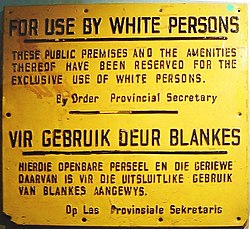
Plessy v. Ferguson was an 1896 U.S. Supreme Court case in which Homer Plessy, a mixed-race man arrested for refusing to leave a whites-only railroad car in Louisiana, challenged segregation. The Court upheld racial segregation under the doctrine of 'separate but equal,' legalizing Jim Crow laws until overturned by Brown v. Board of Education in 1954. More Less
1849
Before the Fourteenth Amendment was ratified, the Massachusetts Supreme Court ruled in 1849 that segregated schools were constitutional, setting an early legal precedent for racial separation in American institutions.
Image source: Plessy v. Ferguson

1875
An 1875 Supreme Court decision limited the federal government's ability to intervene in state affairs, guaranteeing to Congress only the power 'to restrain states from acts of racial discrimination and segregation', strengthening the doctrine later relied upon in Plessy.
1877
The end of the Reconstruction era in 1877 allowed Southern states to begin re-establishing racial segregation through so-called Jim Crow laws, which would later be legitimized by the Plessy v. Ferguson decision.
1890
In 1890, the Louisiana State Legislature passed the Separate Car Act, requiring separate accommodations for blacks and whites on Louisiana railroads. The law made it a misdemeanor for any passenger to insist on going into a coach or compartment to which by race he did not belong, punishable by a US$25 fine or up to 20 days in prison.
1890 - 1908
From 1890 to 1908, Southern state legislatures passed new or amended constitutions and laws that disenfranchised most blacks and many poor whites through voter registration requirements such as proof of land ownership and literacy tests administered by white staff at poll stations.
Image source: Disfranchisement after the Reconstruction era

Jun 7, 1892
On June 7, 1892, Homer Plessy, a mixed-race man, bought a first-class ticket at the Press Street Depot and boarded a 'Whites Only' car of the East Louisiana Railroad in New Orleans, bound for Covington, deliberately violating Louisiana's Separate Car Act of 1890.
Image source: Homer Plessy

Dec 1892
In December 1892, the Louisiana court upheld Judge Ferguson's ruling against Plessy, and denied Plessy's attorneys' subsequent request for a rehearing, pushing the case onward toward the Supreme Court.
Apr 13, 1896
Oral arguments for Plessy v. Ferguson were held before the United States Supreme Court on April 13, 1896, as Plessy's attorneys challenged the constitutionality of Louisiana's Separate Car Act under the Fourteenth Amendment.
1896
The effect of the Plessy ruling was immediate; there were already significant differences in funding for the segregated school system, which continued into the 20th century. States consistently underfunded black schools, providing them with substandard buildings, textbooks, and supplies.
Feb 11, 1897
After the Supreme Court ruling, Plessy's criminal trial went ahead in Ferguson's court in Louisiana on February 11, 1897, where he faced penalties under the Separate Car Act he had violated in 1892.
This Plessy v. Ferguson timeline was generated with the help of AI, using information found on the internet.
We work hard to keep these timelines accurate, but mistakes do get through. If you spot one, email us at [email protected] and we'll fix it for future visitors.
Generate yours with AI or build it from scratch, for free.