-
Use Cases
-
Resources
-
Pricing
FC Barcelona (Futbol Club Barcelona) is one of the world's most successful and popular football clubs, founded in 1899 in Catalonia, Spain. Known for its motto 'Més que un club' (More than a club), Barcelona has won numerous La Liga titles, UEFA Champions League trophies, and produced legendary players like Johan Cruyff, Ronaldinho, Xavi, Andrés Iniesta, and Lionel Messi. The club is famous for its attacking playing style and its iconic stadium, Camp Nou. More Less
Nov 29, 1899
% complete
Swiss entrepreneur Joan Gamper placed an advertisement in Los Deportes seeking players to form a football club in Barcelona. The founding meeting on November 29, 1899 established Foot-Ball Club Barcelona, beginning one of the most storied institutions in world football.
Image source: FC Barcelona
Dec 8, 1899
% complete
Barcelona played its first match against a team of English expatriates at the Velódromo de la Bonanova, losing 1-0. The new club quickly grew, attracting local Catalan players and building a passionate early following.
May 15, 1910
% complete
Barcelona won its first Copa del Rey, defeating Club Español de Madrid 3-2 in the final. The triumph marked the club's emergence as a national force in Spanish football during its first decade of existence.
Jan 1, 1920
% complete
During the early 20th century Barcelona became a symbol of Catalan identity, famously described by Narcís de Carreras in 1968 as 'more than a club.' The phrase encapsulated the club's role as a cultural and political emblem of Catalonia.
Image source: FC Barcelona
Mar 7, 1922
% complete
Barcelona inaugurated Camp de Les Corts, a modern stadium with an initial capacity of 20,000 that would be expanded over the decades. It served as the club's home until the construction of the Camp Nou in 1957.
Image source: Camp de Les Corts
Aug 6, 1936
% complete
Club president Josep Sunyol, known as the 'martyr president,' was executed by Franco's forces near Guadarrama early in the Spanish Civil War. His death cemented the club's association with Republican and Catalan causes.
Image source: Josep Sunyol
Sep 24, 1957
% complete
Barcelona opened the Camp Nou, then Europe's largest stadium with a capacity of around 93,000. A ceremonial match featuring a selection of Polish stars marked the inauguration of what became the biggest stadium on the continent.
Image source: Camp Nou
Jan 1, 1989
% complete
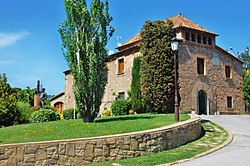
Under Cruyff's influence, Barcelona consolidated La Masia, its famed youth academy housed in the farmhouse beside the Camp Nou. The academy became the engine of the club's philosophy, producing generations of homegrown stars.
Image source: La Masia
Jun 1, 1950
% complete
Hungarian star László Kubala joined Barcelona and transformed the club into a European power. In his debut season he led Barça to five trophies, including La Liga and the Latin Cup, drawing huge crowds to Les Corts.
Image source: László Kubala
Sep 1, 1958 - May 31, 1959
% complete
Coach Helenio Herrera guided Barcelona to a La Liga and Fairs Cup double in the 1958-59 season, with Kubala, Luis Suárez, Sándor Kocsis and Zoltán Czibor forming one of the era's most feared attacks.
Image source: Helenio Herrera
Dec 13, 1960
% complete
Spanish midfielder Luis Suárez became the first and only male player born in Spain to win the Ballon d'Or while playing for Barcelona, recognized as Europe's best footballer after leading the club to domestic success.
Image source: Luis Suárez (Spanish footballer)
Aug 22, 1973
% complete
Dutch superstar Johan Cruyff arrived from Ajax for a world-record fee. He led Barcelona to the 1973-74 La Liga title — their first in 14 years — including a legendary 5-0 win at Real Madrid's Bernabéu.
Image source: Johan Cruyff
Dec 28, 1973
% complete
Johan Cruyff won the Ballon d'Or in his first season at Barcelona, capping a year in which he also starred for the Netherlands at the 1974 World Cup and revolutionized attacking play worldwide.
May 4, 1988
% complete
Johan Cruyff returned to the club as manager and built the famous 'Dream Team,' blending La Masia graduates like Pep Guardiola with stars such as Romário, Hristo Stoichkov and Michael Laudrup.
Image source: Japan national football team
Sep 1, 1996 - May 30, 1997
% complete
The young Brazilian Ronaldo spent one electrifying season at Barcelona under Bobby Robson, scoring 47 goals and winning the FIFA World Player of the Year award before moving to Inter Milan.
Image source: Ronaldo (Brazilian footballer)
Nov 29, 1999
% complete
Brazilian forward Rivaldo won the Ballon d'Or after a stunning 1998-99 season in which his goals secured the centenary-year league title, highlighted by an iconic bicycle kick against Valencia.
Image source: Rivaldo
Nov 28, 2005
% complete
Ronaldinho was crowned European Footballer of the Year after dazzling performances that included a standing ovation from Real Madrid fans at the Bernabéu, symbolizing Barcelona's return to dominance.
Image source: 2005 Ballon d'Or
Jul 11, 2014 - Aug 1, 2017
% complete
With Neymar signed in 2013 and Luis Suárez joining from Liverpool in 2014, the fearsome 'MSN' front line scored hundreds of goals together, powering the club through one of its most prolific eras.
Image source: Neymar
Oct 1, 2015 - May 30, 2016
% complete
During the 2015-16 season the MSN attack combined for over 130 goals as Barcelona retained La Liga and lifted the Copa del Rey, with Suárez winning the Pichichi as Spain's top scorer.
Image source: Lionel Messi
Mar 17, 2018
% complete
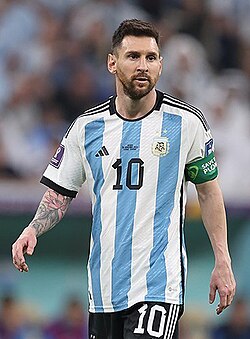
Lionel Messi continued to extend records that made him the greatest scorer in the history of a single club, surpassing 600 career goals for Barcelona across all competitions.
Image source: List of FC Barcelona records and statistics
Jun 17, 1950
% complete
Barcelona defeated Benfica 2-1 in the final to win the Latin Cup, one of the most prestigious European competitions before the European Cup era. It was the club's first major continental honor.
Jul 23, 1958
% complete
Barcelona beat London XI 8-2 on aggregate to win the inaugural Inter-Cities Fairs Cup, a precursor to the UEFA Europa League. The club went on to win the competition a record three times in its first four editions.
Image source: 1955–1958 Inter-Cities Fairs Cup
May 20, 1992
% complete
Ronald Koeman's extra-time free kick beat Sampdoria 1-0 at Wembley, giving Barcelona its first-ever European Cup after decades of heartbreak, including two previous final defeats.
Image source: 1992 European Cup final
May 17, 2006
% complete
Barcelona came from behind to beat Arsenal 2-1 in Paris, with late goals from Samuel Eto'o and Juliano Belletti securing the club's second European Cup and completing a league-and-Europe double.
Image source: 2006 UEFA Champions League final
May 27, 2009
% complete
Barcelona dismantled Manchester United 2-0 in Rome, with Samuel Eto'o and Messi scoring. Guardiola's side completed the treble of La Liga, Copa del Rey and Champions League — the first Spanish club to do so.
Image source: 2009 UEFA Champions League final
Aug 23, 2009 - Dec 19, 2009
% complete
By beating Estudiantes in the FIFA Club World Cup final, Barcelona became the first club in history to win all six available trophies in a calendar year: La Liga, Copa del Rey, Champions League, Spanish Super Cup, UEFA Super Cup and Club World Cup.
Image source: Sextuple (association football)
Jun 6, 2015
% complete
Barcelona beat Juventus 3-1 in Berlin thanks to goals from Rakitić, Suárez and Neymar, sealing a second treble under Luis Enrique and making the club the first to win the European treble twice.
Image source: 2015 UEFA Champions League final
Sep 1, 1991 - May 30, 1994
% complete
Between 1991 and 1994 Cruyff's Dream Team captured four straight league championships, dominating Spanish football with attractive possession-based play that laid the foundations for future generations.
Jan 1, 1999 - May 30, 1999
% complete
Barcelona celebrated its 100th anniversary by winning La Liga under Louis van Gaal, capping a century that had transformed a modest Swiss-founded club into a global sporting institution.
Jul 1, 2003
% complete
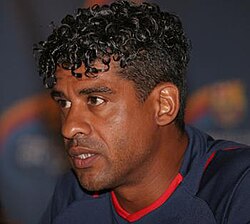
President Joan Laporta hired Frank Rijkaard as coach and signed Brazilian magician Ronaldinho from Paris Saint-Germain. The pair revived a struggling club and ushered in a new golden age.
Image source: Frank Rijkaard
Jun 17, 2008
% complete
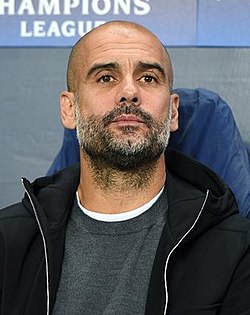
Former captain and La Masia graduate Pep Guardiola took charge, promoted Lionel Messi to a central false-nine role, and began assembling arguably the greatest club side ever seen.
Image source: Pep Guardiola
May 5, 2012
% complete
Pep Guardiola announced his departure after four extraordinary seasons in which Barcelona won 14 major trophies, including three consecutive league titles, redefining modern football with tiki-taka.
Mar 8, 2017
% complete
Trailing 4-0 from the first leg, Barcelona produced one of sport's greatest comebacks by beating Paris Saint-Germain 6-1 at the Camp Nou, with Sergi Roberto scoring the winner in the dying seconds.
Aug 3, 2017
% complete
PSG triggered Neymar's 222 million euro release clause, shattering the world transfer record. Barcelona reinvested heavily, signing Ousmane Dembélé and later Philippe Coutinho.
Image source: Paris Saint-Germain FC
Aug 8, 2021
% complete
Unable to register a new contract within La Liga's financial rules amid the club's debt crisis, Barcelona tearfully parted ways with Lionel Messi, who signed with Paris Saint-Germain, ending an era defined by 35 trophies and 672 goals.
Or browse the full history timeline directory, with more than 2,000 topics.
This FC Barcelona timeline was generated with the help of AI, using information found on the internet.
We work hard to keep these timelines accurate, but mistakes do get through. If you spot one, email us at [email protected] and we'll fix it for future visitors.
Generate yours with AI or build it from scratch, for free.
Export your timeline, add your own events, edit or remove AI-generated events, and much more
No credit card required.
Cancel anytime.
Cancel anytime.
You can create an unlimited number of timelines with up to 10 events on each one, customize how they look, export them to PDF, PNG, PowerPoint, CSV, and Excel, and share them with a link. Paid plans raise the event limit and add features like spreadsheet imports and collaborators.
Yes. You can cancel your subscription from your account page at any time, and you will not be charged again. Your subscription stays active for the rest of the period you already paid for.
Yes. We will email you a reminder before the annual renewal, and we will also email you a receipt.
Yes. You can email us within 15 days of any payment, and we will issue you a full refund.
Check out our pricing docs or send us an email anytime: [email protected].