-
Use Cases
-
Resources
-
Pricing
The Good Friday Agreement, also known as the Belfast Agreement, was a landmark peace deal signed on 10 April 1998 that largely ended the decades-long conflict in Northern Ireland known as the Troubles. Approved by referendums in both Northern Ireland and the Republic of Ireland, it established a devolved power-sharing government at Stormont, created new cross-border institutions, and set out principles for decommissioning paramilitary weapons, reforming policing, and protecting civil rights. More Less
1973
% complete
The Agreement has been referred to as 'Sunningdale for slow learners', suggesting it was nothing more than what was on offer in the Sunningdale Agreement of 1973, which had attempted a similar power-sharing arrangement decades earlier.
1998
% complete
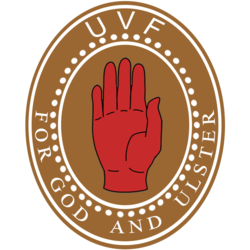
Three parties at the talks were representative of unionism: the Ulster Unionist Party, which had led unionism in Ulster since the beginning of the 20th century, and two smaller parties associated with Loyalist paramilitaries: the Progressive Unionist Party (linked to the UVF) and the Ulster Democratic Party (the political wing of the UDA).
Image source: Good Friday Agreement
1998
% complete
Because the Agreement commits the government to enshrine the European Convention on Human Rights in law and allows Northern Ireland residents access to the European Court of Human Rights, it required enactment of the Human Rights Act 1998.
Image source: Human Rights Act 1998
Apr 10, 1998
% complete
The Good Friday Agreement or Belfast Agreement is a pair of agreements signed on 10 April 1998, Good Friday. It ended most of the violence of the Troubles, an ethnic and national conflict in Northern Ireland since the late 1960s.
May 22, 1998
% complete
The Agreement was approved by voters across the island of Ireland in two referendums held on 22 May 1998. In Northern Ireland, voters were asked whether they supported the multi-party Agreement, while voters in the Republic voted simultaneously.
Image source: 1998 Northern Ireland Good Friday Agreement referendum
Jul 28, 1998
% complete
The Northern Ireland (Sentences) Act 1998 received royal assent on 28 July 1998, providing for the early release of prisoners affiliated with paramilitary groups as part of the Agreement's provisions.
Image source: Good Friday Agreement
Oct 1998
% complete
Under the early release scheme established by the Northern Ireland (Sentences) Act 1998, 167 prisoners had been released by October 1998 as part of the peace process.
Dec 1999
% complete
By December 1999, 308 prisoners had been released under the terms of the Agreement's early release scheme for paramilitary-affiliated prisoners.
Jul 28, 2000
% complete
The final group of prisoners was released by 28 July 2000, giving a total of 428 prisoners released under the early release provisions of the Agreement.
Dec 2, 1999
% complete
Peter Mandelson, the Secretary of State for Northern Ireland, attended early on 2 December 1999 as commencement orders for the British–Irish Agreement came into effect, marking the formal transfer of power to Northern Ireland's new institutions.
Dec 2, 1999
% complete
The British–Irish Agreement came into force on 2 December 1999. Direct rule from Westminster came to an end when power was formally devolved to the new Northern Ireland Assembly, the North/South Ministerial Council and the British–Irish Council.
Feb 2000
% complete
The Assembly and Executive were established in December 1999 on the understanding that decommissioning would begin immediately, but were suspended within two months due to lack of progress, before being re-established in May 2000 as Provisional IRA decommissioning eventually began.
Oct 2001 - Oct 2003
% complete
A series of rounds of decommissioning by the IRA took place in October 2001, April 2002 and October 2003, fulfilling a key commitment of the Agreement. A date of May 2000 had originally been set for total disarming of all paramilitary groups.
2002
% complete
An outline structure for the North/South Consultative Forum was agreed in 2002, and in 2006 the Northern Ireland Executive agreed it would support its establishment. As of 2020, however, the Forum had still not been created.
Jul 2005
% complete
Following a series of decommissioning rounds, in July 2005 the IRA announced the formal end of its armed campaign, a landmark moment in the peace process.
Image source: Provisional Irish Republican Army
Sep 26, 2005
% complete
On 26 September 2005, it was announced that the Provisional Irish Republican Army had completely decommissioned its arsenal of weapons and put them beyond use.
Jun 2009
% complete
In June 2009, the UVF announced it had completed decommissioning and the UDA said it had started to decommission its arsenal, extending the disarmament process begun under the Agreement.
Image source: Ulster Volunteer Force
Jan 6, 2010
% complete
On 6 January 2010, the UDA announced that it had put its weapons 'verifiably beyond use', completing the process of loyalist decommissioning envisaged by the Agreement.
Image source: Ulster Defence Association
Oct 2012
% complete
In October 2012, this forum was created as the North/South Inter-Parliamentary Association. The British–Irish Parliamentary Assembly had already been expanded in 2001, as suggested by the Agreement, to incorporate parliamentarians from all members of the British–Irish Council.
Image source: British–Irish Parliamentary Assembly
2002
% complete
The Ulster Unionist Party resigned from the power-sharing Executive in 2002 following the Stormontgate scandal, which saw three Sinn Féin members charged with intelligence-gathering. These charges were eventually dropped in 2005 on the controversial grounds that pursuit would not be 'in the public interest'.
Image source: Tuck shop
Nov 2003
% complete
The DUP, the sole anti-Agreement party, overtook the pro-Agreement UUP in the 2003 Assembly election, reshaping unionist politics and complicating efforts to restore the devolved institutions.
Image source: 2003 Northern Ireland Assembly election
2004
% complete
In 2004, negotiations were held between the two governments, the DUP, and Sinn Féin on an agreement to re-establish the devolved institutions following their suspension.
Oct 2006
% complete
Further negotiations took place in October 2006, leading to the St Andrews Agreement, which paved the way for the restoration of devolved government and power-sharing in Northern Ireland.
Image source: St Andrews Agreement
May 8, 2007
% complete
In May 2007, a power-sharing executive was again established to govern Northern Ireland in devolved matters, with Ian Paisley as First Minister and Martin McGuinness as Deputy First Minister.
Image source: Northern Ireland Executive
Jun 5, 2008
% complete
Ian Paisley retired from the office of First Minister and from the leadership of the DUP on 5 June 2008 and was succeeded in both functions by Peter Robinson.
Jan 11, 2016
% complete
After Peter Robinson resigned as First Minister on 11 January 2016, he was replaced by Arlene Foster, who became the first female First Minister of Northern Ireland.
Image source: Arlene Foster
Jan 9, 2017
% complete
Upon Martin McGuinness's resignation on 9 January 2017, the devolved government in Stormont collapsed, as the Agreement demands when no new leader is appointed. The institutions remained dormant until January 2020, when the Executive was re-established.
Image source: Martin McGuinness
2017
% complete
During the negotiations on Britain's planned 2019 withdrawal from the European Union, the EU produced a position paper setting out its concerns regarding the Good Friday Agreement, particularly around the Irish border.
Image source: Brexit withdrawal agreement
2018
% complete
In order to protect North–South co-operation and avoid controls on the Irish border, the UK, led by Prime Minister Theresa May, agreed to protect the Agreement in all its parts and maintain full alignment with relevant Internal Market and Customs Union rules in the absence of agreed solutions, with the caveat that nothing is agreed until everything is agreed.
Image source: Irish backstop
Oct 17, 2019
% complete
The new Northern Ireland Protocol replaced the Irish backstop as part of the deal which Prime Minister Boris Johnson brokered on 17 October 2019, reshaping post-Brexit arrangements for Northern Ireland.
Image source: Northern Ireland Protocol
Sep 2020 - Dec 2020
% complete
In September 2020, the Internal Market Bill was introduced, and Northern Ireland secretary Brandon Lewis told the House of Commons that the government planned to break international law in a 'specific and limited way' regarding EU treaty obligations. The bill was enacted in December 2020 without the controversial Northern Ireland provisions.
Mar 2021
% complete
In March 2021, the Loyalist Communities Council, representing loyalist paramilitary groups, said they were temporarily withdrawing their support for the Agreement, but emphasised that unionist opposition to the protocol should remain 'peaceful and democratic'.
Or browse the full history timeline directory, with more than 2,000 topics.
This Good Friday Agreement timeline was generated with the help of AI, using information found on the internet.
We work hard to keep these timelines accurate, but mistakes do get through. If you spot one, email us at [email protected] and we'll fix it for future visitors.
Generate yours with AI or build it from scratch, for free.
Export your timeline, add your own events, edit or remove AI-generated events, and much more
No credit card required.
Cancel anytime.
Cancel anytime.
You can create an unlimited number of timelines with up to 10 events on each one, customize how they look, export them to PDF, PNG, PowerPoint, CSV, and Excel, and share them with a link. Paid plans raise the event limit and add features like spreadsheet imports and collaborators.
Yes. You can cancel your subscription from your account page at any time, and you will not be charged again. Your subscription stays active for the rest of the period you already paid for.
Yes. We will email you a reminder before the annual renewal, and we will also email you a receipt.
Yes. You can email us within 15 days of any payment, and we will issue you a full refund.
Check out our pricing docs or send us an email anytime: [email protected].