-
Use Cases
-
Resources
-
Pricing
The Era of Good Feelings was a period of heightened national unity and political calm in the United States, associated with President James Monroe's administration. Despite growing sectional tensions over slavery, tariffs, and states' rights, the era encouraged nationalism, economic development, and westward expansion. More Less
Dec 1815
The Era of Good Feelings began at the end of the War of 1812, reflecting a sense of national purpose and a desire for unity among Americans.
Image source: Era of Good Feelings
Dec 1815
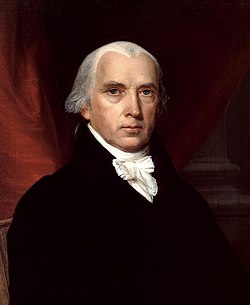
James Madison announced a shift in policy in his State of the Union Address, helping define the national program associated with the early Era of Good Feelings.
Image source: James Madison
Dec 1815
In the policy shift announced in December 1815, Madison authorized measures for a national bank.
Image source: Second Bank of the United States
Dec 1815
Madison's December 1815 policy program also authorized a protective tariff on manufactures.
1816
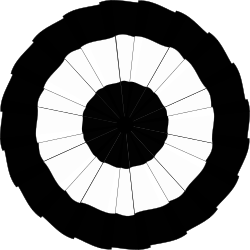
Political hostilities declined as the Federalist Party largely dissolved after the fiasco of the Hartford Convention in 1814–15.
Image source: Federalist Party
1817
Writing to Monroe in 1817, Madison declared that there had never been a moment when such a proposition to the states was so likely to be approved.
Jul 12, 1817
Benjamin Russell coined the phrase Era of Good Feelings in the Boston Federalist newspaper Columbian Centinel on July 12, 1817, after Monroe's visit to Boston during his goodwill tour.
Nov 1816
James Monroe defeated Federalist Rufus King in the 1816 presidential election. The result was so widely predicted that voter turnout was low.
Image source: 1816 United States presidential election
1817 - 1825
The period became closely associated with Monroe's presidency and administrative goals, making his name and the era virtually synonymous.
1817
Monroe undertook a country-wide goodwill tour in 1817, one of the clearest illustrations of the Era of Good Feelings.
Image source: James Monroe
1817 - 1825
John Quincy Adams served in Monroe's cabinet during the presidency that became most closely associated with the Era of Good Feelings.
Image source: John Quincy Adams
1817
As the last U.S. president who was a Revolutionary War veteran, Monroe wore a Revolutionary War officer's uniform and tied his long, powdered hair in an eighteenth-century queue during his public appearances.
1817 - 1825
William H. Crawford served in Monroe's cabinet and was another rival who would seek the presidency in 1824.
1817 - 1825
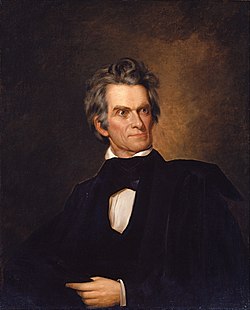
John C. Calhoun served in Monroe's cabinet and later became one of the political rivals competing for the presidency in 1824.
Image source: John C. Calhoun
Mar 4, 1817
When Monroe assumed office in March 1817, a spirit of reconciliation between Democratic-Republicans and Federalists was already well underway.
Jul 1817
Monroe's visit to Boston, Massachusetts, as part of his goodwill tour provided the occasion for Benjamin Russell's phrase describing the national mood.
1819
Monroe made another country-wide goodwill tour in 1819, reinforcing the image of national reconciliation associated with his presidency.
Nov 1820
Monroe's nearly unanimous electoral victory for reelection in 1820 appeared to confirm the political harmony associated with the Era of Good Feelings.
Image source: 1820 United States presidential election
1819 - 1820
The Missouri Crisis made explosive political conflict between slave and free soil open and explicit.
1820
In 1820, the Missouri Crisis demonstrated that sectional divisions could break through the era's broader rhetoric of national unity.
Image source: Missouri Compromise
1819
The Supreme Court's McCulloch v. Maryland was among the developments that complicated the political consensus of the period.
Image source: McCulloch v. Maryland
1819
The disastrous Panic of 1819 challenged the apparent political harmony of the Era of Good Feelings.
Image source: Panic of 1819
1819
Much anti-Federalist sentiment was viewed as political posturing, but Monroe remained uncertain of support for his domestic and foreign programs.
1819
With de-Federalization virtually complete by 1820, appointing former Federalist Party members seemed appropriate, although Monroe feared a political backlash.
1820
Some historians interpret Monroe's unopposed run in the 1820 presidential election as evidence that he had reduced party politics.
1820
By 1820, de-Federalization was virtually complete, marking the near disappearance of the Federalist Party from national political life.
1821
Monroe was concerned about mounting hostilities over the upcoming presidential contest in 1824, which was expected to be a purely intraparty affair.
Image source: 1824 United States presidential election
1821
Monroe's cabinet included three political rivals who would vie for the presidency in 1824: John Quincy Adams, John C. Calhoun, and William H. Crawford.
1824
During and after the 1824 presidential election, the Democratic-Republican Party split between supporters and opponents of Jacksonian Democracy.
Image source: Democratic-Republican Party
1824
The Democratic-Republican split surrounding the 1824 election led to the development of the Second Party System.
Image source: Second Party System
Or browse the full history timeline directory, with more than 2,500 topics.
This Era of Good Feelings timeline was generated with the help of AI, using information found on the internet.
We work hard to keep these timelines accurate, but mistakes do get through. If you spot one, email us at [email protected] and we'll fix it for future visitors.
Generate yours with AI or build it from scratch, for free.
Export your timeline, add your own events, edit or remove AI-generated events, and much more
No credit card required.
Cancel anytime.
Cancel anytime.
You can create an unlimited number of timelines with up to 10 events on each one, customize how they look, export them to PDF, PNG, PowerPoint, CSV, and Excel, and share them with a link. Paid plans raise the event limit and add features like spreadsheet imports and collaborators.
Yes. You can cancel your subscription from your account page at any time, and you will not be charged again. Your subscription stays active for the rest of the period you already paid for.
Yes. We will email you a reminder before the annual renewal, and we will also email you a receipt.
Yes. You can email us within 15 days of any payment, and we will issue you a full refund.
Check out our pricing docs or send us an email anytime: [email protected].