-
Use Cases
-
Resources
-
Pricing
1800 - 1850
% completado
Expected standards of personal conduct changed in around the first half of the 19th century, with good manners and self-restraint becoming much more common. Historians suggest factors such as Britain's conflicts with France requiring moral focus on the war effort, and the evangelical movement's push for moral improvement.
Image source: Victorian morality
1850
% completado
The development of police forces led to a rise in prosecutions for illegal sodomy in the middle of the 19th century. At the same time, overall crime rates fell significantly in the second half of the century, aided by professional policing and improving social conditions.
Image source: Victorian era
1850
% completado
Historian Harold Perkin argued that the change in moral standards led by the middle of the 19th century to 'diminished cruelty to animals, criminals, lunatics, and children (in that order)'. Further interventions took place throughout the century to increase the level of child protection.
1851
% completado
Nonconformists comprised about half of church attendees in England in 1851, and gradually the legal discrimination that had been established against them outside of Scotland was removed, reflecting increasing religious toleration during the Victorian era.
Image source: Nonconformity in Wales
1800 - 1901
% completado
Levels of poverty fell significantly during the 19th century, from as much as two thirds of the population in 1800 to less than a third by 1901, though low wages meant many still struggled to achieve more than a subsistence living.
Image source: Poverty in the United Kingdom
1801 - 1901
% completado
By the 1901 census, more than three out of every four people in Britain were classified as living in an urban area, compared to one in five a century earlier—a dramatic transformation driven by industrialisation and rapid population growth across England, Scotland and Wales.
Image source: Urbanization

1833
% completado
From the 1833 Factory Act onwards, attempts were made to get child labourers into part-time education, though this was often difficult to achieve. Work continued to inhibit children's schooling into the early 20th century, highlighting the slow progress of child protection and education reform.
Image source: Factory Acts
1834
% completado
The Poor Law Amendment Act 1834 was deliberately designed to punish the poor rather than relieve them generously. It remained the basis for welfare provision into the 20th century, shaping attitudes toward poverty throughout the Victorian era.
Image source: Poor Law Amendment Act 1834
1837 - 1901
% completado
Initially the Industrial Revolution increased working hours, but over the course of the 19th century a variety of political and economic changes caused them to fall back down to—and in some cases below—pre-industrial levels, creating more time for leisure among working Victorians.
1837 - 1901
% completado
Access to education increased rapidly during the Victorian era, and literacy rates rose until they had become nearly universal by the end of the century. Private education for wealthier children, boys and more gradually girls, also became more formalised over the course of the century.
Image source: History of education in England
1845 - 1852
% completado
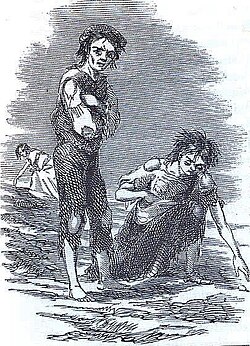
From 1845 to 1852, the Potato Famine caused mass starvation, disease and death in Ireland, sparking large-scale emigration. The famine was one of the greatest humanitarian catastrophes of the Victorian era and profoundly reshaped Ireland's population and diaspora.
Image source: Great Famine (Ireland)
1850 - 1870
% completado
Historians have characterised the mid-Victorian era from 1850 to 1870 as Britain's 'Golden Years', with national income per person increasing by half. Known as the 'workshop of the world', Britain was uniquely advanced in technology during this prosperous period.
1851
% completado
Of the babies born in Liverpool in 1851, only 45 per cent survived to the age of 20. Such figures illustrate the harsh realities of urban life in mid-Victorian Britain, even as poverty levels overall began to decline significantly during the century.
1880 - 1901
% completado
Historians distinguish late Victorianism, from 1880 onwards, by its new waves of aestheticism and imperialism, separating it from both the unsettled early Victorianism of 1837–1850 and the Victorian heyday of mid-Victorianism from 1851 to the 1870s.
1887
% completado
Much of the improved wages of the era was saved: the number of depositors in savings banks rose from 430,000 in 1831 to 5.2 million in 1887, with deposits growing from £14 million to over £90 million—evidence of rising prosperity among ordinary Victorians.
1901
% completado
Wage rates continued to improve in the later 19th century: real wages, after taking inflation into account, were 65 per cent higher in 1901 compared with 1871. Yet Cook argues typical wages for much of the population remained barely enough for subsistence in good times, let alone saving for bad times.
1815 - 1914
% completado
The period from 1815 to 1914, known as the Pax Britannica, was a time of relatively peaceful relations between the world's great powers. Throughout most of the 19th century, Britain was the most powerful country in the world, and the interwar period between the Napoleonic Wars and the First World War is broadly seen as an age of peace, progress, and political liberalism.
Image source: Pax Britannica
1832
% completado
The Reform Act 1832 introduced a wide-ranging change to the electoral system of England and Wales, expanding the franchise. It is sometimes cited as marking the beginning of the 'long Victorian era', as it set in motion the political agitation and sensibilities that characterised the period before Victoria's accession.
Jun 20, 1837
% completado
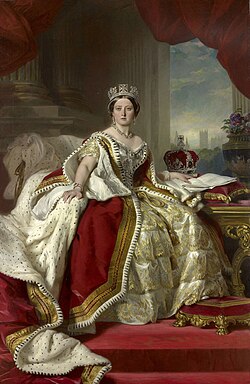
On 20 June 1837, Queen Victoria acceded to the throne after the death of her uncle, William IV. Her accession marks the start of the Victorian era in its strictest sense—the reign of Victoria as Queen of the United Kingdom of Great Britain and Ireland.
1840
% completado
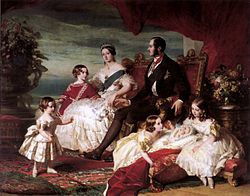
In 1840, Queen Victoria married her German cousin Prince Albert of Saxe-Coburg and Gotha. Their marriage became a defining partnership of the era, with Albert playing an influential role in British public life until his death in 1861.
Image source: Prince Albert of Saxe-Coburg and Gotha
1853 - 1856
% completado
The Crimean War, fought from 1853 to 1856, was the only war in which the British Empire fought against another major power during the Pax Britannica. The conflict against Russia exposed weaknesses in the British army but did not disrupt the broader era of relatively peaceful relations among the great powers.
Image source: Crimean War
1861
% completado
In 1861, Prince Albert died, devastating Queen Victoria. She withdrew substantially from public life for years afterwards, deepening her mourning and affecting the monarchy's public presence during the 1860s.
1867
% completado
The franchise was expanded again by the Second Reform Act in 1867, continuing the broadening of the electoral system begun with the Reform Act 1832. Nevertheless, all women and a large minority of men remained outside the political system.
1871
% completado
In 1871, with republican sentiments growing in Britain, Queen Victoria began to return to public life. Her renewed visibility helped restore support for the monarchy at a time when criticism of her long seclusion had been intensifying.
1884
% completado
The Third Reform Act in 1884 introduced a general principle of one vote per household, further extending the electoral franchise. Despite these reforms, all women and a large minority of men remained outside the political system into the early 20th century.
Image source: Representation of the People Act 1884
Jan 22, 1901
% completado
Queen Victoria died on 22 January 1901, ending the Victorian era. She was succeeded by her eldest son, Edward VII. By this point literacy had become nearly universal, real wages had risen sharply, and Britain had been the world's most powerful country for most of the century; such substantial economic growth would not be experienced again until the post–World War II period.
Image source: Queen Victoria
1833
% completado
In 1833, William Whewell coined the term 'scientist' to refer to those who studied what was generally then known as natural philosophy. Although it took a while for the term to catch on, it reflected the growing professionalisation of scientific study during the Victorian period.
Image source: William Whewell
1837
% completado
In 1837, William Fothergill Cooke and Charles Wheatstone invented the first telegraph system. This revolutionary communication technology would eventually develop into a worldwide network towards the end of the century, transforming the speed of information exchange across Britain and its empire.
Image source: Electrical telegraph
1847
% completado
Having been previously dominated by amateurs with a separate income, the Royal Society admitted only professionals from 1847 onwards. This marked a key step in the professionalisation of science in Victorian Britain, though earning a living as a scientist alone remained difficult.
Image source: Royal Society
1852
% completado
In 1852, the British biologist Thomas Henry Huxley indicated that it remained difficult to earn a living as a scientist alone. His observation illustrates that despite growing professionalisation, scientific careers were still financially precarious in mid-Victorian Britain.
Image source: Thomas Henry Huxley
1859
% completado
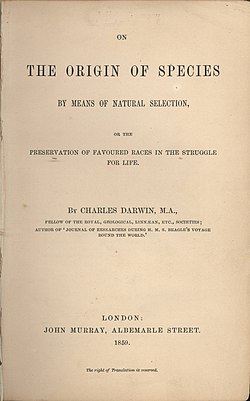
In 1859, Charles Darwin published On the Origin of Species, which sought to explain biological evolution by natural selection. Scientific knowledge and debates such as this gained a high profile in the public consciousness, making evolution one of the great controversies of the Victorian age.
Image source: On the Origin of Species
1861
% completado
Medicine advanced rapidly during the 19th century, and the germ theory was developed for the first time. Despite these advances, the mortality rate fell only marginally, from 20.8 per thousand in 1850 to 18.2 by the end of the century.
Image source: Germ theory of disease
1876
% completado
In 1876, the American Alexander Graham Bell patented the telephone. This invention joined other rapid technological developments of the 19th century, further transforming communication in Britain and around the world during the later Victorian years.
Image source: Alexander Graham Bell
Or browse the full history timeline directory, with more than 2,000 topics.
This Victorian Era timeline was generated with the help of AI, using information found on the internet.
We work hard to keep these timelines accurate, but mistakes do get through. If you spot one, email us at [email protected] and we'll fix it for future visitors.
Generate yours with AI or build it from scratch, for free.
Export your timeline, add your own events, edit or remove AI-generated events, and much more
No credit card required.
Cancel anytime.
Cancel anytime.
You can create an unlimited number of timelines with up to 10 events on each one, customize how they look, export them to PDF, PNG, PowerPoint, CSV, and Excel, and share them with a link. Paid plans raise the event limit and add features like spreadsheet imports and collaborators.
Yes. You can cancel your subscription from your account page at any time, and you will not be charged again. Your subscription stays active for the rest of the period you already paid for.
Yes. We will email you a reminder before the annual renewal, and we will also email you a receipt.
Yes. You can email us within 15 days of any payment, and we will issue you a full refund.
Check out our pricing docs or send us an email anytime: [email protected].