-
Use Cases
-
Resources
-
Pricing
The history of amusement parks traces the evolution of public entertainment venues from medieval pleasure gardens and traveling fairs to the grand trolley parks of the late 19th century, the birth of the modern theme park with Disneyland in 1955, and today's global industry featuring immersive lands, cutting-edge rides, and multi-billion-dollar resorts. More Less
1583
% complete
Bakken ('The Hill'), the world's oldest amusement park, opened in mainland Europe in 1583. Located north of Copenhagen, it began as a natural spring area where crowds gathered for entertainment, and it remains in operation today.
Image source: Dyrehavsbakken
1600 - 1699
% complete
The origins of roller coasters can be traced back to 17th-century Russia, where gravity-driven attractions consisting of sleds or carts riding down chutes on specially constructed snow slopes were used as winter leisure activities.
Image source: Roller coaster
1661
% complete
Vauxhall Gardens was founded in London in 1661 as one of the early pleasure gardens. Such gardens evolved into places of entertainment for the masses, where the public could view freak shows, acrobatics, conjuring, and juggling, take part in competitions, and walk through menageries.
Image source: Vauxhall Gardens
1700 - 1899
% complete
By the 18th and 19th centuries, pleasure gardens had evolved into places of entertainment for the masses, where the public could view freak shows, acrobatics, conjuring, and juggling, take part in competitions, and walk through menageries.
1766
% complete
The Prater, located in Vienna, Austria, began as a royal hunting ground which was opened in 1766 for public enjoyment. It later became one of Europe's most famous amusement areas.
Image source: Prater
1780
% complete
By the late 18th century, the site of a popular pleasure garden had an admission fee for its many attractions, marking an early shift toward the commercial model later used by amusement parks.
Image source: Amusement park
1800 - 1899
% complete
By the 19th century, carousels were common in parks around the world, becoming one of the most iconic and widespread amusement rides of the era.
Image source: Carousel
1851
% complete
The first World's Fair began in 1851 with the construction of the landmark Crystal Palace in London, England. These expositions showcased technology and entertainment, laying groundwork for the modern amusement park.
Image source: Great Exhibition
1893
% complete
The Columbian Exposition of 1893 was a particularly fertile testing ground for amusement rides and included some the public had never seen before, such as the world's first steel Ferris wheel, one of the most recognized products of the fair.
Image source: Ferris Wheel (1893)
1893
% complete
The World's Columbian Exposition of 1893 in Chicago, Illinois was an early precursor to the modern amusement park, introducing grand midway entertainment to millions of visitors.
Image source: World's Columbian Exposition
1829
% complete
For Coney Island in Brooklyn, New York, on the Atlantic Ocean, a horse-drawn streetcar line brought pleasure seekers to the beach beginning in 1829, starting its transformation into a major resort destination.
Image source: Coney Island
1846
% complete
Lake Compounce in Bristol, Connecticut, first established as a picturesque picnic park in 1846, is considered the oldest continuously operating amusement park in North America. It grew from picnic groves established along rivers and lakes that provided bathing and water sports.
Image source: Lake Compounce
1870
% complete
Riverside Park in Massachusetts was founded in the 1870s along the Connecticut River, an example of amusement parks that grew from picnic groves along rivers and lakes offering bathing and water sports.
Image source: Six Flags New England
1875 - 1876
% complete
In 1875, a million passengers rode the Coney Island Railroad, and in 1876 two million visited Coney Island, cementing its status as America's premier seaside playground.
1884
% complete
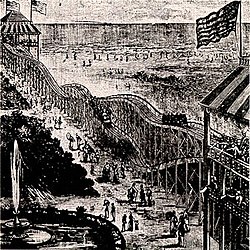
Coney Island's first roller coaster, the 'Switchback Railway', opened in 1884, following the installation of its first amusement ride, a carousel, in 1876. It helped launch the American roller coaster craze.
Image source: Switchback Railway
1890 - 1899
% complete
In the final decade of the 19th century, electric trolley lines were developed in many large American cities, giving rise to trolley parks that drew weekend crowds to picnic groves and rides at the end of the lines.
Image source: Trolley park
1891
% complete
The Ocean Pier opened in Atlantic City in 1891, followed later by the Steel Pier in 1898, both boasting rides and attractions typical of the time, such as Midway-style games and electric trolley rides.
Image source: Atlantic City Boardwalk
1891
% complete
Another early park was the Eldorado Amusement Park that opened in 1891 on the banks of the Hudson River, overlooking New York City, featuring elaborate attractions for visitors.
Image source: Eldorado Amusement Park
1892
% complete
The boardwalk also had the first Roundabout installed in 1892 by William Somers, a wooden predecessor to the Ferris Wheel that carried riders in swinging cars around a central structure.
Image source: Ferris wheel
1895
% complete
The first permanent enclosed entertainment area, regulated by a single company, was founded in Coney Island in 1895: Sea Lion Park at Coney Island in Brooklyn, pioneering the gated amusement park model.
Image source: Sea Lion Park
1897
% complete
In 1897, Sea Lion Park was joined by Steeplechase Park, the first of three major amusement parks that opened in the Coney Island area, helping make the district the world's amusement capital.
Image source: Steeplechase Park
1903 - 1904
% complete
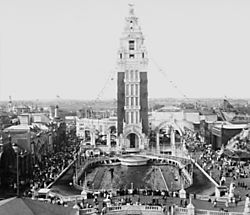
Coney Island also featured Luna Park (1903) and Dreamland (1904), completing the trio of major parks that made Coney Island a huge success; by 1910 attendance on days could reach a million people.
Image source: Luna Park (Coney Island, 2010)
1911
% complete
In 1911, Dreamland became the first Coney Island amusement park to completely burn down; in 1944, Luna Park also burned to the ground, marking the decline of Coney Island's golden age.
Image source: Dreamland (Coney Island, 1904)
1925
% complete
Founded in 1925, the original Kiddie Park is located in San Antonio, Texas, and is still in operation as of 2022, pioneering the concept of amusement rides designed specifically for young children.
1964
% complete
In 1964, Steeplechase Park, once the king of all amusement parks, closed down for good, symbolizing the end of Coney Island's era as America's amusement capital.
1846
% complete
Blackpool rose to prominence as a seaside resort with the completion in 1846 of a branch line to Blackpool from Poulton on the main Preston and Wyre Joint Railway line, bringing visitors to its beaches and attractions.
Image source: Blackpool
1880
% complete
In England, Dreamland Margate opened in 1880 with Frederick Savage's carousel as the first amusement ride installed, becoming one of Britain's leading seaside amusement parks.
Image source: Dreamland Margate
1896
% complete
The first amusement park in England, Blackpool Pleasure Beach, opened in 1896. Until 2011, it ranked among the top free-of-charge attractions in Britain, growing into one of the country's most visited parks.
Image source: Blackpool Pleasure Beach
1904
% complete
In 1904, Sir Hiram Maxim's Captive Flying Machine was introduced; having designed an unsuccessful steam-powered aircraft, he instead opened up a pleasure ride of flying carriages that revolved around a central pylon.
Image source: Hiram Maxim
1920
% complete
In 1920 the Scenic Railway rollercoaster opened to the public at Dreamland Margate with great success, carrying half a million passengers in its first year. A ballroom was constructed on the site of the Skating Rink in 1920 and a Variety Cinema was built in 1923.
Image source: Scenic Railway (Dreamland Margate)
1977
% complete
Created in 1977, the Puy du Fou is a much-celebrated theme park in Vendée, France, known for its spectacular historical shows rather than traditional rides.
Image source: Puy du Fou
1935
% complete
Santa Claus Town, which opened in Santa Claus, Indiana, in 1935 and included Santa's Candy Castle and other Santa Claus-themed attractions, is considered the first themed attraction in the United States: a precursor to the modern day theme park.
1940
% complete
To entertain waiting crowds, Walter Knott built a Ghost Town in 1940, using buildings relocated from real old west towns such as Calico, California, and Prescott, Arizona, laying the foundation for Knott's Berry Farm's transformation.
Image source: Knott's Berry Farm
1946
% complete
Santa Claus Land (renamed Holiday World in 1984) opened in 1946 in Santa Claus, Indiana, and many argue it was the first true theme park despite Knott's earlier history of themed attractions.
1951 - 1953
% complete
Inspired by the layout of Tivoli Gardens theme park in Copenhagen, Denmark, in 1951 Walt Disney came up with the idea of having an amusement park next to the studios in Burbank, initially called Mickey Mouse Park. In 1952 he created WED Enterprises, and in 1953 convinced bankers to fund the Anaheim park with Herb Ryman's aerial drawing of Disneyland.
Image source: Disneyland
Jul 17, 1955
% complete
Construction started by July 1954 with a deadline of one year. Disneyland opened on July 17, 1955, using the pay-as-you-go format, and two months after opening welcomed its one millionth guest, revolutionizing the amusement industry.
1959
% complete
What became Busch Gardens Tampa opened in 1959 as a garden and bird sanctuary, eventually evolving into a major theme park combining animal exhibits with thrill rides.
Image source: Busch Gardens Tampa Bay
1961
% complete
The first regional amusement park, Six Flags Over Texas officially opened in 1961 in Arlington, Texas, themed to the six countries that ruled over Texas. Founder Angus Wynne, after visiting Disneyland in 1955, adopted a pay-one-price format instead of Disneyland's pay-as-you-go system.
Image source: Six Flags Over Texas
1964
% complete
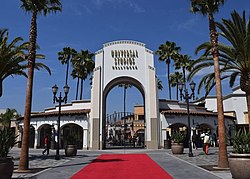
In 1964, Universal Studios Hollywood opened to the public with a studio tour of their backlot that had multiple adventure scenes and became a proper theme park, blending filmmaking with entertainment.
Image source: Universal Studios Hollywood
1968
% complete
In 1968, the Knott family fenced the farm, charged admission for the first time, and Knott's Berry Farm officially became a theme park, building on Walter Knott's earlier Ghost Town attraction.
1968 - 1971
% complete
By 1968, the second Six Flags park, Six Flags Over Georgia, opened, and in 1971, Six Flags Over Mid-America (now Six Flags St. Louis) debuted, establishing Six Flags as a growing chain of regional theme parks.
Image source: Six Flags
Oct 1, 1971
% complete
After six years of construction, Walt Disney World opened to the public on October 1, 1971, a massive resort complex in Florida that greatly expanded on the Disneyland concept.
Image source: Walt Disney World
1982
% complete
In 1982, Walt Disney Productions opened the second Walt Disney World park, EPCOT Center, based on Walt Disney's futurist ideals and World Fairs. That same year, Disneyland abandoned the pay-as-you-go practice in favor of unlimited ride admissions.
Image source: Epcot
1987 - May 1, 1989
% complete
In 1987, Disney announced it would open its third Disney World park, Disney-MGM Studios in 1989, with a working backlot. It opened on May 1, 1989, with two major attractions: The Backlot Tour and The Great Movie Ride.
Image source: Disney's Hollywood Studios
1994 - 1998
% complete
Disney expanded Disney-MGM Studios with The Twilight Zone Tower of Terror in 1994, and built their fourth Walt Disney World park, Disney's Animal Kingdom, continuing the rapid expansion of the resort.
Image source: The Twilight Zone Tower of Terror
1983
% complete
Tokyo Disneyland opened in 1983, owned and operated by the Oriental Land Company under license from Disney, marking Disney's first international expansion and the start of the modern global theme park boom.
Image source: Tokyo Disneyland
1985
% complete
In 1985, a theme park called Santa Claus Village was opened in Rovaniemi, Finland near the Arctic Circle, which led the city to trademark itself as the 'official hometown of Santa Claus' in 2009.
Image source: Santa Claus Village
Jun 7, 1990
% complete
Universal Studios Florida opened on June 7, 1990 (delayed by one year) to great fanfare, but the primary attractions were experiencing severe technical difficulties during the early period.
Image source: Universal Studios Florida
1992
% complete
In 1992, Disney opened its first European park, Euro Disneyland, outside Paris, France, designed like the Magic Kingdom in Florida but catering to European tastes, including replacing Tomorrowland with Discoveryland themed to European futurist thinkers.
Image source: Disneyland Paris
1999
% complete
In 1999, Universal Studios opened Universal Studios Islands of Adventure under the new resort name Universal Studios Escape, introducing state-of-the-art thrill rides and themed lands to challenge Disney.
Image source: Universal Islands of Adventure
Feb 8, 2001
% complete
When the park opened on February 8, 2001, it received a chilly reception for its lack of attractions, poor environment, and overemphasis on retail and dining, prompting significant retheming efforts in later years.
Image source: Disney California Adventure
Sep 4, 2001
% complete
In the late 80s, the Oriental Land Company wanted a second park alongside Tokyo Disneyland. Tokyo DisneySea was constructed at a cost of ¥335 billion and opened on September 4, 2001, becoming one of the world's most acclaimed theme parks.
Image source: Tokyo DisneySea
Mar 16, 2002
% complete
The park opened March 16, 2002, with only three rides and California Adventure style theming, bringing Warner Bros.-branded movie-themed entertainment to Europe.
Image source: Parque Warner Madrid
Sep 12, 2005
% complete
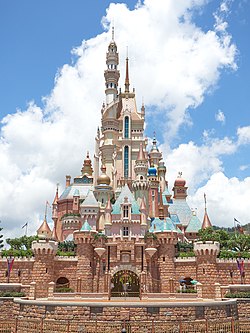
It opened on September 12, 2005, with only four lands, and had exorbitant wait times on opening day for everything from rides to food, marking Disney's entry into the Chinese market.
Image source: Hong Kong Disneyland
2010
% complete
The project was announced in 2007 and in 2010 the land was opened to the public at Universal Orlando, transforming the resort's fortunes and setting a new standard for immersive intellectual property-based lands.
Image source: The Wizarding World of Harry Potter
2015
% complete
In 2015, theme parks in the United States had a revenue of US$8 billion and theme parks in China had a revenue of US$4.6 billion, with China expected to overtake the United States by 2020, reflecting the industry's shifting global center.
Or browse the full history timeline directory, with more than 2,000 topics.
This History of Amusement Parks timeline was generated with the help of AI, using information found on the internet.
We work hard to keep these timelines accurate, but mistakes do get through. If you spot one, email us at [email protected] and we'll fix it for future visitors.
Generate yours with AI or build it from scratch, for free.
Export your timeline, add your own events, edit or remove AI-generated events, and much more
No credit card required.
Cancel anytime.
Cancel anytime.
You can create an unlimited number of timelines with up to 10 events on each one, customize how they look, export them to PDF, PNG, PowerPoint, CSV, and Excel, and share them with a link. Paid plans raise the event limit and add features like spreadsheet imports and collaborators.
Yes. You can cancel your subscription from your account page at any time, and you will not be charged again. Your subscription stays active for the rest of the period you already paid for.
Yes. We will email you a reminder before the annual renewal, and we will also email you a receipt.
Yes. You can email us within 15 days of any payment, and we will issue you a full refund.
Check out our pricing docs or send us an email anytime: [email protected].