-
Use Cases
-
Resources
-
Pricing
The history of anthropology traces the development of the systematic study of humans, their cultures, societies, biology, and languages. Emerging as an academic discipline in the 19th century amid European colonial expansion and evolutionary theory, anthropology evolved through key schools such as cultural evolutionism, historical particularism, functionalism, structuralism, and interpretive anthropology. Figures like Edward Tylor, Franz Boas, Bronisław Malinowski, Margaret Mead, Claude Lévi-Strauss, and Clifford Geertz shaped its methods and theories, transforming it into a critical, reflexive discipline that continues to address globalization, identity, and human diversity today. More Less
1000
% complete
Biruni's tradition of comparative cross-cultural study continued in the Muslim world through to Ibn Khaldun's work in the fourteenth century, representing an early non-European tradition of systematic study of human societies.
Image source: Al-Biruni
1377
% complete
Ibn Khaldun carried forward Biruni's tradition of comparative cross-cultural study in the fourteenth century, continuing a long-standing Islamic scholarly engagement with the diversity of human societies.
Image source: Ibn Khaldun
1593
% complete
The first use of the term 'anthropology' in English to refer to a natural science of humanity was apparently in Richard Harvey's 1593 Philadelphus, a defense of the legend of Brutus in British history.
Image source: Library of Alexandria
1615
% complete
In Canada, Jesuit missionaries such as Fathers LeClercq, Le Jeune and Sagard, in the 17th century, provide the oldest ethnographic records of native tribes in what was then the Dominion of Canada.
Image source: Jesuit missions in North America
1715 - 1789
% complete
Many scholars consider modern anthropology as an outgrowth of the Age of Enlightenment (1715–1789), a period when Europeans attempted to study human behavior systematically, the known varieties of which had been increasing since the fifteenth century as a result of the first European colonization wave. There was a tendency to understand human society as natural phenomena that behaved according to certain principles and could be observed empirically.
Image source: Age of Enlightenment
1772
% complete
Immanuel Kant began teaching an annual course in anthropology in 1772, laying groundwork for one of the first major treatises on anthropology, Anthropology from a Pragmatic Point of View, which treats it as a branch of philosophy.
Image source: Immanuel Kant
1798
% complete
It took Immanuel Kant (1724–1804) 25 years to write one of the first major treatises on anthropology, Anthropology from a Pragmatic Point of View (1798), which treats anthropology as a branch of philosophy.
Image source: Anthropology from a Pragmatic Point of View
1829 - 1837
% complete
Late-eighteenth-century ethnology established the scientific foundation for the field, which began to mature in the United States during the presidency of Andrew Jackson (1829–1837), influenced by the presence of Native American societies.
Image source: Andrew Jackson
1851 - 1881
% complete
Lewis Henry Morgan (1818–1881), a lawyer from Rochester, New York, became an advocate for and ethnological scholar of the Iroquois, contributing significantly to early American anthropology.
Image source: Lewis H. Morgan
1853 - 1855
% complete
Arthur de Gobineau's An Essay on the Inequality of Human Races (1853–1855) contains what may be considered the first formulation of scientific racism, whose validity later exhibitions would attempt to illustrate and prove.
Image source: An Essay on the Inequality of the Human Races
1854
% complete
The high-water mark of polygenic theories was Josiah Nott and Gliddon's voluminous eight-hundred page tome titled Types of Mankind, published in 1854. The first printing sold out quickly and by the end of the century it had undergone nine editions.
Image source: Samuel George Morton
1854
% complete
In an 1854 address entitled 'The Claims of the Negro Ethnologically Considered', Frederick Douglass directly attacked the leading theorists of the American School of Anthropology, arguing that by making the enslaved a character fit only for slavery, slaveowners excused themselves for refusing to make the slave a freeman.
Image source: Frederick Douglass
1906
% complete
In 1906, Congolese pygmy Ota Benga was put by anthropologist Madison Grant in a cage in the Bronx Zoo, labelled 'the missing link' between an orangutan and the 'white race'. Grant, a renowned eugenicist, was also the author of The Passing of the Great Race (1916). Such exhibitions were attempts to prove the validity of scientific racism.
Image source: Ota Benga
1931
% complete
In 1931, the Colonial Exhibition in Paris still displayed Kanaks from New Caledonia in the 'indigenous village'; it received 24 million visitors in six months, demonstrating the popularity of such 'human zoos'.
Image source: Paris Colonial Exposition
Jan 15, 1784
% complete
The Asiatic Society was established on 15 January 1784 in Kolkata by Sir William Jones, a philologist. Although anthropology was not separately studied in this pioneering centre of learning, its scholars studied language, history, arts and the sciences.
Image source: The Asiatic Society
1881
% complete
The next impetus for Anthropology in India came with the Census operations by the British administration in 1881. Indian census data and its publications included huge amounts of anthropological information.
Image source: Census of India
1886 - 1973
% complete
The first professional journal of anthropology in India was the Journal of the Anthropological Society of Bombay, founded in 1886. This journal continued up to 1973.
Image source: The Asiatic Society of Mumbai
1908
% complete
The first Census Commissioner Sir H.H. Risley (1851–1911) constructed the racial classification of the Indian population in 1908, drawing on census data gathered by the British administration.
Image source: Herbert Hope Risley
1920
% complete
The first Department of Anthropology was established at Calcutta University in 1920 by the famous Indian Vice-Chancellor Sir Asutosh Mukhopadhyay, with Ananthakrishna Ayer, a pioneering Indian anthropologist, as its Head of the Department.
Image source: University of Calcutta
1921
% complete
The second professional journal of anthropology in India, named Man in India, was established by Sarat Chandra Roy (1871–1942), a pioneering Indian anthropologist, in 1921. It completed one hundred years in 2021.
1923
% complete
Bhupendranath Datta (1880–1961), younger brother of Swami Vivekananda, earned a PhD in anthropology from the University of Hamburg, Germany in 1923. His books Dialectics of Hindu Ritualism (1950) and Studies in Indian Social Polity (1963) are regarded as pioneering works on Indian society and culture from a Marxist perspective.
Image source: Bhupendranath Datta
1923
% complete
Panchanan Mitra (1892–1936), professor of ancient Indian history, culture and anthropology at the University of Calcutta, was head of the department of anthropology and is mostly known for his pioneering book, Prehistoric India, published as early as 1923.
1945
% complete
T.C. Das's study on the Purum Kuki tribe of north-east India, published in 1945 by Calcutta University, became one of the major sources of database in the acrimonious debate on descent versus alliance theories on kinship in Anglo-American Anthropology involving figures like Claude Lévi-Strauss and David Schneider.
Image source: Tarak Chandra Das
1949
% complete
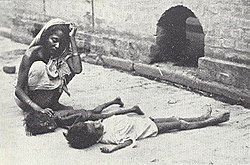
T.C. Das's study on the Great Bengal Famine was published by the University of Calcutta in 1949. It depicted the misery of the famine-affected people of Bengal through the anthropological method of fieldwork, and his data was used by Nobel Laureate economist Amartya Sen and historian Mark Tauger.
Image source: Bengal famine of 1943
1951
% complete
Another important anthropological study on the social impact assessment of the resettlement of refugees in the Andaman Islands from the then East Pakistan was done by Surajit Sinha in 1951.
Image source: Surajit Chandra Sinha
1959 - 1961
% complete
Nirmal Kumar Bose joined the Anthropological Survey of India in 1959 as Director and involved all researchers in a mega project collecting socio-economic and cultural data on villages covering 311 districts of India out of 322, published as Peasant Life in India: A Study in Indian Unity and Diversity in 1961.
1969
% complete
Irawati Karve, who contributed profusely in both Physical and Social Anthropology, conducted a study with Jai Nimbkar published as A Survey of the People Displaced Through the Koyna Dam (1969), the first of its kind on displacement caused by a big dam in India.
Image source: Irawati Karve
1985
% complete
A team of anthropologists revisited the field area where T.C. Das conducted his ethnographic observations during 1931–1936, resulting in Proceedings of the Symposium on Purum (Chote) Revisited in 1985, in which about 20 anthropologists and two educated members of the tribe participated.
Oct 1985 - 1992
% complete
The People of India project started in October 1985 by the Anthropological Survey of India aimed to generate descriptive anthropological profiles of all communities of India. From 1985 to 1992, 4635 communities in all states and union territories were identified and described, with about 3000 scholars participating in roughly 100 workshops.
Image source: Anthropological Survey of India
2001
% complete
A report of the University Grants Commission (UGC) of India in 2001 revealed that before 1960 there were only nine anthropology departments in the country, and more than 60 percent were created after 1960, mainly in states with higher concentrations of tribal population.
1863
% complete
James Hunt founded the Anthropological Society of London and served as its first president in 1863, attempting to rescue the etymology of anthropology in his first address to the society.
1895
% complete
True anthropology in Canada began with a Government department: the Geological Survey of Canada, with George Mercer Dawson as director in 1895.
Image source: George Mercer Dawson
1898
% complete
Cambridge University financed a multidisciplinary expedition to the Torres Strait Islands in 1898, organized by Alfred Cort Haddon and including a physician-anthropologist, William Rivers, as well as a linguist, a botanist, and other specialists.
Image source: Cambridge Anthropological Expedition to Torres Straits
1910
% complete
This was expanded upon by Prime Minister Wilfrid Laurier, who established a Division of Anthropology within the Geological Survey in 1910, institutionalizing anthropology within the Canadian government.
Image source: Geological Survey of Canada
1914 - 1922
% complete
Polish anthropology student Bronisław Malinowski (1884–1942) was beginning fieldwork when the outbreak of the First World War stranded him in New Guinea. He made use of the time by undertaking far more intensive fieldwork than had been done by British anthropologists.
Image source: Bronisław Malinowski
1922
% complete
Malinowski's classic ethnography, Argonauts of the Western Pacific (1922), advocated an approach to fieldwork that became standard in the field: getting 'the native's point of view' through participant observation. Radcliffe-Brown also published a seminal work in 1922.
Image source: Argonauts of the Western Pacific
1917
% complete
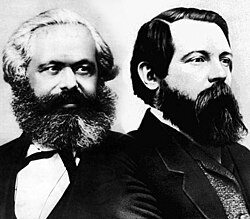
After the Revolution of 1917, views expressed by anthropologists in the USSR, and later the Soviet Bloc countries, were highly shaped by the requirement to conform to Marxist theories of social evolution.
Image source: Marxism
1967
% complete
In 1967 Marvin Harris published The Rise of Anthropological Theory, presenting argumentative examinations of anthropology's historical developments. Harris agreed with the 19th-century view that laws are abstractions from empirical evidence, and decried the loss of nomothetic views in the 20th century.
Image source: Marvin Harris
2008
% complete
Anthropology has been used in Britain to provide an alternative explanation for the 2008 financial crisis to the technical explanations rooted in economic and political theory, demonstrating the discipline's continued relevance to contemporary issues.
Image source: 2007–2008 financial crisis
Or browse the full history timeline directory, with more than 2,000 topics.
This History of Anthropology timeline was generated with the help of AI, using information found on the internet.
We work hard to keep these timelines accurate, but mistakes do get through. If you spot one, email us at [email protected] and we'll fix it for future visitors.
Generate yours with AI or build it from scratch, for free.
Export your timeline, add your own events, edit or remove AI-generated events, and much more
No credit card required.
Cancel anytime.
Cancel anytime.
You can create an unlimited number of timelines with up to 10 events on each one, customize how they look, export them to PDF, PNG, PowerPoint, CSV, and Excel, and share them with a link. Paid plans raise the event limit and add features like spreadsheet imports and collaborators.
Yes. You can cancel your subscription from your account page at any time, and you will not be charged again. Your subscription stays active for the rest of the period you already paid for.
Yes. We will email you a reminder before the annual renewal, and we will also email you a receipt.
Yes. You can email us within 15 days of any payment, and we will issue you a full refund.
Check out our pricing docs or send us an email anytime: [email protected].