-
Resources
-
Pricing
This timeline traces the development of forensic anthropology from early studies of human bones to its modern role in identifying remains, investigating deaths, and supporting human rights cases. More Less
Build a timeline like this one in minutes, for free. Start Yours →
1247
Song Ci's Xi Yuan Ji Lu, commonly translated as The Washing Away of Wrongs, organized practical knowledge about investigating violent deaths, injuries, wounds, and decomposition. It is often regarded as the earliest major forensic medical text and helped establish systematic examination of human remains.
Image source: Collected Cases of Injustice Rectified
1489 - 1513
Leonardo da Vinci's dissections and anatomical drawings documented bones, joints, and bodily proportions with unprecedented observational precision. His work strengthened the comparative anatomical knowledge later used by physical anthropologists, even though much of it was not published during his lifetime.
Image source: Leonardo da Vinci
1543
Andreas Vesalius published a landmark anatomical treatise based on human dissection. Its detailed illustrations and corrections to classical anatomical errors helped create the modern anatomical framework from which osteology and forensic skeletal analysis developed.
Image source: De Humani Corporis Fabrica Libri Septem
1655 - 1687
William Petty promoted quantitative comparison of human populations through what he called political arithmetic. His statistical approach anticipated later anthropometry, the measurement of human bodies that became an important, though eventually controversial, component of forensic identification.
Image source: William Petty
1735
Carl Linnaeus placed humans within a biological classification system in Systema Naturae and gave the species the name Homo sapiens. Taxonomic and comparative approaches to human variation subsequently influenced physical anthropology and the interpretation of skeletal remains.
Image source: Carl Linnaeus
1775
Johann Friedrich Blumenbach's work on human skulls helped establish craniology and comparative human anatomy as research fields. His specimen-based descriptions contributed to the study of cranial variation, although later racial interpretations of craniology became scientifically and ethically problematic.
Image source: Johann Friedrich Blumenbach
1801
In an early American example of forensic osteology, Thomas Jefferson examined the bones of an enslaved man killed in Virginia and used skeletal observations in a disputed identification. The episode illustrates how human remains were already being used in legal contexts before forensic anthropology became a formal discipline.
Image source: Thomas Jefferson
1813
Mathieu Orfila published influential works that helped establish forensic toxicology and medical jurisprudence. His approach encouraged the use of laboratory science and expert evidence in legal investigations, creating an environment in which specialized examination of bodies and bones could develop.
Image source: Mathieu Orfila
1839
Samuel George Morton published measurements and descriptions of hundreds of human skulls in Crania Americana. The work expanded systematic cranial documentation, but Morton later became associated with scientifically flawed racial hierarchy claims and selective interpretations of data.
Image source: Samuel George Morton
1848
George Busk and colleagues studied a Neanderthal skull discovered at Forbes' Quarry in Gibraltar. The specimen helped establish that distinct ancient human populations existed and demonstrated the importance of careful skeletal description and comparison.
Image source: Gibraltar 1
1859
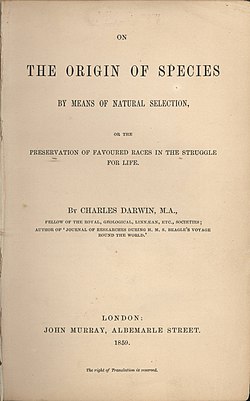
Charles Darwin's theory of evolution by natural selection provided a framework for understanding biological variation, ancestry, and adaptation. Evolutionary thinking later shaped anthropological interpretation of human skeletons and population differences.
Image source: On the Origin of Species
1863
Thomas Henry Huxley's Evidence as to Man's Place in Nature compared human and ape skeletons and argued for evolutionary continuity. The book helped integrate comparative anatomy with human origins research, a scientific background shared by physical and forensic anthropology.
Image source: Thomas Henry Huxley
1876
Cesare Lombroso's L'uomo delinquente applied anthropometric and anatomical ideas to criminality. Its theory of the born criminal was later discredited, but the episode shows how body measurement entered legal science and why modern forensic anthropology emphasizes validation and limits on inference.
Image source: Cesare Lombroso
1912
Charles Dawson presented fossils later known as Piltdown Man as evidence of an ancient human ancestor. The forgery, exposed in 1953, became a lasting warning about confirmation bias, provenance, and the need for independent scientific verification of human remains.
Image source: Piltdown Man
1859
Paul Broca founded the Société d'Anthropologie de Paris, creating a major center for research on human anatomy, variation, and measurement. Broca also developed standardized osteological observations that influenced later work in anthropometry and skeletal identification.
Image source: Paul Broca
1882
Alphonse Bertillon introduced a standardized system of body measurements, photographs, and descriptive records for identifying people, especially repeat offenders. Bertillonage demonstrated the practical value of systematic human measurement before fingerprinting became dominant.
Image source: Alphonse Bertillon
1892
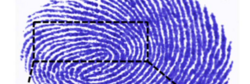
Francis Galton's Finger Prints established the individuality and persistence of friction-ridge patterns and helped make fingerprint identification practical. The success of fingerprints shifted routine personal identification away from anthropometry, allowing skeletal specialists to focus more on unidentified remains and biological profile estimation.
Image source: Francis Galton
1903 - 1943
Aleš Hrdlička became a central figure in American physical anthropology and helped standardize the study of human skeletal variation. His work at the Smithsonian and in professional organizations influenced generations of osteologists, although some early anthropological practices reflected racial typologies later rejected by the field.
Image source: Aleš Hrdlička
1929
Wilton Marion Krogman published influential guidance on identifying human skeletal remains and became one of the most important early American advocates for applying physical anthropology to legal investigations. His teaching helped connect academic osteology with police and medical examiner work.
1931
Earnest Hooton's Up from the Ape popularized physical anthropology and brought public attention to human evolution and anatomical variation. Hooton also trained influential students and helped institutionalize anthropological approaches to skeletal analysis in the United States.
Image source: Earnest Hooton
1932
The FBI established a laboratory that supported scientific examination of evidence, including fingerprints, questioned documents, and later skeletal and biological material. Its growth reflected the broader professionalization of forensic science in the twentieth century.
Image source: FBI Laboratory
1947
The U.S. Army Central Identification Laboratory was established in Hawaii to recover and identify military personnel missing from earlier conflicts. It became a major center for forensic anthropology, archaeology, osteology, and laboratory identification of war dead.
Image source: Joint POW/MIA Accounting Command
1962
Wilton M. Krogman's The Human Skeleton in Forensic Medicine synthesized methods for estimating age, sex, stature, ancestry, and identity from human remains. It became a foundational reference and helped define forensic anthropology as a recognizable applied specialty.
Image source: Forensic anthropology
1977
The American Board of Forensic Anthropology was established to develop professional standards and certification for forensic anthropologists. Board certification helped distinguish trained practitioners and encouraged formal evaluation of expertise, methods, and courtroom testimony.
Image source: Forensic anthropology
1977
The Smithsonian Institution developed a dedicated forensic anthropology capability within its Department of Anthropology. The unit became internationally known for case consultation, identification of human remains, mass-disaster response, and development of skeletal reference collections.
Image source: National Museum of Natural History
1981
William M. Bass founded the Anthropological Research Facility at the University of Tennessee, widely known as the Body Farm. Controlled studies of donated human remains produced crucial observations about decomposition, insect activity, scavenging, and the interpretation of outdoor scenes.
1929 - 1977
Mildred Trotter began the research program that produced widely used stature-estimation standards from long bones. Her studies, including wartime military remains, made estimated living height a central component of the forensic anthropological biological profile.
Image source: Mildred Trotter
1939 - 1945
World War II produced enormous numbers of fragmented, burned, decomposed, and commingled remains. Military identification programs expanded the use of dental records, anthropology, radiography, pathology, and personal effects, accelerating practical methods later used in mass-fatality investigations.
Image source: World War II casualties
1952
Trotter and Goldine Gleser published influential regression equations for estimating stature from long bones. Their standards became widely used in casework, while later research has emphasized population-appropriate samples, uncertainty intervals, and the limitations of applying older equations universally.
1953
Fluorine testing, anatomical comparison, and closer examination demonstrated that Piltdown Man combined a modern human skull with an orangutan jaw and altered teeth. The exposure reinforced the importance of scientific skepticism, laboratory testing, and transparent evidence histories.
1984
The Argentine Forensic Anthropology Team was founded after the end of Argentina's military dictatorship to investigate disappearances and identify victims of state violence. Its work demonstrated how forensic anthropology can support human rights investigations, families, truth commissions, and legal accountability.
Image source: Argentine Forensic Anthropology Team
1986
Professional medical-examiner organizations expanded formal guidance for disaster victim identification and mass-fatality response during the 1980s. These protocols promoted coordinated use of anthropology, odontology, pathology, radiology, fingerprints, DNA, documentation, and family assistance.
1992
The Guatemalan Forensic Anthropology Foundation conducted exhumations and identifications connected to the country's civil war and state violence. Its work combined archaeology, osteology, genetics, historical research, and community participation, demonstrating the discipline's role in transitional justice.
1996 - 2005
Forensic teams exhumed and analyzed mass graves associated with the Srebrenica massacre for the International Criminal Tribunal for the former Yugoslavia. Skeletal trauma, grave documentation, commingling analysis, and DNA identifications helped establish the scale and circumstances of the killings.
Image source: Srebrenica massacre
2000
The United States launched NamUs as a national information system for missing, unidentified, and unclaimed persons. It improved cross-jurisdictional comparison of case data, forensic anthropology reports, dental records, fingerprints, and DNA profiles.
Sep 11, 2001 - 2005
The World Trade Center attacks generated highly fragmented and commingled remains. Forensic anthropologists helped recover, sort, examine, and document material alongside forensic odontologists, pathologists, DNA analysts, and disaster-response personnel in one of the largest American identification efforts.
Image source: September 11 attacks
2009
The International Committee of the Red Cross expanded practical guidance for managing human remains and identifying the dead in armed conflict and disasters. The guidance emphasized dignity, documentation, culturally appropriate recovery, and the needs of families.
Image source: International Committee of the Red Cross
2009
The National Academy of Sciences report Strengthening Forensic Science in the United States criticized uneven standards, weak validation, and overstated courtroom claims across forensic disciplines. It helped drive calls for empirical error studies, accreditation, transparent statistics, and clearer testimony in forensic anthropology.
2010 - 2025
Computed tomography, structured-light scanning, photogrammetry, and three-dimensional modeling became increasingly important in forensic anthropology. Digital methods support non-destructive analysis, geometric morphometrics, reconstruction, remote collaboration, and preservation of evidence, while requiring validation and careful management of digital data.
2011
During the 2010s, international forensic anthropology organizations increasingly formalized ethical guidance for work involving conflict, migration, disasters, and human-rights abuses. Practitioners emphasized informed collaboration, respectful treatment of the dead, documentation, and avoiding unsupported conclusions.
2018
The American Academy of Forensic Sciences and its Standards Board developed and revised consensus standards for forensic anthropology. The standards address terminology, biological-profile estimation, reporting, testimony, quality assurance, and communicating uncertainty.
Image source: American Academy of Forensic Sciences
2018 - 2025
Investigative genetic genealogy began helping identify some long-unidentified remains by combining forensic DNA profiles with genealogical databases and traditional genealogy. The approach expanded investigative possibilities but raised major questions about consent, privacy, database governance, legal authority, and evidentiary limits.
Image source: Investigative genetic genealogy
Build a timeline like this one in minutes, for free. Start Yours →
Or browse the full history timeline directory, with more than 2,500 topics.
This History of Forensic Anthropology timeline was generated with the help of AI, using information found on the internet.
We work hard to keep these timelines accurate, but mistakes do get through. If you spot one, email us at [email protected] and we'll fix it for future visitors.
Generate yours with AI or build it from scratch, for free.
Export your timeline, add your own events, edit or remove AI-generated events, and much more
No credit card required.
15-day money-back guarantee.
You can create an unlimited number of timelines with up to 10 events on each one, customize how they look, export them to PDF, PNG, PowerPoint, CSV, and Excel, and share them with a link. Timelines made with Timeline Maker AI keep every event the generator created, and you can add up to 5 events of your own. Paid plans remove the event limit, add spreadsheet imports and hide Preceden's branding, and the higher-priced plan also adds collaborators, a custom logo and a custom domain.
Yes. You can cancel your subscription from your account page at any time, and you will not be charged again. Your subscription stays active for the rest of the period you already paid for.
Yes. We email you a reminder 15 days before your annual renewal, and we email you a receipt after every payment.
Yes. You can email us within 15 days of any payment, and we will issue you a full refund.
Check out our pricing docs or send us an email anytime: [email protected].