-
Use Cases
-
Resources
-
Pricing
The history of the polygraph traces the development of instruments designed to detect deception by recording physiological responses, as well as the continuing debate over their accuracy, ethics, and legal use. More Less
Build a timeline like this one in minutes, for free. Start Yours →
1895
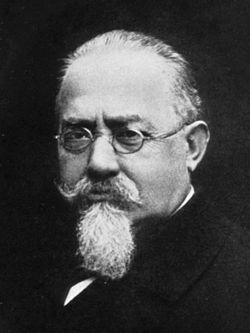
Cesare Lombroso created an early lie-detection device that measured changes in blood pressure for use in police cases, providing an important predecessor to the modern polygraph.
Image source: Cesare Lombroso
1904
Vittorio Benussi developed a device that measured breathing, adding respiratory measurement to the emerging field of physiological lie detection.
Image source: Vittorio Benussi

1906
The Mackenzie-Lewis Polygraph was first developed by James Mackenzie in 1906 and became one of the early devices used to record physiological signals relevant to lie detection.
Image source: James Mackenzie (cardiologist)

1915
William Moulton Marston wrote a second paper on the concept of using blood pressure in deception research in 1915, while completing his undergraduate studies.
Image source: William Moulton Marston

1917
After entering Harvard Law School and graduating in 1918, Marston republished his earlier work in 1917, helping publicize the idea that blood-pressure changes could indicate deception.
1917
According to Marston's son, Elizabeth Marston suggested that her blood pressure seemed to climb when she became angry or excited. Later accounts connect this observation to Marston's deception research.
1920 - 1929
Elizabeth Marston appears in a photograph taken in her husband's polygraph laboratory during the 1920s. Although she was not listed as a collaborator in early work, later writers connected her to the research.
1921
John Augustus Larson, a medical student at the University of California, Berkeley and a Berkeley police officer, invented a device that recorded both blood pressure and breathing.
Image source: John Augustus Larson

1921
The Berkeley Police Department, under nationally renowned police chief August Vollmer, first applied Larson's blood-pressure-and-respiration device in law-enforcement work.
1936
C. D. Lee developed the Berkeley Psychograph, a blood-pressure, pulse, and respiration recorder that was similar to later polygraph designs.
Build a timeline like this one in minutes, for free. Start Yours →
This History of the Polygraph timeline was generated with the help of AI, using information found on the internet.
We work hard to keep these timelines accurate, but mistakes do get through. If you spot one, email us at [email protected] and we'll fix it for future visitors.
Generate yours with AI or build it from scratch, for free.