-
Use Cases
-
Resources
-
Pricing
Mary Anning (1799–1847) was an English fossil collector, dealer, and self-taught paleontologist from Lyme Regis, Dorset. Working along the Jurassic Coast, she discovered the first correctly identified ichthyosaur skeleton, the first complete plesiosaur, and the first pterosaur found outside Germany. Despite facing barriers as a working-class woman in science, her discoveries fundamentally changed scientific understanding of prehistoric life. More Less
Aug 8, 1793
% complete
Mary Anning's parents, Richard and Molly Anning, married on 8 August 1793 in Blandford Forum and moved to Lyme Regis in Dorset, living in a house built on the town's bridge.
Image source: Mary Anning
May 21, 1799
% complete
Mary Anning was born in Lyme Regis in Dorset, England, on 21 May 1799. She would become a renowned fossil collector, dealer, and palaeontologist.
Aug 19, 1800
% complete
On 19 August 1800, when Anning was 15 months old, she survived an incident that became part of local lore: a woman holding her was struck by lightning, but baby Mary recovered, while others present died.
Nov 1810
% complete
Anning's father had been suffering from tuberculosis and injuries from a fall off a cliff, contributing to his death in November 1810 at age 44. His death left the family in financial difficulty.
1821
% complete
As late as 1821, Molly Anning wrote to the British Museum to request payment for a specimen, illustrating the family's continued financial struggles despite their important finds.
1830
% complete
By 1830, because of difficult economic conditions in Britain that reduced the demand for fossils, coupled with long gaps between major finds, Anning was having financial problems again.
1835
% complete
Anning suffered another serious financial setback in 1835 when she lost most of her life savings, about £300, in a bad investment.
1811
% complete
Their first well-known find was in 1811 when Mary Anning was 12; her brother Joseph dug up a 4-foot (1.22 metre) ichthyosaur skull but failed to locate the rest of the animal.
1812
% complete
A few months after Joseph found the skull, Mary herself found the rest of the skeleton, which turned out to be over 5 yards (4.57 metres) in length — one of the first nearly complete ichthyosaur skeletons known.
Image source: Ichthyosaurus
May 1819
% complete
The famous ichthyosaur skeleton was sold for £45 and five shillings at auction in May 1819 as a 'Crocodile in a Fossil State' to Charles Konig of the British Museum, who had already suggested the name Ichthyosaurus for it.
May 15, 1820
% complete
In 1820, Lieutenant-Colonel Thomas James Birch, disturbed by the family's poverty, auctioned his collection of fossils he had bought from them at Bullock's in London on 15 May 1820, raising £400 (equivalent to about £33,000 in 2025).
1821
% complete
Also in 1821, Anning found the 20 ft (6.1 m) skeleton from which the species Ichthyosaurus platydon (now Temnodontosaurus platyodon) would be named. McGowan hypothesises it was collected during the winter of 1820/1821.
Image source: Temnodontosaurus
Dec 10, 1823
% complete
On 10 December 1823, Anning found the first complete Plesiosaurus, specimen NHMUK OR 22656, a discovery that caused controversy until Cuvier's accusations of fraud were resolved by a special meeting of the Geological Society earlier in 1824.
Image source: Plesiosaurus
1826
% complete
In 1826 Anning discovered what appeared to be a chamber containing dried ink inside a belemnite fossil, demonstrating the preservation of soft tissues in fossils.
Image source: Belemnoidea
1826
% complete
In 1826, aged 27, Anning managed to save enough money to purchase a house with a glass store-front window for her shop, Anning's Fossil Depot, which became a hub for visiting geologists and collectors.
Dec 1829
% complete
In December 1829 she found a fossil fish, Squaloraja, which attracted attention because it had characteristics intermediate between sharks and rays.
Image source: Squaloraja
Dec 1830
% complete
In December 1830, Anning finally made another major find, a skeleton of a new type of plesiosaur, which sold for £200. It was named Plesiosaurus macrocephalus by William Buckland and described in an 1840 paper by Richard Owen.
Image source: Thalassiodracon
Oct 1833
% complete
The risks of Anning's profession were illustrated when in October 1833 she barely avoided being killed by a landslide that buried her black-and-white terrier, Tray, her constant companion when she went collecting.
1814
% complete
The notoriety of the ichthyosaur find increased when Sir Everard Home wrote a series of six papers, starting in 1814, describing it for the Royal Society, without crediting Anning.
Image source: Everard Home
1819
% complete
Perplexed by the creature, Home kept changing his classification, finally reasoning in 1819 it might be an intermediate form between salamanders and lizards, proposing to name it Proteo-Saurus.
1819
% complete
Charles Konig purchased the ichthyosaur skeleton for the British Museum in 1819. The skull is still held by the Natural History Museum in London, but the rest of the skeleton's location is unknown.
Image source: Natural History Museum, London
1821
% complete
In 1821, William Conybeare and Henry De la Beche, both members of the Geological Society of London, collaborated on a paper analysing in detail the specimens found by Anning and others, also naming and describing the genus Plesiosaurus.
Image source: William Conybeare (geologist)
1824
% complete
When Conybeare presented his analysis of plesiosaur anatomy to the Geological Society in 1824, he again failed to mention Anning by name, even though she had possibly collected both skeletons and made his presentation sketch.
1824
% complete
It was to Buckland that Anning made what would prove to be the scientifically important suggestion, in a letter auctioned for over £100,000 in 2020, that the strange conical objects known as bezoar stones were really the fossilised faeces of ichthyosaurs or plesiosaurs.
Image source: Coprolite
1829
% complete
Anning had found the first British example of a pterosaur in 1828, displayed at the British Museum as a flying dragon. In 1829 William Buckland described it as Pterodactylus macronyx (later renamed Dimorphodon macronyx by Owen), and unusually credited Anning with the discovery.
Image source: Dimorphodon
1829
% complete
After further investigation and comparison with similar fossils found elsewhere, Buckland published the conclusion in 1829 that the stones were fossilised dung, naming them coprolites.
1829
% complete
Charlotte Murchison helped Anning build her network of customers throughout Europe, and Anning stayed with the Murchisons when she visited London in 1829.
Image source: Charlotte Murchison
1834
% complete
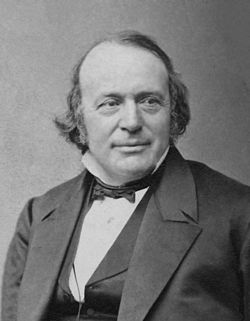
The Swiss palaeontologist Louis Agassiz visited Lyme Regis in 1834 and worked with Anning to obtain and study fish fossils found in the region, grateful for the help the women gave him examining specimens.
Image source: Louis Agassiz
1839
% complete
As time passed, Anning's confidence grew, and in 1839 she wrote to the Magazine of Natural History questioning a claim that a recently discovered Hybodus fossil represented a new genus, since she had long known of sharks with straight and hooked teeth. This extract was the only scientific writing of hers published in her lifetime.
1839
% complete
In 1839 Buckland, Conybeare and Richard Owen visited Lyme together so that Anning could lead them all on a fossil-collecting excursion, showing the respect she commanded among leading geologists.
Image source: William Buckland
1844
% complete
King Frederick Augustus II of Saxony visited her shop in 1844 and purchased an ichthyosaur skeleton for his extensive natural history collection, evidence of her international reputation.
Image source: Frederick Augustus II of Saxony
1846
% complete
Upon learning of her cancer diagnosis, the Geological Society raised money from its members to help with her expenses, and the council of the newly created Dorset County Museum made Anning an honorary member — honours normally accorded only to fellows, as women were not admitted until 1904.
Image source: Dorset Museum
Mar 9, 1847
% complete
Anning died from breast cancer at the age of 47 on 9 March 1847 in Lyme Regis. After her death, her unusual life story attracted increasing interest.
1850
% complete
Members of the Geological Society contributed to a stained-glass window in Anning's memory, unveiled in 1850, honouring her contributions to science.
Image source: Lyme Regis
Feb 1865
% complete
An anonymous article about Anning's life was published in February 1865 in Charles Dickens's literary magazine All the Year Round. Long attributed to Dickens himself, historians in 2014 determined Fagan had largely plagiarised it from Henry Rowland Brown's guidebook.
Image source: All the Year Round
1902
% complete
In 1902, the Lyme Regis Museum was built on the site of Anning's former home, commemorating her connection to the town where she made her discoveries.
1925
% complete
Beginning with H. A. Forde's The Heroine of Lyme Regis: The Story of Mary Anning the Celebrated Geologist (1925), a number of writers throughout the 20th century saw Anning's life as inspirational.
1969
% complete
Anning has been referenced in several historical novels, most notably in The French Lieutenant's Woman (1969) by John Fowles, who was critical that no British scientist had named a species after her in her lifetime.
Image source: The French Lieutenant's Woman
1999
% complete
In 1999, on the 200th anniversary of Anning's birth, an international meeting of historians, palaeontologists, fossil collectors and others interested in her life was held in Lyme Regis.
2005
% complete
In 2005 the Natural History Museum added Anning, alongside scientists such as Carl Linnaeus, Dorothea Bate and William Smith, as one of the 'gallery characters' (actors in period costumes) used around its display cases.
2009
% complete
In 2009, Tracy Chevalier wrote a historical novel entitled Remarkable Creatures, in which Anning and Elizabeth Philpot were the main characters, bringing her story to a wide readership.
2010
% complete
In 2010, 163 years after her death, the Royal Society included Anning in a list of the ten British women who have most influenced the history of science.
Image source: Royal Society
2012 - 2015
% complete
In 2012, the plesiosaur genus Anningasaura was named after Anning, and in 2015 the species Ichthyosaurus anningae was also named in her honour, partially remedying the lack of species named for her during her lifetime.
Image source: Anningasaura
2020
% complete
The 2020 film Ammonite, directed by Francis Lee and based on segments of Anning's life and legacy, premiered at the 2020 Toronto International Film Festival.
Image source: Ammonite (film)
2021
% complete
In 2021, the Royal Mint issued sets of commemorative fifty pence coins called The Mary Anning Collection, designed by palaeoartist Bob Nicholls, minted in acknowledgement of her lack of recognition as one of Britain's greatest fossil hunters.
Image source: Mary Anning
May 21, 2022
% complete
Following the 'Mary Anning Rocks' campaign begun in August 2018 by schoolgirl Evie Swire, sculptor Denise Dutton produced a statue, which Professor Alice Roberts and Swire unveiled on 21 May 2022, the 223rd anniversary of Anning's birth.
Image source: Statue of Mary Anning
Mar 2024
% complete
In March 2024, the Royal Mail issued a set of four stamps celebrating Mary Anning and her discoveries, further cementing her legacy.
May 2024
% complete
In May 2024, a book that once belonged to Anning — Miller's Natural History of the Crinoidea, stolen between 1946 and 1979 and bought by Museums Victoria in 1985 — was returned to the museum in Lyme Regis from Australia on her 225th birthday.
Or browse the full history timeline directory, with more than 2,000 topics.
This Mary Anning timeline was generated with the help of AI, using information found on the internet.
We work hard to keep these timelines accurate, but mistakes do get through. If you spot one, email us at [email protected] and we'll fix it for future visitors.
Generate yours with AI or build it from scratch, for free.
Export your timeline, add your own events, edit or remove AI-generated events, and much more
No credit card required.
Cancel anytime.
Cancel anytime.
You can create an unlimited number of timelines with up to 10 events on each one, customize how they look, export them to PDF, PNG, PowerPoint, CSV, and Excel, and share them with a link. Paid plans raise the event limit and add features like spreadsheet imports and collaborators.
Yes. You can cancel your subscription from your account page at any time, and you will not be charged again. Your subscription stays active for the rest of the period you already paid for.
Yes. We will email you a reminder before the annual renewal, and we will also email you a receipt.
Yes. You can email us within 15 days of any payment, and we will issue you a full refund.
Check out our pricing docs or send us an email anytime: [email protected].