-
Use Cases
-
Resources
-
Pricing
Mary McLeod Bethune (1875–1955) was an American educator, stateswoman, philanthropist, and civil rights activist. Born to formerly enslaved parents in South Carolina, she founded the Daytona Literary and Industrial School for Training Negro Girls in 1904, which later became Bethune-Cookman University. She served as an advisor to President Franklin D. Roosevelt and was a key figure in the 'Black Cabinet,' advocating for African American education and civil rights throughout her life. More Less
Jul 10, 1875
% complete
Mary Jane McLeod was born on July 10, 1875, in a small log cabin near Mayesville, South Carolina, on a rice and cotton farm in Lee County. She would grow up to become a renowned American educator, philanthropist, humanitarian, womanist, and civil rights activist.
Image source: Mary McLeod Bethune
Oct 1886
% complete
In October 1886, McLeod began attending Mayesville's one-room Black schoolhouse, Trinity Mission School, which was run by the Presbyterian Board of Missions of Freedmen and founded by Emma Jane Wilson.
1888 - 1894
% complete
Emma Jane Wilson helped McLeod attend the same school on a scholarship, which McLeod did from 1888 to 1894, furthering her education and preparing her for a career in teaching.
1894 - 1895
% complete
McLeod attended Moody's Institute for Home and Foreign Missions in Chicago (now the Moody Bible Institute) from 1894 to 1895, training for missionary work.
Image source: Moody Bible Institute
1898
% complete
McLeod married Albertus Bethune in 1898, beginning a family life that she balanced with her growing educational and civic commitments.
1907
% complete
Albertus left the family in 1907 and relocated to South Carolina. The couple never divorced, and Albertus died in 1918 from tuberculosis.
1918
% complete
Albertus Bethune died in 1918 from tuberculosis. The couple had never divorced after he left the family in 1907.
1896
% complete
In 1896, she began teaching at Haines Normal and Industrial Institute in Augusta, Georgia, which was part of a Presbyterian mission organized by northern congregations.
Image source: Lucy Craft Laney
1899
% complete
The Bethunes moved in 1899; Mary ran the mission school and began an outreach to prisoners, expanding her work in education and community service.
Oct 1904
% complete
In October 1904, Bethune rented a small house for $11.00 per month and started the Educational and Industrial Training School for Negro Girls, laying the foundation for what would become Bethune-Cookman University.
1911
% complete
In 1911, Bethune opened the first Black hospital in Daytona Beach, naming it McLeod Hospital after her parents.
1912
% complete
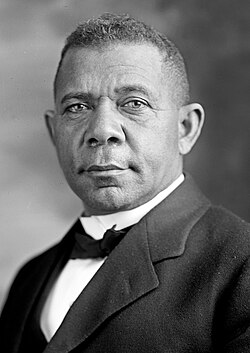
When Booker T. Washington of the Tuskegee Institute visited in 1912, he advised Bethune of the importance of gaining support from White benefactors for funding, suggesting ways of doing so.
Image source: Booker T. Washington
1918
% complete
The McLeod Hospital and its nurses were praised for their efforts during the 1918 influenza outbreak, serving the Black community of Daytona Beach.
1918
% complete
By 1918, Faith Hall was completed along with an additional two-story building and an auditorium, greatly expanding the facilities of Bethune's growing school.
1920
% complete
Starting in 1920, Bethune opened her school to visitors and tourists in Daytona Beach on Sundays, showing off her students' accomplishments, hosting national speakers on Black issues, and taking donations.
1923
% complete
Beginning in 1923, the Daytona School merged with the coeducational Cookman Institute; run by the Methodist church, the institute was the first Black college in Florida.
1925
% complete
The merger completed in 1925 and formed Daytona Cookman Collegiate Institute, a coeducational junior college.
1931
% complete
Through the Great Depression, the school, renamed Bethune-Cookman College in 1931, continued to operate and met the educational standards of the State of Florida.
1936 - 1942
% complete
From 1936 to 1942, Bethune had to cut back her time as president of Bethune-Cookman College because of her duties in Washington, D.C.
1941
% complete
By 1941, Bethune-Cookman College had developed a four-year curriculum and achieved full college status.
1942
% complete
By 1942, Bethune gave up the presidency of Bethune-Cookman College, as her health was adversely affected by her many responsibilities.
Image source: Bethune–Cookman University
1912
% complete
Mary McLeod Bethune joined the Equal Suffrage League, an organization branched off of the National Association of Colored Women, in 1912, advancing her activism for women's rights.
1917 - 1925
% complete
Bethune served as the Florida chapter president of the National Association of Colored Women from 1917 to 1925. The NACW had been formed in 1896 to promote the needs of Black women.
Image source: National Association of Colored Women's Clubs
1920 - 1925
% complete
The Southeastern Federation of Colored Women's Clubs elected Bethune as president after its first conference in 1920 at the Tuskegee Institute. The organization worked to improve opportunities for Black women.
1924 - 1928
% complete
She served as the 8th national president of the National Association of Colored Women's Clubs from 1924–1928, succeeding Hallie Quinn Brown, and implemented the purchase of headquarters at 1318 Vermont Avenue in Washington, D.C.
1924 - 1955
% complete
Bethune wrote prolifically, publishing in several periodicals from 1924 to 1955, sharing her views on education, race relations, and women's leadership.
1931
% complete
In 1931, Daytona's public hospital, Halifax, agreed to open a separate hospital for people of color, following years of advocacy including Bethune's pioneering McLeod Hospital.
1935
% complete
In 1935 Bethune founded the National Council of Negro Women (NCNW) in New York City, bringing together representatives of 28 different organizations to work to improve the lives of Black women and their communities. She also established the Aframerican Women's Journal, the flagship journal of the organization.
Image source: National Council of Negro Women
1938
% complete
In 1938, the NCNW hosted the White House Conference on Negro Women and Children, demonstrating the importance of Black women in democratic roles.
1938
% complete
At the Southern Conference on Human Welfare in 1938, held in Birmingham, Alabama, Eleanor Roosevelt requested a seat next to Bethune despite state segregation laws, a powerful symbol against Jim Crow.
Image source: Eleanor Roosevelt
Apr 25, 1944
% complete
Bethune co-founded the United Negro College Fund (UNCF) on April 25, 1944, with William J. Trent Jr. She helped with its initial fundraising efforts, which gathered around $900,000 (equivalent to $16,500,000 in 2025) in six months.
Image source: UNCF
1952
% complete
Bethune continued to refer philanthropists to the fund, and she joined the board of directors in 1952.
1928
% complete
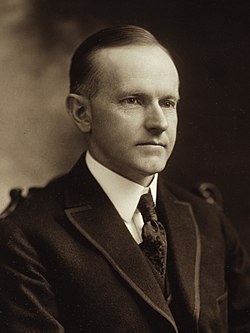
Gaining a national reputation, in 1928 Bethune was invited to attend the Child Welfare Conference called by Republican President Calvin Coolidge.
Image source: Calvin Coolidge
1930
% complete
In 1930, President Herbert Hoover appointed Bethune to the White House Conference on Child Health, recognizing her expertise in education and child welfare.
Image source: Herbert Hoover
1930
% complete
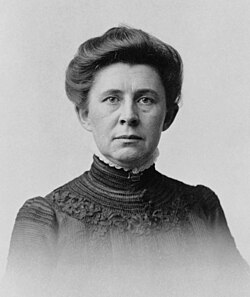
In 1930, journalist Ida Tarbell included Bethune as number 10 on her list of America's greatest women.
Image source: Ida Tarbell
1932
% complete
After working on the presidential campaign for Franklin Roosevelt in 1932, Bethune was appointed as a national advisor and worked with Roosevelt to create the Federal Council on Colored Affairs, also known as the Black Cabinet.
Image source: 1932 United States presidential election
1935
% complete
Shortly after joining the National Youth Administration in 1935, Bethune became the first Black woman to lead a federal agency when she was appointed by President Franklin D. Roosevelt. She earned a full-time staff position in 1936 as an assistant.
1939
% complete
The director of the NYA said in 1939: "No one can do what Mrs. Bethune does," acknowledging her unmatched effectiveness in advocating for minority youth.
Sep 19, 1942
% complete
On September 19, 1942, she gave the address at the Los Angeles, California, launching ceremony for the Liberty ship Booker T. Washington.
Image source: SS Booker T. Washington
1943
% complete
The National Youth Administration, where Bethune had served as a leading advisor and champion of minority involvement, was terminated in 1943.
Image source: National Youth Administration
1945
% complete
Bethune was the only Black woman present at the founding of the United Nations in San Francisco in 1945, representing the NAACP with W. E. B. Du Bois.
Image source: United Nations Conference on International Organization
1935
% complete
Bethune was awarded the Spingarn Medal in 1935 by the NAACP, one of the highest honors given to an African American for outstanding achievement.
Image source: Spingarn Medal
1949
% complete
In 1949, Bethune became the first woman to receive the National Order of Honour and Merit, Haiti's highest award, and also received Liberia's honor named after Tubman of Liberia in 1949.
May 18, 1955
% complete
On May 18, 1955, Mary McLeod Bethune died of a heart attack. The Christian Century suggested "the story of her life should be taught to every school child for generations to come." The New York Times noted she was "one of the most potent factors in the growth of interracial goodwill in America."
1973
% complete
In 1973, Bethune was inducted into the National Women's Hall of Fame, cementing her legacy as one of America's foremost women leaders.
Image source: National Women's Hall of Fame
Jul 10, 1974
% complete
On July 10, 1974, the anniversary of her 99th birthday, the Mary McLeod Bethune Memorial, by artist Robert Berks, was erected in her honor in Lincoln Park in Washington, D.C.
Image source: Mary McLeod Bethune Memorial
1976
% complete
In 1976, a portrait of Bethune, painted by artist Simmie Knox, was unveiled in the South Carolina House of Representatives.
Image source: Simmie Knox
1989
% complete
In 1989, Ebony magazine listed Bethune as one of the "50 Most Important Figures in Black American History".
Image source: Ebony (magazine)
1994
% complete
In 1994, the National Park Service acquired Bethune's last residence, the NACW Council House at 1318 Vermont Avenue, preserving it as a national historic site.
Image source: Mary McLeod Bethune
1999
% complete
In 1999, Ebony included Bethune as one of the "100 Most Fascinating Black Women of the 20th century".
2002
% complete
In 2002, scholar Molefi Kete Asante listed Bethune on his list of 100 Greatest African Americans.
2018
% complete
The Legislature of Florida in 2018 designated Bethune as the subject of one of Florida's two statues in the National Statuary Hall Collection, replacing Confederate General Edmund Kirby Smith.
2019
% complete
In 2019, Time created 89 new covers to celebrate women of the year starting from 1920; it chose Bethune for 1934.
Image source: Time (magazine)
2021
% complete
A statue of Bethune in Jersey City, New Jersey, was dedicated in 2021 in a namesake park across the street from the Mary McLeod Bethune Life Center.
Jul 13, 2022
% complete
The statue of Mary McLeod Bethune was unveiled on July 13, 2022, in the United States Capitol, making her the first Black American represented in the National Statuary Hall Collection.
Aug 18, 2022
% complete
A bronze copy of the marble statue was completed by the same artist, Nilda Comas, and erected in Daytona Beach's riverfront park beside the News-Journal Center on August 18, 2022.
Oct 1, 2024
% complete
Moody Bible Institute in Chicago, where Bethune had enrolled in 1894, dedicated the "Bethune-Fitzwater Educational Building" on October 1, 2024, honoring her legacy at her alma mater.
Dec 20, 2024
% complete
Bethune appears as a character in the 2024 war film The Six Triple Eight, where she is depicted attempting to persuade Roosevelt of the importance of delivering mail to soldiers fighting in Europe.
Image source: The Six Triple Eight
Or browse the full history timeline directory, with more than 2,000 topics.
This Mary McLeod Bethune timeline was generated with the help of AI, using information found on the internet.
We work hard to keep these timelines accurate, but mistakes do get through. If you spot one, email us at [email protected] and we'll fix it for future visitors.
Generate yours with AI or build it from scratch, for free.
Export your timeline, add your own events, edit or remove AI-generated events, and much more
No credit card required.
Cancel anytime.
Cancel anytime.
You can create an unlimited number of timelines with up to 10 events on each one, customize how they look, export them to PDF, PNG, PowerPoint, CSV, and Excel, and share them with a link. Paid plans raise the event limit and add features like spreadsheet imports and collaborators.
Yes. You can cancel your subscription from your account page at any time, and you will not be charged again. Your subscription stays active for the rest of the period you already paid for.
Yes. We will email you a reminder before the annual renewal, and we will also email you a receipt.
Yes. You can email us within 15 days of any payment, and we will issue you a full refund.
Check out our pricing docs or send us an email anytime: [email protected].