-
Use Cases
-
Resources
-
Pricing
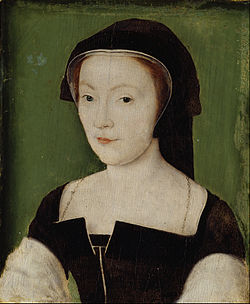
Mary Queen of Scots (Mary Stuart) was a monarch whose life spanned the courts of France and Scotland. Crowned Queen of Scotland as an infant in 1542, she later became Queen consort of France before returning to rule Scotland amid religious conflict and political scandal. Forced to abdicate in 1567, she fled to England, where she spent nearly two decades imprisoned by her cousin Elizabeth I before being executed for alleged involvement in plots against the English crown. More Less
Dec 8, 1542
% complete
Mary was born on 8 December 1542 at Linlithgow Palace, Scotland, to King James V and his French second wife, Mary of Guise. She became Queen of Scotland on 14 December 1542 upon her father's death.
Image source: Mary, Queen of Scots
Jul 1, 1543
% complete
When Mary was six months old, the Treaty of Greenwich was signed, which promised that, at the age of ten, Mary would marry Edward, Prince of England, and move to England, where Henry VIII could oversee her upbringing.
Jul 27, 1543
% complete
The Earl of Lennox escorted Mary and her mother to Stirling with 3,500 armed men for her safety and protection.
Sep 9, 1543
% complete
Mary was crowned in the castle chapel on 9 September 1543 with "such solemnity as they do use in this country, which is not very costly", according to the report of Ralph Sadler and Henry Ray.
May 1544
% complete
The English Earl of Hertford raided Edinburgh during the Rough Wooing, and the Scots took Mary to Dunkeld for safety from invading forces.
May 1546
% complete
Cardinal Beaton was murdered by Protestant lairds, deepening religious turmoil in Scotland during Mary's minority.
Sep 10, 1547
% complete
Nine months after the death of Henry VIII, the Scots suffered a heavy defeat at the Battle of Pinkie at the hands of English forces.
Feb 1548
% complete
Mary was moved, again for her safety, to Dumbarton Castle amid continuing English threats during the Rough Wooing.
Jul 7, 1548
% complete
A Scottish Parliament held at a nunnery near the town agreed to the French marriage treaty, betrothing Mary to Francis, the Dauphin of France.
Aug 7, 1548
% complete
The French fleet sent by Henry II, commanded by Nicolas de Villegagnon, sailed with Mary from Dumbarton on 7 August 1548 and arrived a week or more later in Brittany, where she would be safe from invading English forces.
1551
% complete
When Lady Fleming left France in 1551, she was succeeded by a French governess, Françoise de Paroy, who oversaw Mary's upbringing at court.
Apr 4, 1558
% complete
On 4 April 1558, Mary signed a secret agreement bequeathing Scotland and her claim to England to the French crown if she died without issue.
Apr 24, 1558
% complete
Mary married Francis, the Dauphin of France, becoming Dauphine of France and strengthening the Franco-Scottish alliance against England.
Nov 1558
% complete
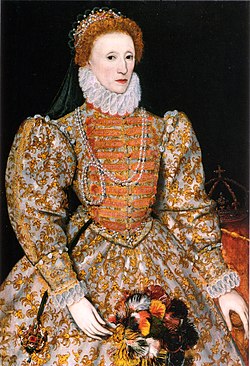
In November 1558, Henry VIII's elder daughter, Mary I of England, was succeeded by her only surviving sibling, Elizabeth I, whose legitimacy Catholics disputed, making Mary a rival claimant to the English throne.
Image source: Elizabeth I
Jul 10, 1559
% complete
When Henry II died on 10 July 1559 from injuries sustained in a joust, fifteen-year-old Francis and sixteen-year-old Mary became king and queen consort of France.
Dec 5, 1560
% complete
Francis II died on 5 December 1560 of a middle-ear infection that led to an abscess in his brain, leaving Mary widowed after less than a year as queen consort.
1560
% complete
In early 1560, the Protestant lords invited English troops into Scotland in an attempt to secure Protestantism during Mary's absence in France.
Jun 11, 1560
% complete
On 11 June 1560, Mary's mother died, making the question of future Franco-Scots relations a pressing one.
Image source: Mary of Guise
Jul 6, 1560
% complete
Under the terms of the Treaty of Edinburgh, signed by Mary's representatives on 6 July 1560, France and England undertook to withdraw their troops from Scotland.
Aug 19, 1561
% complete
Widowed, Mary returned to Scotland nine months later, arriving in Leith on 19 August 1561 to take up personal rule of her kingdom.
Sep 6, 1561
% complete
Her privy council of 16 men was appointed on 6 September 1561, retaining those who already held offices of state. It was dominated by Protestant leaders including the Earls of Argyll, Glencairn, and Moray.
1562
% complete
Mary joined with Moray in the destruction of Scotland's leading Catholic magnate, Lord Huntly, in 1562, after he led a rebellion against her in the Highlands.
Dec 1563
% complete
Even the one significant later addition to the council, Lord Ruthven in December 1563, was another Protestant whom Mary personally disliked.
Feb 17, 1565
% complete
Mary next met her half-cousin Henry Stuart, Lord Darnley, on Saturday 17 February 1565 at Wemyss Castle in Scotland; the two quickly fell in love.
Image source: Henry Stuart, Lord Darnley
Jul 29, 1565
% complete
Mary married Darnley at Holyrood Palace on 29 July 1565, even though both were Catholic and a papal dispensation for the marriage of first cousins had not been obtained.
Aug 26, 1565
% complete
Mary set out from Edinburgh on 26 August 1565 to confront rebel lords led by Moray who opposed her marriage, an episode known as the Chaseabout Raid.
Jun 19, 1566
% complete
Mary's son by Darnley, James, was born on 19 June 1566 in Edinburgh Castle. He would later reign as James VI of Scotland and James I of England.
Image source: James VI and I
Oct 1566
% complete
While staying at Jedburgh, Mary made a journey on horseback of at least four hours each way to visit the Earl of Bothwell at Hermitage Castle, where he lay ill from wounds sustained in a skirmish.
Nov 30, 1566
% complete
At Craigmillar Castle, near Edinburgh, at the end of November 1566, Mary and leading nobles held a meeting to discuss the "problem of Darnley", whose behavior had grown intolerable.
Image source: Craigmillar Castle
Feb 9, 1567 - Feb 10, 1567
% complete
In February 1567, Darnley's residence was destroyed by an explosion, and he was found murdered in the nearby garden. James Hepburn, 4th Earl of Bothwell, was generally believed to have orchestrated the death.
Image source: Murder of Lord Darnley
Apr 1567 - May 1567
% complete
James Hepburn, 4th Earl of Bothwell, was acquitted of the charge of murdering Darnley in April 1567, and in the following month he married Mary.
Image source: James Hepburn, 4th Earl of Bothwell
Jul 24, 1567
% complete
In July 1567, Mary was forced to abdicate in favour of her one-year-old son, who became James VI of Scotland, ending her reign as Queen of Scotland.
May 2, 1568
% complete
On 2 May 1568, Mary escaped from Lochleven Castle with the aid of George Douglas, brother of William Douglas, the castle's owner.
Image source: Lochleven Castle
Jul 1568
% complete
In mid-July 1568, English authorities moved Mary to Bolton Castle, because it was farther from the Scottish border but not too close to London.
Image source: Bolton Castle
Oct 1568 - Jan 1569
% complete
A commission of inquiry, or conference, was held in York and later Westminster between October 1568 and January 1569, where the casket letters allegedly implicating Mary in Darnley's murder were examined but never conclusively proven genuine.
Image source: Casket letters
Jan 26, 1569
% complete
On 26 January 1569, Mary was moved to Tutbury Castle and placed in the custody of George Talbot, 6th Earl of Shrewsbury, and his wife Bess of Hardwick.
Image source: Tutbury Castle
May 1569
% complete
In May 1569, Elizabeth attempted to mediate the restoration of Mary in return for guarantees of the Protestant religion, but a convention held at Perth rejected the deal overwhelmingly.
Oct 1569 - Aug 1570
% complete
The Duke of Norfolk continued to scheme for a marriage with Mary, and Elizabeth imprisoned him in the Tower of London between October 1569 and August 1570.
Image source: Thomas Howard, 4th Duke of Norfolk
1571
% complete
In 1571, Cecil and Walsingham uncovered the Ridolfi Plot, a plan to replace Elizabeth with Mary with the help of Spanish troops and the Duke of Norfolk.
Image source: Ridolfi plot
1584
% complete
After the Throckmorton Plot of 1583, Walsingham introduced the Bond of Association and the Act for the Queen's Safety, which sanctioned the killing of anyone who plotted against Elizabeth and aimed to prevent a putative successor from profiting from her murder.
1584
% complete
In 1584, Mary proposed an "association" with her son, James, seeking to share or transfer royal authority while she remained in captivity.
Feb 1585
% complete
In February 1585, William Parry was convicted of plotting to assassinate Elizabeth, without Mary's knowledge, although her agent Thomas Morgan was implicated.
Aug 11, 1586
% complete
On 11 August 1586, after being implicated in the Babington Plot to assassinate Elizabeth, Mary was arrested while out riding and taken to Tixall Hall in Staffordshire.
Image source: Babington Plot
Oct 1586
% complete
After eighteen and a half years in captivity, Mary was found guilty of plotting to assassinate Elizabeth I in 1586, sealing her fate.
Image source: Execution of Mary, Queen of Scots
Feb 1, 1587
% complete
On 1 February 1587, Elizabeth signed the death warrant and entrusted it to William Davison, a privy councillor, setting the execution in motion.
Feb 8, 1587
% complete
At Fotheringhay, on the evening of 7 February 1587, Mary was told she was to be executed the next morning. She was beheaded on 8 February 1587 at Fotheringhay Castle, ending her life after decades of imprisonment.
Image source: Fotheringhay Castle
Or browse the full history timeline directory, with more than 2,000 topics.
This Mary Queen of Scots timeline was generated with the help of AI, using information found on the internet.
We work hard to keep these timelines accurate, but mistakes do get through. If you spot one, email us at [email protected] and we'll fix it for future visitors.
Generate yours with AI or build it from scratch, for free.
Export your timeline, add your own events, edit or remove AI-generated events, and much more
No credit card required.
Cancel anytime.
Cancel anytime.
You can create an unlimited number of timelines with up to 10 events on each one, customize how they look, export them to PDF, PNG, PowerPoint, CSV, and Excel, and share them with a link. Paid plans raise the event limit and add features like spreadsheet imports and collaborators.
Yes. You can cancel your subscription from your account page at any time, and you will not be charged again. Your subscription stays active for the rest of the period you already paid for.
Yes. We will email you a reminder before the annual renewal, and we will also email you a receipt.
Yes. You can email us within 15 days of any payment, and we will issue you a full refund.
Check out our pricing docs or send us an email anytime: [email protected].