-
Use Cases
-
Resources
-
Pricing
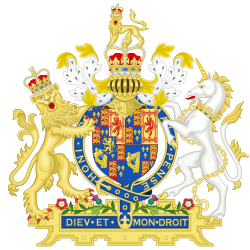
Queen Anne was the Queen of England, Scotland, and Ireland from 8 March 1702, and of Great Britain after the Acts of Union 1707 merged the two kingdoms. She was the last Stuart monarch and died in 1714 without a surviving heir, leading to the succession of George I of Hanover under the Act of Settlement 1701. More Less
Feb 6, 1665
% complete
Anne was born at 11:39 pm on 6 February 1665 at St James's Palace, London, the fourth child and second daughter of the Duke of York (later King James II) and his first wife, Anne Hyde.
Image source: Anne, Queen of Great Britain
1669
% complete
Following her grandmother's death in 1669, Anne lived with an aunt, Henrietta Anne, Duchess of Orléans.
1670
% complete
On the sudden death of her aunt in 1670, Anne returned to England.
1671
% complete
Around 1671, Anne first made the acquaintance of Sarah Jennings, who later became her close friend and one of her most influential advisors.
Image source: Sarah Churchill, Duchess of Marlborough
1673
% complete
In 1673, James's conversion to Catholicism became public, and he married a Catholic princess, Mary of Modena, who was only six and a half years older than Anne.
Image source: James II of England
Nov 1677
% complete
In November 1677, Anne's sister Mary married their Dutch first cousin William III of Orange at St James's Palace, but Anne could not attend because she was confined to her room with smallpox.
Image source: William III of England
Mar 1679
% complete
The Duke and Duchess of York retired to Brussels in March 1679 in the wake of anti-Catholic hysteria fed by the Popish Plot, and Anne visited them from the end of August.
Image source: Popish Plot
Dec 1680
% complete
Anne's second cousin George of Hanover visited London for three months from December 1680, sparking rumours of a potential marriage between them.
Image source: George I of Great Britain
Jul 1681 - May 1682
% complete
Anne joined her parents at Holyrood Palace in Edinburgh from July 1681 until May 1682.
Jul 28, 1683
% complete
Bishop Compton officiated at Anne and George of Denmark's wedding on 28 July 1683 in the Chapel Royal at St James's Palace. George was a Lutheran.
Image source: Prince George of Denmark
1685
% complete
When Charles II died in 1685, Anne's father became King James II of England and VII of Scotland.
Image source: Glorious Revolution
1694
% complete
When Mary died of smallpox in 1694, William continued to reign alone until his own death in 1702, when Anne succeeded him.
Image source: Mary II of England
Mar 8, 1702
% complete
Anne became queen upon the death of King William III on 8 March 1702, and was immediately popular. She adopted the motto semper eadem ('always the same').
Apr 23, 1702
% complete
Nov 1703
% complete
After the Great Storm of 1703, one of the most severe natural disasters ever recorded in southern Britain, Anne declared a general fast to implore God 'to pardon the crying sins of this nation'.
Image source: Great storm of 1703
Nov 29, 1708
% complete
Anne appointed the moderate Earl of Pembroke on 29 November 1708.
Image source: Thomas Herbert, 8th Earl of Pembroke
Jul 30, 1714
% complete
She was rendered unable to speak by a stroke on 30 July 1714, the anniversary of Gloucester's death, and on the advice of the Privy Council handed the treasurer's staff of office to Whig grandee Charles Talbot, 1st Duke of Shrewsbury.
Image source: Charles Talbot, 1st Duke of Shrewsbury
Aug 1, 1714
% complete
Anne died around 7:30 am on 1 August 1714, aged 49.
1687
% complete
In early 1687, within a matter of days, Anne miscarried, her husband caught smallpox, and their two young daughters died of the same infection.
Apr 1688
% complete
Anne had another miscarriage in April 1688, and left London to recuperate in the spa town of Bath.
Jul 24, 1689
% complete
On 24 July 1689, Anne gave birth to a son, Prince William, Duke of Gloucester, who, though ill, survived infancy.
Image source: Prince William, Duke of Gloucester
Mar 1693
% complete
Later that year, Anne moved to Berkeley House in Piccadilly, London, where she had a stillborn daughter in March 1693.
Jan 25, 1700
% complete
Anne's final pregnancy ended on 25 January 1700 with a stillbirth. She had experienced bouts of 'gout' from at least 1698.
Jul 30, 1700
% complete
Anne's sole surviving child, the Duke of Gloucester, died at age 11 on 30 July 1700, leaving Anne the only person remaining in the line of succession established by the Bill of Rights 1689.
Jul 1708
% complete
In July 1708, a bawdy poem written by a Whig propagandist, probably Arthur Maynwaring, came to court implying a lesbian relationship between Anne and Abigail Hill.
Image source: Abigail Masham, Baroness Masham
Oct 1708
% complete
Anne was devastated by Prince George's death in October 1708, and it proved a turning point in her relationship with the Duchess of Marlborough.
Oct 1709
% complete
Sarah continued to berate Anne for her friendship with Abigail and, in October 1709, Anne wrote to the Duke of Marlborough asking that his wife 'leave off teasing & tormenting me & behave herself with the decency she ought both to her friend and Queen'.
Apr 6, 1710
% complete
On Maundy Thursday, 6 April 1710, Anne and Sarah saw each other for the last time.
Jan 1711
% complete
In January 1711, Anne forced Sarah to resign her court offices, and Abigail took over as Keeper of the Privy Purse.
Jan 1713 - Jul 1713
% complete
Anne was unable to walk between January and July 1713. She recovered, but was seriously ill again in March 1714.
Jun 10, 1688
% complete
Anne's stepmother gave birth to a son, James Francis Edward Stuart, on 10 June 1688, making a Catholic succession more likely.
Image source: James Francis Edward Stuart
Nov 5, 1688
% complete
William of Orange invaded England on 5 November 1688 in the Glorious Revolution, which ultimately deposed King James. Anne was aware of the plans to invade through correspondence with her sister Mary.
Jan 1689
% complete
In January 1689, a Convention Parliament assembled in England and declared that James had effectively abdicated when he fled, and that the thrones of England and Ireland were therefore vacant.
Image source: Convention Parliament (1689)
1689
% complete
The Bill of Rights 1689 and Claim of Right Act 1689 settled the succession, establishing William and Mary as joint monarchs with Anne next in line.
Image source: Bill of Rights 1689
Jan 1692
% complete
In January 1692, suspecting that Marlborough was secretly conspiring with James's followers, the Jacobites, William and Mary dismissed him from all his offices.
Image source: John Churchill, 1st Duke of Marlborough
1701
% complete
To address the succession crisis and preclude a Catholic restoration, Parliament enacted the Act of Settlement 1701, providing that the Crown would go to Sophia of Hanover and her Protestant descendants, excluding all Catholics.
Image source: Act of Settlement 1701
Sep 1701
% complete
Anne's father, James II, died in exile in September 1701.
Oct 1702 - Feb 1703
% complete
Anne had declared it 'very necessary' to conclude a union of England and Scotland in her first speech to the English Parliament. A joint commission met at the Cockpit from October 1702, breaking up in early February 1703 having failed to reach agreement.
Image source: Acts of Union 1707
1704
% complete
The Duke of Marlborough won a great victory at the Battle of Blenheim in 1704 during the War of the Spanish Succession. The Whigs vigorously supported the war and became even more influential afterwards.
Image source: Battle of Blenheim
1706
% complete
In 1706, Godolphin and the Marlboroughs forced Anne to accept Lord Sunderland, a Junto Whig and the Marlboroughs' son-in-law, as Secretary of State for the Southern Department.
Image source: Robert Harley, 1st Earl of Oxford and Earl Mortimer
1706
% complete
After England's Alien Act 1705 threatened economic sanctions, Scotland chose union. New commissioners were appointed by Queen Anne in early 1706, and the articles of union were presented to her on 23 July 1706.
Jan 16, 1707 - Mar 6, 1707
% complete
The articles of union were ratified by the Scottish Parliament on 16 January 1707 and by the English Parliament on 6 March 1707.
May 1, 1707
% complete
Under the Acts of Union, England and Scotland were united into a single kingdom called Great Britain, with one parliament, on 1 May 1707. The union was heraldically expressed by placing the arms of England and Scotland side by side.
Image source: Kingdom of Great Britain
1708
% complete
Anne withheld royal assent from the Scottish Militia Bill 1708 in case the militia raised in Scotland was disloyal and sided with the Jacobites.
Image source: Scottish Militia Bill
1708
% complete
As a result of the Jacobite invasion scare, support for the Tories fell and the Whigs were able to secure a majority in the 1708 British general election.
Image source: 1708 British general election
Feb 8, 1708
% complete
The division within the ministry came to a head on 8 February 1708, when Godolphin and the Marlboroughs insisted that the Queen had to either dismiss Harley or do without their services.
Image source: Sidney Godolphin, 1st Earl of Godolphin
Nov 1709
% complete
Another month of arguments followed before the Queen finally consented to put Orford in control of the Admiralty as First Lord in November 1709.
Image source: Edward Russell, 1st Earl of Orford
Jun 1710
% complete
The Queen, increasingly disdainful of the Marlboroughs and her ministry, finally took the opportunity to dismiss Sunderland in June 1710.
Image source: Charles Spencer, 3rd Earl of Sunderland
Apr 1711
% complete
The elder brother of Archduke Charles, Emperor Joseph I, died in April 1711 and Charles succeeded him in Austria, Hungary and the Holy Roman Empire, altering the balance of the War of the Spanish Succession.
Image source: Charles VI, Holy Roman Emperor
Sep 1712
% complete
Godolphin's death from natural causes in September 1712 reduced Anne to tears; she blamed their estrangement on the Marlboroughs.
1714
% complete
Harley and the Tory Secretary of State Lord Bolingbroke were in separate and secret discussions with Anne's half-brother about a possible Stuart restoration until early 1714, fuelled by Anne's refusals to permit any Hanoverians to visit England.
Image source: Henry St John, 1st Viscount Bolingbroke
Jul 27, 1714
% complete
By July 1714, Anne had lost confidence in Harley, complaining he neglected business, could not be understood, often came drunk, and behaved disrespectfully. On 27 July 1714 she dismissed him as Lord Treasurer.
Aug 1, 1714
% complete
Electress Sophia of Hanover had died on 28 May 1714, so Sophia's son, George, Elector of Hanover, succeeded pursuant to the Act of Settlement 1701. His accession was relatively stable: a Jacobite rising in 1715 failed.
Or browse the full history timeline directory, with more than 2,000 topics.
This Queen Anne timeline was generated with the help of AI, using information found on the internet.
We work hard to keep these timelines accurate, but mistakes do get through. If you spot one, email us at [email protected] and we'll fix it for future visitors.
Generate yours with AI or build it from scratch, for free.
Export your timeline, add your own events, edit or remove AI-generated events, and much more
No credit card required.
Cancel anytime.
Cancel anytime.
You can create an unlimited number of timelines with up to 10 events on each one, customize how they look, export them to PDF, PNG, PowerPoint, CSV, and Excel, and share them with a link. Paid plans raise the event limit and add features like spreadsheet imports and collaborators.
Yes. You can cancel your subscription from your account page at any time, and you will not be charged again. Your subscription stays active for the rest of the period you already paid for.
Yes. We will email you a reminder before the annual renewal, and we will also email you a receipt.
Yes. You can email us within 15 days of any payment, and we will issue you a full refund.
Check out our pricing docs or send us an email anytime: [email protected].