-
Use Cases
-
Resources
-
Pricing
Queen Victoria (1819–1901) was Queen of the United Kingdom of Great Britain and Ireland from 1837 until her death in 1901. Her 63-year reign, the longest of any British monarch at the time, spanned a period of industrial, political, scientific, and military change within the United Kingdom and was marked by a great expansion of the British Empire. This period became known as the Victorian Era. More Less
May 24, 1819
% complete
Princess Alexandrina Victoria was born at Kensington Palace in London, the only child of Prince Edward, Duke of Kent, and Princess Victoria of Saxe-Coburg-Saalfeld. At birth she was fifth in line to the British throne.
Image source: Queen Victoria
Jan 23, 1820
% complete
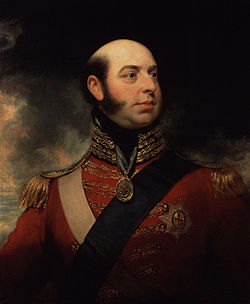
Victoria's father, the Duke of Kent, died when she was less than a year old, leaving her raised by her mother in relative isolation at Kensington Palace amid a succession crisis over who might inherit the crown.
Image source: Prince Edward, Duke of Kent and Strathearn
Jun 26, 1830
% complete
The death of George IV brought his brother William IV to the throne, making the young Victoria heir presumptive. She was educated carefully under the Kensington System devised by her mother and Sir John Conroy.
Image source: William IV
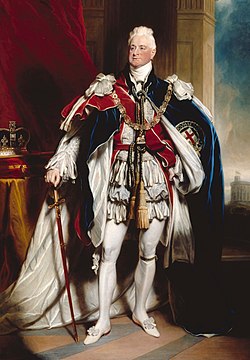
Jun 20, 1837
% complete
King William IV died without legitimate surviving children, and 18-year-old Victoria became Queen of the United Kingdom of Great Britain and Ireland, beginning what would become the longest reign in British history at that time.
Image source: Coronation of Queen Victoria
Jul 13, 1837
% complete
Victoria became the first sovereign to make Buckingham Palace her official London residence, moving in three weeks after her accession and establishing it as the ceremonial heart of the British monarchy.
Image source: Buckingham Palace
Jun 28, 1838
% complete
Victoria was crowned at Westminster Abbey in a ceremony attended by huge crowds. Despite some mishaps during the service, it was widely celebrated as a joyous occasion marking the start of a new era.
Jun 20, 1837 - 1841
% complete
Lord Melbourne, her first prime minister, became a close political mentor to the young queen, teaching her constitutional principles and government business during the early, formative years of her reign.
Image source: William Lamb, 2nd Viscount Melbourne
May 19, 1840 - 1882
% complete
Victoria survived at least eight attempted assassinations or attacks during her reign, including Edward Oxford's shots in 1840 and Robert Pate's assault in 1850. Her calm courage in these incidents boosted her public popularity.
Aug 29, 1842
% complete
Britain's victory over Qing China ended the First Opium War. China ceded Hong Kong Island to the British Crown, opening treaty ports and expanding British commercial influence in Asia early in Victoria's reign.
Image source: Treaty of Nanking
May 1, 1851 - Oct 11, 1851
% complete
Organized largely by Prince Albert, the Great Exhibition showcased industrial and cultural achievements from around the world in Joseph Paxton's revolutionary glass structure in Hyde Park, attracting over six million visitors.
Image source: Great Exhibition
Oct 16, 1853 - Feb 1, 1856
% complete
Britain and France joined the Ottoman Empire against Russia in a costly war fought mainly on the Crimean Peninsula. Florence Nightingale's nursing reforms there transformed military medicine, and the war ended with the Treaty of Paris.
Image source: Crimean War
May 10, 1857 - Nov 1, 1858
% complete
A widespread uprising against British East India Company rule shook northern India. Its suppression led directly to the dissolution of the Company and the transfer of India to direct Crown control.
Image source: Indian Rebellion of 1857
Aug 2, 1858
% complete
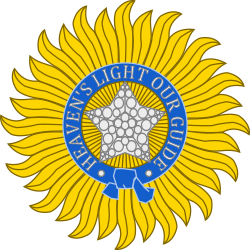
Following the rebellion, Parliament abolished East India Company rule and made India a territory governed directly by the British Crown, with Victoria proclaimed Empress of India two decades later.
Image source: Government of India Act 1858
Jan 1, 1877
% complete
Championed by Prime Minister Benjamin Disraeli, Victoria assumed the title 'Empress of India', formalizing Britain's imperial relationship with the subcontinent and reflecting the growing grandeur of the British Empire.
Image source: Emperor of India
Jun 13, 1878 - Jul 13, 1878
% complete
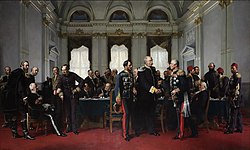
Disraeli represented Britain at the Congress of Berlin, which revised the Treaty of San Stefano, checked Russian influence in the Balkans, and acquired Cyprus for Britain — boosting Disraeli and Victoria's imperial prestige.
Image source: Congress of Berlin
Nov 21, 1878 - Sep 3, 1880
% complete
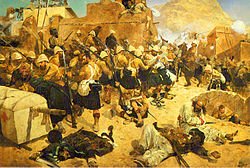
Britain fought Afghanistan to counter perceived Russian expansion toward India, installing a friendly Amir and securing British control of Afghan foreign policy before withdrawing most forces.
Image source: Second Anglo-Afghan War
Oct 11, 1899 - May 31, 1902
% complete
War broke out between the British Empire and the Boer republics of the Transvaal and Orange Free State. The costly conflict strained Britain late in Victoria's reign and foreshadowed debates about imperialism.
Image source: Second Boer War
Oct 15, 1839
% complete
As queen, Victoria had to be the one to propose. She asked Prince Albert, her first cousin from Coburg, to marry her, and he accepted; they had first met again just days earlier and quickly fell deeply in love.
Image source: Descendants of Queen Victoria
Feb 10, 1840
% complete
Victoria married Albert in the Chapel Royal at St James's Palace. She wore a white wedding dress that helped popularize white bridal fashion. The marriage proved deeply loving and devoted until Albert's death.
Image source: Wedding of Queen Victoria and Prince Albert
Nov 21, 1840
% complete
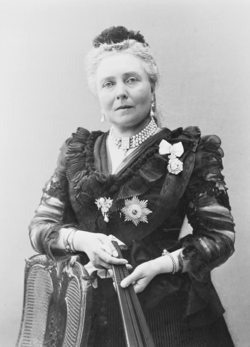
The couple's first child, Victoria, was born at Buckingham Palace. She would later marry German Crown Prince Friedrich and become Empress of Germany, mother of Kaiser Wilhelm II.
Image source: Victoria, Princess Royal
Nov 9, 1841
% complete
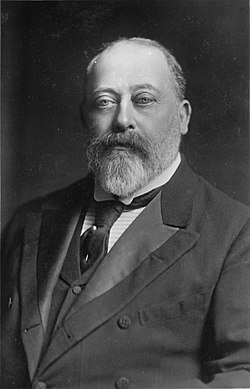
The birth of the heir apparent, Albert Edward, secured the succession. He would eventually succeed his mother as King Edward VII after the longest wait of any heir apparent up to that time.
Image source: Edward VII
Apr 14, 1857
% complete
Princess Beatrice completed Victoria and Albert's family of nine children. Through strategic marriages, their descendants spread across Europe's royal houses, earning Victoria the nickname 'the grandmother of Europe'.
Image source: Princess Beatrice of the United Kingdom
Dec 14, 1861
% complete
Prince Albert died at Windsor Castle aged 42, likely of typhoid fever. Devastated by grief, Victoria withdrew from public life for years, wore black mourning dress for the rest of her life, and relied increasingly on Disraeli and others.
Image source: Prince Albert of Saxe-Coburg and Gotha
Mar 29, 1871
% complete
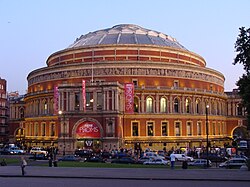
Victoria opened the hall built as a memorial to Prince Albert, part of the Albertopolis complex of cultural institutions in South Kensington that he had envisioned.
Image source: Royal Albert Hall
Jun 20, 1887 - Jun 22, 1887
% complete
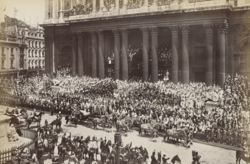
Fifty years into her reign, Victoria celebrated with processions, banquets, and visits from foreign royalty. The festivities marked her full return to public life and renewed affection across Britain and the Empire.
Image source: Golden Jubilee of Queen Victoria
Jun 22, 1897
% complete
The Diamond Jubilee was a vast celebration of empire, with troops from across the dominions parading through London. It showcased the height of British imperial power as Victoria reigned over roughly a quarter of the world's population.
Image source: Diamond Jubilee of Queen Victoria
1901
% complete
Through the marriages of her nine children, Victoria's descendants occupied thrones across Europe, including Germany, Russia, Spain, and Greece. Her genetic legacy also famously passed haemophilia into several royal families.
Jan 22, 1901
% complete
Victoria died aged 81 at Osborne House on the Isle of Wight after a short decline in health. She had reigned for nearly 64 years, and her death ended an era; her son succeeded her as King Edward VII.
Image source: Death and state funeral of Queen Victoria
Jan 22, 1901 - May 6, 1910
% complete
Her son Edward VII ushered in the Edwardian era, but Victoria's long reign had already defined an age — the Victorian era — associated with industrial expansion, imperial power, strict moral codes, and profound social change.
Image source: Edwardian era
Feb 2, 1901
% complete
After a massive state funeral, Victoria was laid to rest beside Prince Albert in the Royal Mausoleum at Frogmore, Windsor, as mourners lined the route through London and naval guns saluted along the procession path.
Image source: Royal Burial Ground, Frogmore
Or browse the full history timeline directory, with more than 2,000 topics.
This Queen Victoria timeline was generated with the help of AI, using information found on the internet.
We work hard to keep these timelines accurate, but mistakes do get through. If you spot one, email us at [email protected] and we'll fix it for future visitors.
Generate yours with AI or build it from scratch, for free.
Export your timeline, add your own events, edit or remove AI-generated events, and much more
No credit card required.
Cancel anytime.
Cancel anytime.
You can create an unlimited number of timelines with up to 10 events on each one, customize how they look, export them to PDF, PNG, PowerPoint, CSV, and Excel, and share them with a link. Paid plans raise the event limit and add features like spreadsheet imports and collaborators.
Yes. You can cancel your subscription from your account page at any time, and you will not be charged again. Your subscription stays active for the rest of the period you already paid for.
Yes. We will email you a reminder before the annual renewal, and we will also email you a receipt.
Yes. You can email us within 15 days of any payment, and we will issue you a full refund.
Check out our pricing docs or send us an email anytime: [email protected].