-
Use Cases
-
Resources
-
Pricing
Marie Curie (1867–1934) was a Polish-born physicist and chemist who pioneered research on radioactivity. She was the first woman to win a Nobel Prize, the first person to win Nobel Prizes in two different sciences, and the discoverer of the elements polonium and radium. Her work laid foundations for cancer treatment and nuclear physics. More Less
Nov 7, 1867
% complete
Maria Salomea Skłodowska was born in Warsaw, Poland, the youngest of five children of teachers Bronisława and Władysław Skłodowski. Her family valued education despite political repression under Russian rule, laying the foundation for her future scientific career.
Image source: Marie Curie
1876
% complete
Marie's eldest sister Zofia died of typhus contracted from a boarder at the family's boarding school. Two years later, her mother died of tuberculosis. These early losses deeply affected Marie and strengthened her determination and resilience.
Jun 12, 1883
% complete
Maria graduated from her gymnasium with a gold medal at age 15. Because women were not permitted to attend university in Russian-controlled Poland at the time, she could not immediately pursue higher education.
1885 - 1888
% complete
Maria attended the illegal 'Flying University,' an underground Polish educational institution that offered classes to women and others excluded from formal universities. She studied there while working as a governess to support her family.
Image source: Flying University
1886 - 1890
% complete
Maria took positions as a governess, including one near Płock where she taught children of the Żorawski family. She used her savings to fund her sister Bronisława's medical studies in Paris, with an agreement that Bronisława would later support hers.
Nov 1891 - 1894
% complete
Maria moved to Paris and enrolled at the Sorbonne, studying physics, chemistry, and mathematics. She initially lived frugally, sometimes fainting from hunger, but excelled academically, earning degrees in physics (1893) and mathematics (1894).
Image source: University of Paris
1894
% complete
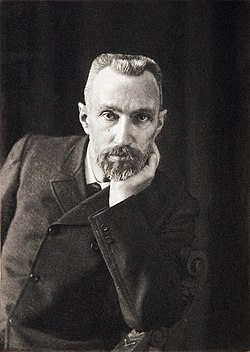
Maria met physicist Pierre Curie while searching for laboratory space for a commissioned study on the magnetic properties of steels. Their shared passion for science led to a deep partnership, both professional and personal.
Image source: Pierre Curie
Jul 26, 1895
% complete
Maria married Pierre Curie in a simple civil ceremony in Sceaux, France, wearing a dark blue outfit she could later wear in the laboratory. The newlyweds honeymooned by bicycle and began their scientific collaboration.
Sep 12, 1897
% complete
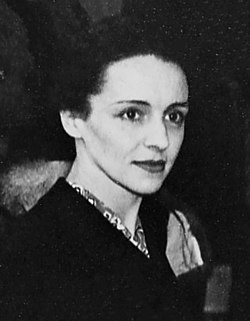
Marie gave birth to her first daughter, Irène, who would later also become a Nobel laureate in chemistry. Marie balanced motherhood with intensive research work in a makeshift laboratory.
Image source: Irène Joliot-Curie
Dec 6, 1904
% complete
Marie's second daughter, Ève, was born in Paris. Ève would later write the acclaimed biography 'Madame Curie' and become a pianist, journalist, and humanitarian.
Image source: Ève Curie
1897 - 1903
% complete
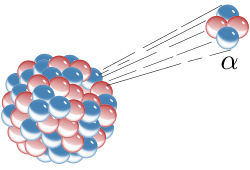
Curie chose the investigation of uranium rays, recently discovered by Henri Becquerel, as her doctoral thesis. She demonstrated that this radiation was an atomic property rather than a chemical reaction, pioneering the concept of radioactivity—a term she coined.
Image source: Radioactive decay
Jul 1898
% complete
While analyzing pitchblende ore with Pierre, Marie Curie identified a new radioactive element, which they named polonium after her native Poland. The discovery was announced by the French Academy of Sciences on July 18, 1898.
Image source: Polonium
Dec 1898
% complete
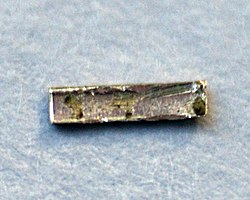
The Curies announced the discovery of radium, an intensely radioactive element far more powerful than uranium or polonium. To prove its existence conclusively, Marie undertook years of painstaking work processing tons of pitchblende residue.
Image source: Radium
1902 - 1910
% complete
Marie Curie succeeded in isolating a decigram of nearly pure radium chloride and determining radium's atomic weight, providing irrefutable evidence for its existence. By 1910 she isolated pure metallic radium with André Debierne.
1910
% complete
Curie published her comprehensive two-volume treatise 'Traité de Radioactivité,' summarizing a decade of research and establishing the theoretical foundations of the new science of radioactivity.
Oct 30, 1911 - Nov 3, 1911
% complete
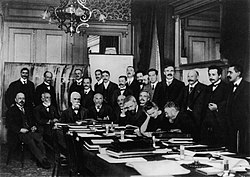
Curie attended the first Solvay Conference on physics in Brussels alongside Einstein, Planck, and other leading physicists, discussing quantum theory. She was the only woman among the participants.
Image source: Solvay Conference
1914
% complete
The Radium Institute (now Institut Curie) opened in Paris with four laboratories dedicated to physics, chemistry, and medicine, with Curie as its director. It became a world center for radioactivity research and cancer treatment.
Image source: Curie Institute (Paris)
Dec 10, 1903
% complete
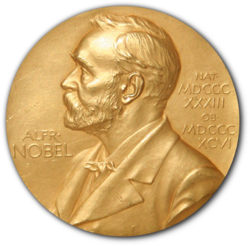
Marie Curie shared the 1903 Nobel Prize in Physics with Pierre Curie and Henri Becquerel for research on radiation phenomena. She became the first woman ever awarded a Nobel Prize, though initially the committee intended to exclude her until Pierre insisted her contributions be recognized.
Image source: Nobel Prize in Physics
May 13, 1906
% complete
Marie Curie assumed Pierre's chair at the Sorbonne, delivering her first lecture on November 5, 1906, to a packed amphitheater. Her appointment broke a major gender barrier in French academia.
1911
% complete
Marie Curie won the 1911 Nobel Prize in Chemistry for the discovery of polonium and radium and the isolation of radium. She became the first person to win Nobel Prizes in two different sciences—a distinction she still uniquely holds among multiple disciplines.
May 1921 - Jun 1921
% complete
At President Warren G. Harding's invitation, Curie toured the United States, where American women had raised funds to purchase a gram of radium for her research. She received the radium from President Harding at the White House and visited numerous cities.
1935
% complete
Irène Joliot-Curie and her husband Frédéric Joliot-Curie won the 1935 Nobel Prize in Chemistry for discovering artificial radioactivity, extending her parents' legacy into a new generation of nuclear science.
Apr 19, 1906
% complete
Pierre Curie was struck and killed by a horse-drawn wagon on rue Dauphine in Paris during rainy weather. Devastated, Marie took over his professorship at the Sorbonne, becoming the first female professor at the University of Paris.
Jan 1911
% complete
Curie narrowly lost her bid to become the first woman elected to the French Academy of Sciences, losing to Édouard Branly amid xenophobic and misogynistic press attacks fueled partly by her relationship with physicist Paul Langevin.
Image source: French Academy of Sciences
1914 - 1918
% complete
During World War I, Curie developed mobile radiography units—nicknamed 'petites Curies'—to bring X-ray imaging to field hospitals near the front lines. She personally drove vehicles and trained some 150 women as radiological assistants, helping treat over a million wounded soldiers.
Image source: Marie Curie
1916 - 1918
% complete
Recognizing the shortage of qualified medical personnel, Curie established training programs teaching women anatomy, radiography techniques, and car maintenance, creating a corps of skilled X-ray operators for military hospitals.
1932
% complete
Curie helped establish the Radium Institute in Warsaw, fulfilling a dream of giving her homeland a major research center. Her sister Bronisława served as its director, and the institute became a leading Polish oncology facility.
Image source: Maria Skłodowska-Curie National Research Institute of Oncology
1934 - Jul 1934
% complete
Suffering from aplastic anemia attributed to prolonged exposure to radiation, Curie made her last visit to her laboratories in Sceaux in June 1934 before traveling to a sanatorium in Passy, France.
Jul 4, 1934
% complete
Marie Curie died of aplastic anemia at the Sancellemoz sanatorium in Passy, Haute-Savoie, France, at age 66. Her death resulted from cumulative radiation exposure, and even her notebooks remain radioactive and are stored in lead-lined boxes.
Or browse the full history timeline directory, with more than 2,000 topics.
This Marie Curie timeline was generated with the help of AI, using information found on the internet.
We work hard to keep these timelines accurate, but mistakes do get through. If you spot one, email us at [email protected] and we'll fix it for future visitors.
Generate yours with AI or build it from scratch, for free.
Export your timeline, add your own events, edit or remove AI-generated events, and much more
No credit card required.
Cancel anytime.
Cancel anytime.
You can create an unlimited number of timelines with up to 10 events on each one, customize how they look, export them to PDF, PNG, PowerPoint, CSV, and Excel, and share them with a link. Paid plans raise the event limit and add features like spreadsheet imports and collaborators.
Yes. You can cancel your subscription from your account page at any time, and you will not be charged again. Your subscription stays active for the rest of the period you already paid for.
Yes. We will email you a reminder before the annual renewal, and we will also email you a receipt.
Yes. You can email us within 15 days of any payment, and we will issue you a full refund.
Check out our pricing docs or send us an email anytime: [email protected].