-
Use Cases
-
Resources
-
Pricing
The history of seismology traces humanity's efforts to understand earthquakes and the propagation of elastic waves through the Earth. Beginning with ancient Chinese seismoscopes and early philosophical explanations, the field developed into a rigorous science in the 18th and 19th centuries with advances in instrumentation, the study of wave propagation, and the establishment of magnitude scales. Today, seismology plays a vital role in earthquake hazard assessment, oil exploration, and understanding the Earth's interior structure. More Less
1650
In the 17th century, Athanasius Kircher argued that earthquakes were caused by the movement of fire within a system of channels inside the Earth, one of the earliest systematic natural explanations for seismic activity.
Image source: Athanasius Kircher

1690
Martin Lister (1638–1712) and Nicolas Lemery (1645–1715) proposed that earthquakes were caused by chemical explosions within the Earth, advancing early scientific debate over the causes of earthquakes.
Image source: Martin Lister

1755
One of the first attempts at the scientific study of earthquakes followed the 1755 Lisbon earthquake, marking the beginning of seismology as an empirical science.
Image source: Seismology
Nov 1, 1755
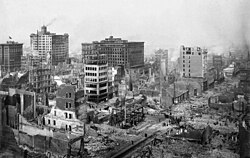
The Lisbon earthquake of 1755, coinciding with the general flowering of science in Europe, set in motion intensified scientific attempts to understand the behaviour and causation of earthquakes.
Image source: 1755 Lisbon earthquake

1757
John Bevis produced one of the earliest responses to the scientific challenge posed by the Lisbon earthquake in 1757, contributing to the growing effort to understand earthquake behaviour.
Image source: John Bevis

1761
In 1761, John Michell published influential early work on the behaviour and causation of earthquakes, part of the earliest scientific responses following the 1755 Lisbon earthquake.
Image source: John Michell

1800
Documentation in the historic period may be sparse or incomplete, not giving a full picture of an earthquake's geographic scope, or may only span a few centuries — a very short time frame in a seismic cycle.
Image source: Induced seismicity

1839
In response to a series of earthquakes near Comrie in Scotland in 1839, a committee was formed in the United Kingdom to produce better detection methods for earthquakes.
Image source: Comrie, Perth and Kinross

1842
The outcome of the Comrie committee was the production of one of the first modern seismometers by James David Forbes, first presented in a report by David Milne-Home in 1842.
Image source: James David Forbes

1857
From 1857, Robert Mallet laid the foundation of modern instrumental seismology and carried out seismological experiments using explosives to measure the speed of seismic waves.
Image source: Robert Mallet

This History of Seismology timeline was generated with the help of AI, using information found on the internet.
We work hard to keep these timelines accurate, but mistakes do get through. If you spot one, email us at [email protected] and we'll fix it for future visitors.
Generate yours with AI or build it from scratch, for free.