-
Use Cases
-
Resources
-
Pricing
The history of climate change science traces humanity's understanding of Earth's climate system, beginning with early discoveries about greenhouse gases in the 1800s, through pivotal 20th-century research linking carbon dioxide emissions to warming, and culminating in today's international scientific assessments and climate policy. More Less
1824
French mathematician Joseph Fourier reasoned that the atmosphere traps heat like a glass vessel warmed by the sun, laying the conceptual groundwork for what would later be called the greenhouse effect. His insight explained why Earth's surface is warmer than calculations of solar radiation alone would predict.
Image source: Joseph Fourier

1856
American scientist Eunice Newton Foote conducted experiments showing that air enriched with carbon dioxide absorbed more solar heat than ordinary air. She suggested that an atmosphere of CO2 would give Earth a higher temperature, one of the earliest experimental demonstrations linking the gas to warming.
Image source: Eunice Newton Foote

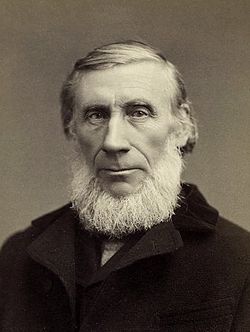
1859
Irish physicist John Tyndall used precise laboratory apparatus to measure the infrared-absorbing properties of gases, demonstrating that water vapor and carbon dioxide strongly absorb radiant heat. His work provided rigorous physical evidence for the atmospheric greenhouse mechanism.
Image source: John Tyndall
1896
Swedish chemist Svante Arrhenius performed laborious hand calculations estimating how changes in atmospheric carbon dioxide would affect global temperature. He predicted that doubling CO2 would warm the planet by several degrees, producing the first quantitative estimate of climate sensitivity.
Image source: Svante Arrhenius

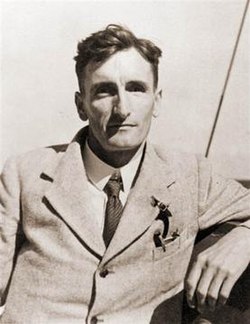
1938
British engineer Guy Stewart Callendar compiled temperature records from around the world and showed that global temperatures had risen over the preceding half century. He attributed this trend to rising carbon dioxide from fossil fuel combustion, a hypothesis later known as the Callendar effect.
Image source: Guy Stewart Callendar
1957
Roger Revelle and Hans Suess demonstrated that chemical buffering in seawater limits how quickly the oceans can absorb excess carbon dioxide. Their 'great experiment' paper warned that most human-emitted CO2 would remain in the atmosphere, setting the stage for systematic monitoring.
Image source: Roger Revelle

Mar 1958
Charles David Keeling established continuous measurements of atmospheric carbon dioxide at the Mauna Loa Observatory in Hawaii. The resulting Keeling Curve revealed a steady rise in CO2 concentrations overlaid with seasonal cycles, becoming the iconic record of human influence on the atmosphere.
Image source: Keeling Curve

1965
A report by the US President's Science Advisory Committee explicitly warned that rising carbon dioxide emissions could modify global climate, marking one of the first high-level government acknowledgments of anthropogenic climate change as a serious policy concern.
1970
The MIT-sponsored Study of Critical Environmental Problems brought together scientists who warned about carbon dioxide buildup and other pollutants altering climate. It helped bring atmospheric science concerns into the emerging environmental movement.
Image source: MIT Press

Jun 23, 1988
NASA scientist James Hansen testified to the US Senate that global warming had begun and was attributable to human activities. Delivered during a summer heat wave, his testimony brought climate change into mainstream public discourse and political debate.
Image source: James Hansen

This History of Climate Change Science timeline was generated with the help of AI, using information found on the internet.
We work hard to keep these timelines accurate, but mistakes do get through. If you spot one, email us at [email protected] and we'll fix it for future visitors.
Generate yours with AI or build it from scratch, for free.