-
Use Cases
-
Resources
-
Pricing
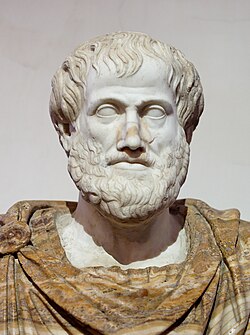
350 BC
Aristotle systematized observations and explanations of nature in works on physics, biology, astronomy, and logic. Although many conclusions were later rejected, his framework shaped scientific inquiry in Europe and the Islamic world for nearly two millennia.
Image source: Aristotle
300 BC
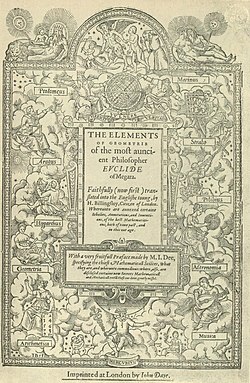
Euclid compiled and proved a systematic body of geometry in Elements. Its axiomatic method became a foundational model for mathematics and influenced later approaches to rigorous scientific reasoning.
Image source: Euclid's Elements
250 BC
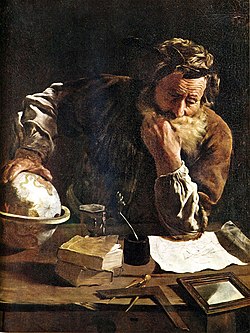
Archimedes formulated principles of buoyancy and lever mechanics and made major advances in geometry and hydrostatics. His work connected mathematical deduction with the quantitative study of physical phenomena.
Image source: Archimedes
240 BC
Using shadow measurements at two Egyptian locations, Eratosthenes estimated Earth's circumference with remarkable accuracy. His calculation demonstrated how geometry could determine large-scale properties of the planet.
Image source: Eratosthenes

105
Papermaking was traditionally attributed to Cai Lun during the Han dynasty, although earlier paper-like materials existed. The technology eventually spread across Asia, the Islamic world, and Europe, transforming the circulation of scientific knowledge.
Image source: Paper
150
Claudius Ptolemy's Almagest presented a mathematical geocentric model that predicted planetary positions. It synthesized Greek astronomical traditions and remained the dominant technical astronomy text for centuries.
Image source: Almagest

820
Al-Khwarizmi's treatise on completing and balancing introduced systematic methods for solving equations. His work helped transmit Hindu-Arabic numerals and algebraic methods into later Islamic and European mathematics.
Image source: Al-Khwarizmi

1021
In the Book of Optics, Ibn al-Haytham argued that vision occurs when light enters the eye and investigated reflection, refraction, and perception. His experiments and emphasis on testing explanations influenced later optical science.
Image source: Ibn al-Haytham

1543
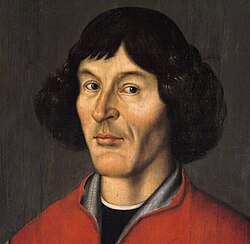
Nicolaus Copernicus's On the Revolutions of the Heavenly Spheres placed the Sun near the center of the planetary system. The proposal challenged the established Ptolemaic model and initiated a major transformation in astronomy.
Image source: Nicolaus Copernicus
1543
Andreas Vesalius published detailed anatomical descriptions based on human dissections. His illustrated work corrected important Galenic errors and established direct observation as a central method in modern anatomy.
Image source: De Humani Corporis Fabrica Libri Septem

This History of Science timeline was generated with the help of AI, using information found on the internet.
We work hard to keep these timelines accurate, but mistakes do get through. If you spot one, email us at [email protected] and we'll fix it for future visitors.
Generate yours with AI or build it from scratch, for free.