-
Use Cases
-
Resources
-
Pricing
The Scientific Revolution was a period of profound transformation in European thought during which new approaches to observation, experimentation, and mathematics replaced traditional views of the natural world. Spanning roughly the 16th and 17th centuries, it produced groundbreaking work by figures such as Copernicus, Galileo, Kepler, Bacon, Descartes, and Newton, laying the foundations of modern physics, astronomy, biology, and the scientific method. More Less
1268
% complete
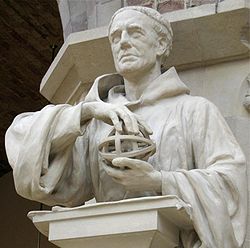
The earliest recorded comment on the use of glass for optical purposes was made in 1268 by Roger Bacon, an early step toward the optical instruments that would later transform science.
Image source: Roger Bacon
1290
% complete
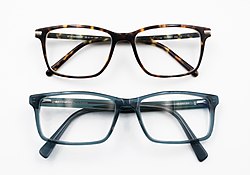
The first eyeglasses were made in central Italy, most likely in Pisa or Florence, by about 1290, after which the widespread manufacture and use of optical glass for eyeglasses expanded rapidly in Europe.
Image source: Glasses
1300
% complete
By around 1300, Venice had become an important center of the manufacture of optical glass, supporting the growing European industry in lenses and eyeglasses.
Image source: Venetian glass
1450
% complete
In the mid-15th century, Venetian glassmakers developed the exceptionally clear colourless glass cristallo, made from high-purity quartz pebbles instead of sand and using manganese oxide as a decolorizer to neutralize the greenish tint caused by iron impurities.
Image source: Cristallo (mountain)
1608
% complete
Refracting telescopes first appeared in the Netherlands in 1608, apparently the product of spectacle makers experimenting with lenses.
Image source: Refracting telescope
1622
% complete
It was William Oughtred who first used two such scales sliding by one another to perform direct multiplication and division and thus is credited as the inventor of the slide rule in 1622.
Image source: Slide rule
1642
% complete
Blaise Pascal invented the mechanical calculator in 1642. The introduction of his Pascaline in 1645 launched the development of mechanical calculators first in Europe and then all over the world.
Image source: Pascal's calculator
1643
% complete
Evangelista Torricelli invented the mercury barometer in 1643, a key instrument for studying atmospheric pressure.
Image source: Barometer
1654 - 1657
% complete
Otto von Guericke made the first air pump in 1654. In 1657, he pumped the air out of two conjoined hemispheres and demonstrated that a team of sixteen horses were incapable of pulling it apart, dramatically proving the power of atmospheric pressure.
Image source: Otto von Guericke
1658
% complete
The air pump construction was greatly improved by Robert Hooke in 1658, enabling more refined experiments on vacuums and respiration.
Image source: Robert Hooke
1663
% complete
The reflecting telescope was described by James Gregory in his book Optica Promota (1663).
Image source: James Gregory (mathematician)
1666 - 1668
% complete
In 1666, Newton argued that the faults of the refracting telescope were fundamental because the lens refracted light of different colors differently. His reflecting telescope was completed in 1668 and is the earliest known functional reflecting telescope.
Image source: Reflecting telescope
1698
% complete
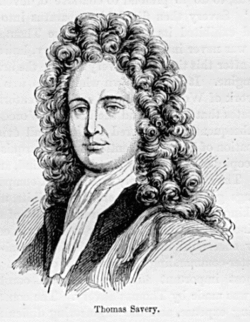
The first working steam engine was patented in 1698 by Thomas Savery as a new invention for raising water by the impellent force of fire. It was demonstrated to the Royal Society on 14 June 1699 and described in his book The Miner's Friend (1702).
Image source: Thomas Savery
1310 - 1347
% complete
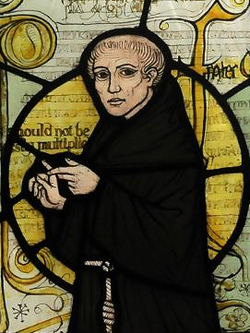
Prior thinkers, including the early-14th-century nominalist philosopher William of Ockham, had begun the intellectual movement toward empiricism that would later underpin the Scientific Revolution.
Image source: William of Ockham
1540 - 1590
% complete
In the 16th century, surgeon Ambroise Paré was a leader in surgical techniques and battlefield medicine, especially the treatment of wounds.
Image source: Ambroise Paré
1543
% complete
The Scientific Revolution is frequently said to have begun in 1543 with the printing of De humani corporis fabrica (On the Workings of the Human Body) by Andreas Vesalius, alongside Copernicus's De Revolutionibus published the same year.
Image source: De Humani Corporis Fabrica Libri Septem
1556
% complete
Practical attempts to improve the refining of ores and their extraction to smelt metals were an important source of information for early chemists in the 16th century, among them Georgius Agricola, who published his great work De re metallica in 1556.
Image source: De re metallica
1600
% complete
William Gilbert's book on magnetism, De Magnete, was written in 1600 and is one of the finest examples of inductive philosophy ever presented to the world; Gilbert is regarded by some as the father of electricity and magnetism.
Image source: De Magnete
1620
% complete
Francis Bacon's Novum Organum was published in 1620, arguing that man is 'the minister and interpreter of nature,' that knowledge and human power are synonymous, and that nature can only be commanded by obeying her.
Image source: Novum Organum
1628
% complete
William Harvey published De Motu Cordis in 1628, demonstrating the circulation of the blood and revolutionizing physiology.
Image source: Exercitatio Anatomica de Motu Cordis et Sanguinis in Animalibus
1660
% complete
Antonie van Leeuwenhoek constructed powerful single lens microscopes and made extensive observations that he published around 1660, paving the way for the science of microbiology.
Image source: Antonie van Leeuwenhoek
1662
% complete
Robert Boyle presented Boyle's law in 1662: the law describes the inversely proportional relationship between the absolute pressure and volume of a gas, if the temperature is kept constant within a closed system.
Image source: Boyle's law
1675
% complete
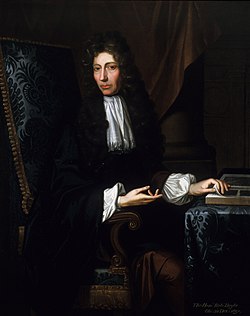
In 1675 Boyle stated that electric attraction and repulsion can act across a vacuum, an early contribution to the study of electricity.
Image source: Robert Boyle
1689
% complete
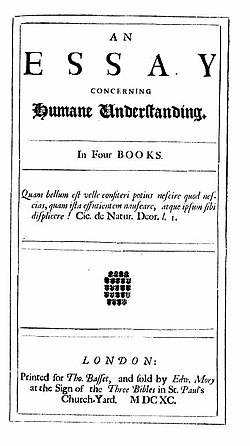
An influential formulation of empiricism was John Locke's An Essay Concerning Human Understanding (1689), in which he maintained that the only true knowledge accessible to the human mind was that which was based on experience.
Image source: An Essay Concerning Human Understanding
1729
% complete
In 1729 Stephen Gray demonstrated that electricity could be 'transmitted' through metal filaments, extending earlier findings that electric attraction and repulsion can act across a vacuum.
1450 - 1500
% complete
Claudius Ptolemy's Geographia was the basis for most maps made in Renaissance Europe in the 15th century. Since the Americas were completely absent from Ptolemy's maps, the European encounter with the Americas beginning at the end of the 15th century was a complete surprise.
Image source: Geography (Ptolemy)
1500 - 1600
% complete
By the 16th century, the Aristotelian framework dominated Europe's intellectual landscape, though historians like James Hannam argue it was already fading and partly discredited. The Scientific Revolution would be a decisive rupture with Renaissance Aristotelianism, but still a break with an existing tradition, not a creation from nothing.
Image source: Aristotelianism
1747
% complete
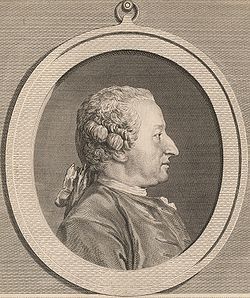
The word 'revolution' has been used to describe scientific upheaval since at least the 18th century. In 1747, the French mathematician Alexis Clairaut applied it to Isaac Newton.
Image source: Alexis Clairaut
1543
% complete
Nicolaus Copernicus's De Revolutionibus (On the Revolutions of the Heavenly Spheres), printed in 1543, is often cited as the beginning of the Scientific Revolution, proposing a heliocentric model of the cosmos.
Image source: De revolutionibus orbium coelestium
Nov 1572
% complete
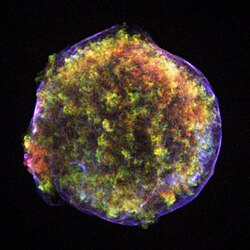
On a fall evening in 1572, just after sunset, a 25-year-old Danish nobleman named Tycho Brahe observed a new star. The SN 1572 supernova has been suggested as an alternative starting date for the Scientific Revolution, since it challenged the Aristotelian notion of an unchanging heavens.
Image source: SN 1572
1573
% complete
Brahe recorded the supernova's position and changing brightness over several months and then published his observations in De Nova Stella in 1573.
Image source: Tycho Brahe
1591
% complete
In 1591, François Viète published In Artem Analyticem Isagoge, which gave the first symbolic notation of parameters in algebra, advancing mathematical formalization.
Image source: François Viète
1604
% complete
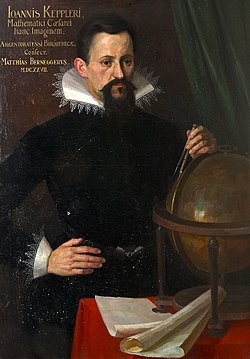
In 1604 Johannes Kepler published Astronomiae Pars Optica (The Optical Part of Astronomy), a foundational work in optics.
Image source: Johannes Kepler
1609
% complete
Galileo was one of the first scientists to use the newly invented telescope for his astronomical observations in 1609, transforming humanity's view of the heavens.
Image source: Galileo Galilei
1610
% complete
Galileo's Sidereus Nuncius (The Starry Messenger), published in Venice in 1610, reported his telescopic discoveries, although printers' blunders caused his lunar surface images to mistakenly appear back to front. The development of engraved metal plates allowed accurate visual information to be made permanent.
Image source: Sidereus Nuncius
1621
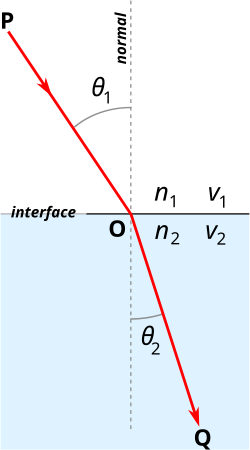
% complete
Willebrord Snellius found the mathematical law of refraction, now known as Snell's law, in 1621.
Image source: Snell's law
1637
% complete
In 1637, René Descartes greatly improved the scope and formalization of algebra in La Géométrie.
Image source: La Géométrie
1675
% complete
In his Hypothesis of Light of 1675, Newton posited the existence of the ether to transmit forces between particles.
Image source: Isaac Newton
1679 - 1681
% complete
In 1679, Newton began to consider gravitation and its effect on the orbits of planets with reference to Kepler's laws of planetary motion. This followed stimulation by a brief exchange of letters in 1679–80 with Hooke, and his interest received further stimulus by the appearance of a comet in the winter of 1680–81, on which he corresponded with John Flamsteed.
1684
% complete
Newton communicated his results to Edmond Halley and to the Royal Society in De motu corporum in gyrum in 1684, laying groundwork for the Principia.
Image source: De motu corporum in gyrum
Jul 5, 1687
% complete
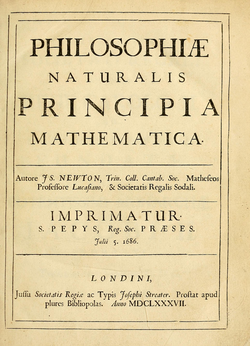
The Philosophiæ Naturalis Principia Mathematica was published on 5 July 1687 with encouragement and financial help from Halley. It culminated the Scientific Revolution: Newton's laws of motion became the solid foundation of mechanics, and his law of universal gravitation combined terrestrial and celestial mechanics into one great system dominating scientists' view of the physical universe for the next three centuries.
Image source: Philosophiæ Naturalis Principia Mathematica
1713
% complete
Whereas Newton vehemently denied gravity was an inherent power of matter, his collaborator Roger Cotes made gravity also an inherent power of matter, as set out in his famous preface to the Principia's 1713 second edition which he edited, contradicting Newton. Newton firmly rejected such criticisms in a concluding General Scholium, writing that it was enough that the phenomena implied gravitational attraction without framing hypotheses about its cause.
Image source: Roger Cotes
Nov 28, 1660 - Jul 15, 1662
% complete
On 28 November 1660, the '1660 committee of 12' announced the formation of a College for the Promoting of Physico-Mathematical Experimental Learning. A royal charter signed on 15 July 1662 created the Royal Society of London, with Lord Brouncker as its first president.
Image source: Royal Society
Apr 23, 1663
% complete
A second royal charter was signed on 23 April 1663, naming the society 'the Royal Society of London for the Improvement of Natural Knowledge'; Robert Hooke was appointed as curator of experiments in November.
1665
% complete
The Royal Society began publication of Philosophical Transactions in 1665, the oldest and longest-running scientific journal in the world, which established the important principles of scientific priority and peer review.
Image source: Philosophical Transactions of the Royal Society
1666
% complete
The French established the Academy of Sciences in 1666. Its rules were set down in 1699 by King Louis XIV, when it received the name of 'Royal Academy of Sciences' and was installed in the Louvre in Paris.
Image source: French Academy of Sciences
Or browse the full history timeline directory, with more than 2,000 topics.
This Scientific Revolution timeline was generated with the help of AI, using information found on the internet.
We work hard to keep these timelines accurate, but mistakes do get through. If you spot one, email us at [email protected] and we'll fix it for future visitors.
Generate yours with AI or build it from scratch, for free.
Export your timeline, add your own events, edit or remove AI-generated events, and much more
No credit card required.
Cancel anytime.
Cancel anytime.
You can create an unlimited number of timelines with up to 10 events on each one, customize how they look, export them to PDF, PNG, PowerPoint, CSV, and Excel, and share them with a link. Paid plans raise the event limit and add features like spreadsheet imports and collaborators.
Yes. You can cancel your subscription from your account page at any time, and you will not be charged again. Your subscription stays active for the rest of the period you already paid for.
Yes. We will email you a reminder before the annual renewal, and we will also email you a receipt.
Yes. You can email us within 15 days of any payment, and we will issue you a full refund.
Check out our pricing docs or send us an email anytime: [email protected].