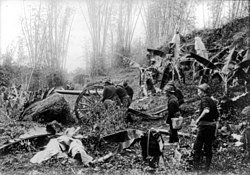
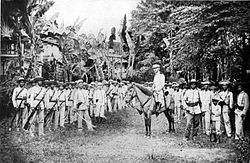
-
Use Cases
-
Resources
-
Pricing
Mar 21, 1887
José Rizal's novel exposed abuses by Spanish friars and colonial officials through fiction. Its criticism of social inequality and political repression helped develop Filipino national consciousness and provided intellectual fuel for later revolutionary movements.
Image source: Noli Me Tángere (novel)
Feb 15, 1889
Filipino reformists in Spain established La Solidaridad as a newspaper advocating representation, equality before the law, secularization, and reforms in the Philippines. Although reformist rather than openly revolutionary, the publication helped connect Filipino nationalists and articulate grievances against Spanish rule.
Image source: La Solidaridad
Sep 18, 1891
Rizal's second novel presented a darker account of colonial injustice and the dangers of failed reform. Its themes of corruption, repression, and armed resistance sharpened political debate among Filipinos, including future revolutionaries.
Image source: El filibusterismo
Jul 17, 1892
Spanish authorities deported Rizal to Dapitan in Mindanao shortly after La Liga Filipina was founded. His exile removed the leading reformist figure from Manila while his example continued to influence clandestine revolutionary organizers.
Image source: José Rizal
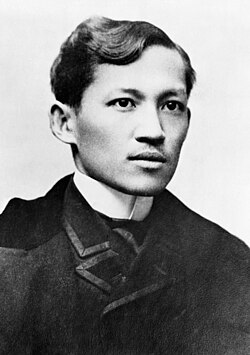
Dec 30, 1896
Spanish authorities executed José Rizal at Bagumbayan after convicting him of rebellion, sedition, and conspiracy. Although Rizal had not directed the uprising, his execution strengthened Filipino nationalism and made him a symbol of sacrifice and independence.
Jun 26, 1892
José Rizal returned to Manila after years abroad and sought to organize peaceful civic action. His return energized reform advocates but also alarmed Spanish authorities, who viewed his influence and writings as threats to colonial order.
Jul 3, 1892
Rizal founded La Liga Filipina in Manila to promote unity, mutual aid, education, and peaceful reform. The organization proposed a nationwide civic network, but its development was cut short by Rizal's arrest and deportation.
Image source: La Liga Filipina
Jul 7, 1892
Andrés Bonifacio, Teodoro Plata, Ladislao Diwa, and others founded the Kataastaasan, Kagalanggalangang Katipunan ng mga Anak ng Bayan, commonly called the Katipunan. It was a secret society committed to independence from Spain and prepared to achieve that goal through revolution.
Image source: Katipunan
1893
Andrés Bonifacio became the central leader of the expanding Katipunan and helped transform it from a small secret association into a mass revolutionary organization. Recruitment, initiation rites, publications, and local councils spread its message across Manila and surrounding provinces.
Image source: Andrés Bonifacio
Aug 19, 1896
The Katipunan was exposed to Spanish authorities after Teodoro Patiño revealed information about the society to a Spanish official and his sister. Arrests followed in Manila, forcing revolutionary leaders to begin their uprising earlier than planned.
Image source: Philippine Revolution
Aug 23, 1896
Katipunan members led by Bonifacio publicly tore their cedulas, or residence certificates, at a gathering north of Manila. The act symbolized rejection of Spanish sovereignty and is widely remembered as the opening declaration of the Philippine Revolution, although accounts differ over its exact location and date.
Image source: Cry of Pugad Lawin
Aug 30, 1896
Spanish Governor-General Camilo de Polavieja proclaimed martial law in several provinces after the revolutionary outbreak. The colonial government carried out mass arrests, executions, and military campaigns while attempting to isolate the Katipunan.
Aug 30, 1896
Katipunan forces attacked the Spanish powder magazine and waterworks at San Juan del Monte near Manila. Spanish forces repelled the assault, but the battle marked one of the first major armed engagements of the revolution and prompted harsher Spanish repression.
Sep 3, 1896
Revolutionary forces in Cavite defeated Spanish troops at Imus, strengthening the position of the Magdalo faction and its commander Emilio Aguinaldo. The victory made Cavite the revolution's strongest territorial base.
Nov 9, 1896 - Nov 11, 1896
Revolutionary forces under Emilio Aguinaldo defeated a major Spanish offensive in Cavite. The victory secured much of the province for the revolutionaries and demonstrated that Spanish forces could be beaten in sustained field operations.
Image source: Battle of Binakayan–Dalahican
Feb 17, 1897
Emilio Aguinaldo's forces defeated Spanish troops at Zapote Bridge in Cavite. The victory increased Aguinaldo's political authority and helped make him the dominant military leader among the revolutionary factions.
Image source: Battle of Zapote River
May 1897 - Jun 1897
Spanish offensives under Governor-General Fernando Primo de Rivera recaptured important positions in Cavite and forced revolutionary forces to retreat. The defeats weakened Aguinaldo's territorial government and encouraged negotiations for a temporary settlement.
Apr 21, 1898 - Dec 10, 1898
The United States and Spain entered war after escalating conflict over Cuba. The war opened a new strategic opportunity for Filipino revolutionaries, who sought to use the collapse of Spanish power to secure independence.
Image source: Spanish–American War
May 1, 1898
Commodore George Dewey's United States Asiatic Squadron destroyed the Spanish fleet in Manila Bay. The decisive American victory ended Spanish naval power in the Philippines and enabled Aguinaldo to return and resume the revolution.
Image source: Battle of Manila Bay
May 19, 1898
Emilio Aguinaldo returned from exile aboard an American vessel and reestablished revolutionary authority. His arrival accelerated the anti-Spanish uprising, though cooperation with the United States soon gave way to conflicting claims of sovereignty.
Image source: Emilio Aguinaldo
Dec 10, 1898
The Treaty of Paris ended the Spanish-American War and transferred the Philippines from Spain to the United States for $20 million. Filipino revolutionaries rejected the agreement because neither Spain nor the United States recognized the independence proclaimed at Kawit.
Image source: Treaty of Paris (1898)
Feb 4, 1899 - Feb 5, 1899
Fighting erupted between Filipino republican forces and United States troops around Manila after months of tense confrontation. The battle began the Philippine-American War and ended the possibility of a peaceful transfer of power.
Image source: Battle of Manila (1899)
Feb 4, 1899 - Jul 2, 1902
The Philippine-American War pitted the First Philippine Republic and its forces against the United States. Conventional battles gradually shifted to guerrilla warfare, while harsh counterinsurgency campaigns caused extensive civilian suffering and resistance across the archipelago.
Dec 2, 1899
General Gregorio del Pilar led a delaying action at Tirad Pass to protect Aguinaldo's retreat from advancing American forces. Del Pilar was killed, but the defense temporarily slowed the pursuit and became a lasting symbol of revolutionary sacrifice.
Image source: Battle of Tirad Pass
Mar 23, 1901
United States forces captured Emilio Aguinaldo at Palanan, Isabela, through a covert operation involving Filipino scouts. He later swore allegiance to the United States and called on remaining revolutionaries to end armed resistance, though fighting continued in several regions.
Sep 28, 1901
Filipino fighters and local residents attacked an American garrison in Balangiga, Samar, killing many soldiers. The United States responded with punitive operations in Samar, including orders associated with General Jacob Smith that caused widespread destruction and civilian deaths.
Image source: Balangiga massacre
Jul 2, 1902
The United States declared the Philippine insurrection substantially ended in 1902, although resistance continued in some areas afterward. The revolutionary struggle had destroyed Spanish colonial rule, created the First Philippine Republic, and initiated a new era of American colonial domination.
Mar 22, 1897
Delegates from rival revolutionary factions met at Tejeros to address military coordination and establish a new revolutionary government. Emilio Aguinaldo was elected president, while Andrés Bonifacio's authority as Katipunan leader was superseded.
Image source: Tejeros Convention
Mar 23, 1897
Andrés Bonifacio and his supporters signed the Acta de Tejeros, questioning the legitimacy of the convention and its elections. The document expressed the widening conflict between Bonifacio's supporters and Aguinaldo's Magdalo faction.
Apr 19, 1897
Bonifacio and allied officers formed an alternative revolutionary command at Naic and attempted to maintain an independent military structure. The initiative failed to displace Aguinaldo and contributed to Bonifacio's arrest.
Apr 27, 1897
Aguinaldo's forces arrested Andrés Bonifacio and his brother Procopio at Limbon. Bonifacio was charged with sedition and treason within the revolutionary movement, turning the struggle against Spain into a bitter internal political crisis.
May 10, 1897
Andrés Bonifacio and Procopio Bonifacio were executed in the Maragondon area on Aguinaldo's orders after a controversial military trial. The death of the Katipunan's founder remains one of the revolution's most divisive episodes.
Dec 14, 1897
The revolutionary government and Spain agreed to a truce at Biak-na-Bato. Aguinaldo and other leaders accepted exile in Hong Kong in exchange for financial compensation, reforms, and an amnesty that Spain only partially fulfilled.
Image source: Pact of Biak-na-Bato
Dec 27, 1897
Emilio Aguinaldo and leading revolutionary officials went into exile in Hong Kong under the Pact of Biak-na-Bato. There they organized the Hong Kong Junta, retained revolutionary funds, and monitored the growing crisis between Spain and the United States.
Jun 12, 1898
Emilio Aguinaldo proclaimed Philippine independence at Kawit, Cavite. The declaration asserted that Spanish rule had ended and established a national revolutionary project, although Spain and the United States did not recognize Philippine sovereignty.
Image source: Philippine Declaration of Independence
Sep 15, 1898
Representatives gathered at Barasoain Church in Malolos to create a constitutional government for the independent Philippines. The congress debated national authority, civil rights, religion, and the structure of the revolutionary state.
Image source: Malolos Congress
Jan 21, 1899
The Malolos Congress promulgated the first republican constitution in Asia. It established a representative government and defined the legal framework of the First Philippine Republic under revolutionary conditions.
Image source: Malolos Constitution
Jan 23, 1899
Emilio Aguinaldo inaugurated the First Philippine Republic in Malolos, Bulacan, with the Malolos Constitution as its foundation. The government claimed national sovereignty as United States forces prepared to occupy the former Spanish colony.
Image source: First Philippine Republic
Or browse the full history timeline directory, with more than 2,500 topics.
This Philippine Revolution timeline was generated with the help of AI, using information found on the internet.
We work hard to keep these timelines accurate, but mistakes do get through. If you spot one, email us at [email protected] and we'll fix it for future visitors.
Generate yours with AI or build it from scratch, for free.
Export your timeline, add your own events, edit or remove AI-generated events, and much more
No credit card required.
Cancel anytime.
Cancel anytime.
You can create an unlimited number of timelines with up to 10 events on each one, customize how they look, export them to PDF, PNG, PowerPoint, CSV, and Excel, and share them with a link. Paid plans raise the event limit and add features like spreadsheet imports and collaborators.
Yes. You can cancel your subscription from your account page at any time, and you will not be charged again. Your subscription stays active for the rest of the period you already paid for.
Yes. We will email you a reminder before the annual renewal, and we will also email you a receipt.
Yes. You can email us within 15 days of any payment, and we will issue you a full refund.
Check out our pricing docs or send us an email anytime: [email protected].