-
Use Cases
-
Resources
-
Pricing
1856
Henry Bessemer patented a process for mass-producing steel by forcing air through molten pig iron. The method sharply reduced costs and helped make steel available for railways, bridges, ships, machinery, and skyscrapers.
Image source: Bessemer process
1857
A refinery at Ploiești, Romania, became one of the earliest modern petroleum-processing facilities. Refining transformed crude oil into kerosene and other products, supporting lighting, lubricants, and later engine fuels.
Image source: Ploiești
1865
The open-hearth process enabled steelmakers to produce large, controllable batches from varied iron and scrap inputs. It became one of the dominant methods of steel production during the Second Industrial Revolution.
1870 - 1900
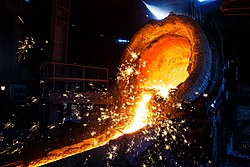
Steel output expanded dramatically in Britain, Germany, the United States, and elsewhere as Bessemer and open-hearth methods spread. Cheap steel transformed construction, rail transport, shipbuilding, armaments, and industrial machinery.
Image source: Steel
1871
Advances in dynamo design made it practical to convert mechanical energy into large-scale electrical power. Dynamos became foundational to electric lighting, motors, electrochemical industries, and centralized power stations.
Image source: Dynamo
1871
Industrial oil extraction expanded rapidly around Baku in the Russian Empire. The region became one of the world's leading petroleum centers, helping establish oil as a major fuel and industrial raw material.
1882
The Vulcan Street Plant in Appleton, Wisconsin, began generating hydroelectric power for local users. It illustrated how falling water could produce electricity and helped launch the growth of electric utility systems.
Image source: Hydroelectricity
Sep 4, 1882
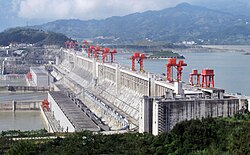
Edison's Pearl Street Station in New York began supplying direct-current electricity to customers in lower Manhattan. It was one of the first central electric power stations and demonstrated the commercial utility model.
Image source: Pearl Street Station
1886
George Westinghouse and his engineers advanced alternating-current generation, transmission, and distribution. AC systems could transmit electricity over longer distances and became the basis of modern power grids.
Image source: War of the currents
May 6, 1889 - Oct 31, 1889
The Paris Exposition showcased electric lighting, industrial machinery, communications, and engineering, including the newly completed Eiffel Tower. International exhibitions promoted technological competition and popular faith in industrial progress.
Image source: Exposition Universelle (1889)
1891
A high-voltage three-phase AC system transmitted electricity over a substantial distance at the International Electrotechnical Exhibition in Frankfurt. The demonstration showed that centralized generation could serve distant users.
1892
Rudolf Diesel patented his compression-ignition engine, which used high compression rather than a spark to ignite fuel. Diesel engines later powered industrial machinery, ships, locomotives, trucks, and generators.
Image source: Diesel engine
1858
A submarine telegraph cable briefly connected Europe and North America, allowing messages to cross the Atlantic far faster than ships could travel. Although the first cable soon failed, subsequent cables created a durable global communications network.
Image source: Transatlantic telegraph cable
1878
The first commercial telephone exchange opened in New Haven, Connecticut. Exchanges made point-to-point voice communication a service available to businesses and households, accelerating the growth of telecommunications networks.
Image source: Telephone exchange
1879
Thomas Edison demonstrated a commercially practical incandescent lamp using a high-resistance filament and improved vacuum. Electric lighting began replacing gas and oil illumination in homes, streets, factories, and businesses.
Image source: Incandescent light bulb
1885
Gottlieb Daimler and Wilhelm Maybach developed a fast-running internal-combustion engine suitable for vehicles. Their work helped establish the lightweight petrol engine that powered motorcycles, automobiles, and eventually aircraft.
Image source: Gottlieb Daimler
1887 - 1888
Heinrich Hertz experimentally generated and detected electromagnetic waves predicted by James Clerk Maxwell. His work provided the scientific foundation for radio, wireless telegraphy, radar, and later electronic communications.
Image source: Heinrich Hertz
1888
Nikola Tesla patented and demonstrated polyphase alternating-current motors. The induction motor provided an efficient, durable way to convert electricity into mechanical work and became central to factory electrification.
Image source: Induction motor
1895
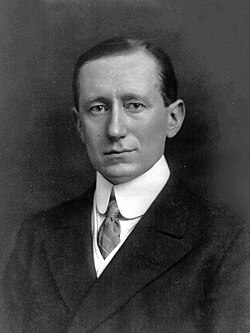
Guglielmo Marconi successfully transmitted wireless signals over increasing distances. His experiments helped turn electromagnetic-wave theory into practical radio communication for ships, governments, news organizations, and militaries.
Image source: Guglielmo Marconi
Dec 28, 1895
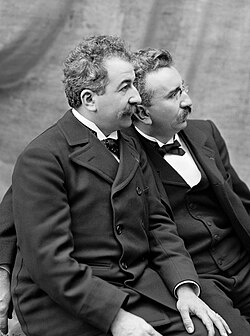
The Lumière brothers held a public screening of short motion pictures in Paris. Cinematography emerged from industrial advances in photography, precision machinery, and chemical film production.
Image source: Auguste and Louis Lumière
Dec 17, 1903
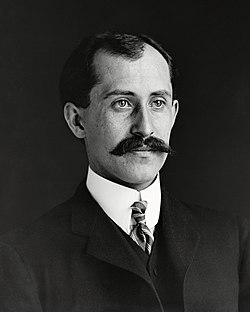
Orville and Wilbur Wright achieved the first controlled, sustained flight of a powered heavier-than-air aircraft at Kitty Hawk, North Carolina. Their achievement extended internal-combustion engineering and aerodynamic research into aviation.
Image source: Wright brothers
1927
The first transatlantic telephone call took place using radio technology. It extended long-distance voice communication across the ocean, though the event belongs to the later legacy of the Second Industrial Revolution.
Image source: Transatlantic communications cable
1868
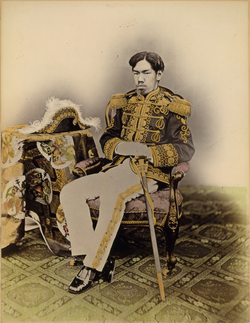
The Meiji Restoration began Japan's rapid state-led modernization. The new government promoted railways, factories, industrial education, military production, and imported technologies, making Japan a major industrial power by the early twentieth century.
Image source: Meiji Restoration
Sep 5, 1882
New York workers organized one of the first Labor Day parades, celebrating labor and advocating improved working conditions. The movement reflected the social consequences of factory growth and urban industrial employment.
Image source: Labor Day
1884 - 1885
The Home Insurance Building in Chicago used a metal structural frame that allowed greater height and larger windows than traditional masonry construction. It helped inaugurate the modern skyscraper.
Image source: Home Insurance Building
May 4, 1886
A labor rally in Chicago seeking an eight-hour workday ended in violence after a bomb was thrown at police. The Haymarket affair became an international symbol of labor activism and intensified debates over workers' rights.
Image source: Haymarket affair
Jul 14, 1889
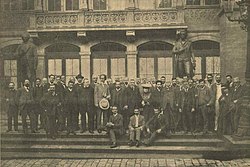
Socialist parties and labor organizations founded the Second International in Paris. Its creation reflected the growth of industrial working classes, organized labor, socialist politics, and international debates over capitalism.
Image source: Second International
Apr 6, 1896 - Apr 15, 1896
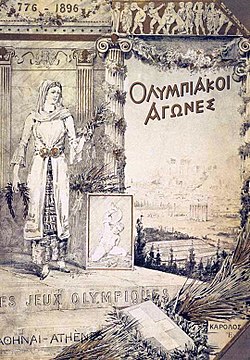
The modern Olympic Games opened in Athens amid the international networks and mass public culture associated with industrial society. Railways, telegraphy, newspapers, and improved travel helped make the event internationally visible.
Image source: 1896 Summer Olympics
1911
Frederick Winslow Taylor published The Principles of Scientific Management, advocating timed tasks, standardized methods, managerial planning, and specialized labor. Taylorism influenced factories and debates about worker control and efficiency.
Image source: The Principles of Scientific Management
May 10, 1869
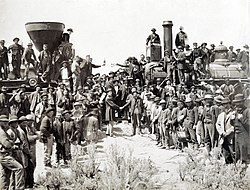
The Union Pacific and Central Pacific railroads met at Promontory Summit, Utah, linking the eastern United States with the Pacific coast. The railway accelerated migration, commerce, resource extraction, and national market integration.
Image source: First transcontinental railroad
Jan 3, 1870 - May 24, 1883
Construction of the Brooklyn Bridge demonstrated the possibilities of steel cables, pneumatic foundations, and large-scale engineering management. When completed, it was among the world's longest suspension bridges and symbolized modern urban infrastructure.
Image source: Brooklyn Bridge
1881
Werner von Siemens demonstrated an electric tramway in Berlin. Electric street railways soon spread through cities, improving urban mobility, expanding suburbs, and creating new markets for electrical equipment.
Image source: Tram
Oct 1884
The International Meridian Conference selected Greenwich as the prime meridian and promoted a global system of standard time. Standardized time zones were essential for coordinating railways, telegraphs, commerce, and administration.
Image source: International Meridian Conference
Jan 29, 1886
Karl Benz patented and built the Benz Patent-Motorwagen, widely regarded as the first practical automobile powered by an internal-combustion engine. It marked the beginning of the modern motor-vehicle industry.
Image source: Benz Patent-Motorwagen
1888
John Boyd Dunlop developed a commercially successful pneumatic tire for bicycles. Air-filled tires later became essential to automobiles, reducing vibration and improving speed, comfort, and road performance.
Image source: Tire
Aug 1888
Bertha Benz undertook the first long-distance automobile journey, driving a Benz vehicle from Mannheim to Pforzheim and back. Her trip demonstrated the practicality of motor travel and publicized the automobile.
Apr 15, 1892
The Edison General Electric Company merged with Thomson-Houston Electric Company to form General Electric. The corporation became a major producer of generators, lighting systems, motors, appliances, and industrial technology.
Image source: General Electric
Jun 16, 1903
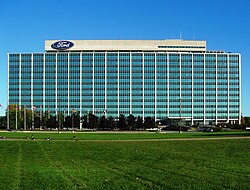
Henry Ford and associates founded Ford Motor Company in Detroit. The firm later pioneered large-scale automobile production and helped make motor vehicles accessible to a mass market.
Image source: Ford Motor Company
Oct 7, 1913
Ford introduced a moving assembly line for automobile production at its Highland Park plant. The system drastically reduced assembly time, standardized components, and became a defining model of mass production.
Image source: Assembly line
Aug 15, 1914
The Panama Canal opened to navigation, linking the Atlantic and Pacific oceans through a vast system of locks and excavations. It shortened global shipping routes and demonstrated the scale of industrial engineering.
Image source: Panama Canal
Or browse the full history timeline directory, with more than 2,500 topics.
This Second Industrial Revolution timeline was generated with the help of AI, using information found on the internet.
We work hard to keep these timelines accurate, but mistakes do get through. If you spot one, email us at [email protected] and we'll fix it for future visitors.
Generate yours with AI or build it from scratch, for free.
Export your timeline, add your own events, edit or remove AI-generated events, and much more
No credit card required.
Cancel anytime.
Cancel anytime.
You can create an unlimited number of timelines with up to 10 events on each one, customize how they look, export them to PDF, PNG, PowerPoint, CSV, and Excel, and share them with a link. Paid plans raise the event limit and add features like spreadsheet imports and collaborators.
Yes. You can cancel your subscription from your account page at any time, and you will not be charged again. Your subscription stays active for the rest of the period you already paid for.
Yes. We will email you a reminder before the annual renewal, and we will also email you a receipt.
Yes. You can email us within 15 days of any payment, and we will issue you a full refund.
Check out our pricing docs or send us an email anytime: [email protected].