-
Use Cases
-
Resources
-
Pricing
The scientific method is a systematic approach to acquiring knowledge through observation, hypothesis formation, experimentation, and analysis. Its development spans millennia, beginning with ancient Greek thinkers like Aristotle, advancing through the contributions of Islamic scholars such as Ibn al-Haytham, and taking modern shape during the Scientific Revolution with Francis Bacon's emphasis on empiricism and René Descartes' rationalism. Over time, figures like Galileo, Newton, Popper, and Kuhn refined ideas about testing, falsifiability, and paradigm shifts, shaping how science is practiced today. More Less
1600 BCE
% complete
The Edwin Smith Papyrus (c. 1600 BCE) applies the components of examination, diagnosis, treatment and prognosis to the treatment of disease, displaying strong parallels to the basic empirical method of science.
Image source: Edwin Smith Papyrus
1550 BCE
% complete
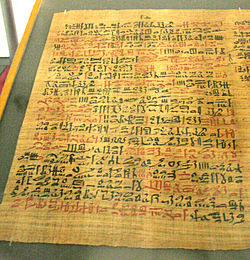
The Ebers Papyrus (c. 1550 BCE) contains evidence of traditional empiricism, an early example of observation-based approaches to knowledge in ancient Egyptian medicine.
Image source: Ebers Papyrus
450 BCE
% complete
Towards the middle of the 5th century BCE, some components of a scientific tradition were heavily established even before Plato, who contributed importantly through the development of deductive reasoning as propounded by his student Aristotle.
400 BCE - 300 BCE
% complete
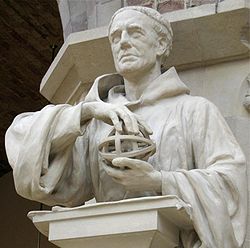
As early as the 4th century BCE, armillary spheres had been invented in China, and in the 3rd century BCE in Greece for use in astronomy; their use was later promulgated by Ibn al-Haytham and Tycho Brahe.
Image source: Armillary sphere
335 BCE - 280 BCE
% complete
The Greek physicians Herophilos (335–280 BCE) and Erasistratus of Chios employed experiments to further their medical research; Erasistratus at one time repeatedly weighed a caged bird and noted its weight loss between feeding times.
Image source: Herophilos
801 - 900
% complete
Starting in the early ninth century, early Muslim scientists such as al-Kindi (801–873) and authors writing under the name of Jābir ibn Hayyān began systematic scientific work that would shape later methodology.
Image source: Al-Kindi
1000 - 1100
% complete
Several scientific methods emerged from the medieval Muslim world by the early 11th century, all emphasizing experimentation as well as quantification to varying degrees.
1021
% complete
The Arab physicist Ibn al-Haytham (Alhazen) used experimentation to obtain the results published in his Book of Optics (1021), a landmark in experimental science.
Image source: Book of Optics
1025
% complete
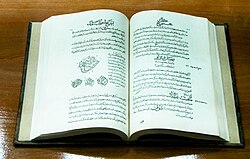
In The Canon of Medicine (1025), Avicenna was the first to describe what is essentially methods of agreement, difference and concomitant variation, critical to inductive logic and the scientific method.
Image source: The Canon of Medicine
1027
% complete
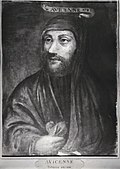
In the On Demonstration section of The Book of Healing (1027), Avicenna discussed philosophy of science and described an early scientific method of inquiry.
Image source: The Book of Healing
1200 - 1250
% complete
Aristotle's ideas became a framework for critical debate beginning with absorption of the Aristotelian texts into the university curriculum in the first half of the 13th century.
1256
% complete
About 1256 Roger Bacon joined the Franciscan Order and became subject to the Franciscan statute forbidding Friars from publishing books or pamphlets without specific approval.
Image source: Roger Bacon
1265
% complete
After the accession of Pope Clement IV in 1265, the Pope granted Roger Bacon a special commission to write to him on scientific matters, leading to works like the Opus Majus.
Image source: Pope Clement IV
1267
% complete
William Whewell later called Opus Majus 'at once the Encyclopaedia and Organon of the 13th century,' reflecting its comprehensive treatment of knowledge and method.
Image source: Opus Majus
1320
% complete
Ibn al-Haytham's Optics was revised in Kitab Tanqih al-Manazir (The Revision of [Ibn al-Haytham's] Optics), completed around 1320, extending the experimental optical tradition.
Image source: Kamāl al-Dīn al-Fārisī
1100 - 1200
% complete
During the European Renaissance of the 12th century, ideas on scientific methodology, including Aristotle's empiricism and the experimental approaches of Alhazen and Avicenna, were introduced to medieval Europe via Latin translations of Arabic and Greek texts.
Image source: Renaissance of the 12th century
1490
% complete
By the late 15th century, the physician-scholar Niccolò Leoniceno was finding errors in Pliny's Natural History, undermining blind reliance on ancient authority.
Image source: Niccolò Leoniceno
1492
% complete
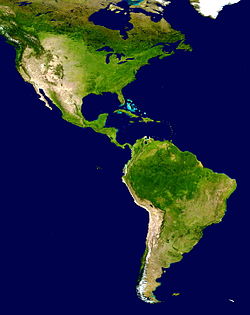
The discovery of the Americas at the close of the 15th century showed European scholars that new discoveries could be found outside the authoritative works of Aristotle, Pliny, Galen, and other ancient writers.
Image source: History of the Americas
1519
% complete
Thomas Linacre, the teacher of Erasmus, translated Methodus Medendi from Greek into Latin for a larger audience in 1519, spreading Galenic medical methodology in Europe.
Image source: Thomas Linacre
1546
% complete
To counter errors in ancient botanical texts, a botanical garden was established at Orto botanico di Padova, University of Padua (in use for teaching by 1546), so medical students might have empirical access to pharmacopia plants.
Image source: Orto botanico di Padova
1550
% complete
The first printed work devoted to the concept of method is Jodocus Willichius's De methodo omnium artium et disciplinarum informanda opusculum (1550).
Image source: History of scientific method
1560
% complete
Limbrick notes that 630 editions, translations, and commentaries on Galen were produced in Europe in the 16th century, eventually eclipsing Arabic medicine there and peaking in 1560, at the time of the Scientific Revolution.
Image source: Galen
1562
% complete
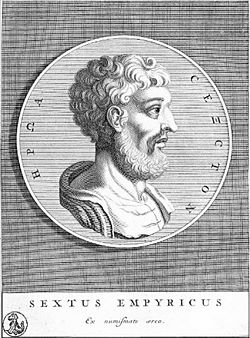
In 1562 Outlines of Pyrrhonism by the ancient Pyrrhonist philosopher Sextus Empiricus was made available in Latin, reviving skeptical challenges to claims of certain knowledge.
Image source: Sextus Empiricus
1581
% complete
Francisco Sanches, led by his medical training to search for a true method of knowing, published That Nothing is Known (Quod Nihil Scitur, 1581), critiquing Aristotelian syllogistic reasoning and warning against relying on commentaries on Aristotle.
Image source: Francisco Sanches
1572
% complete
In 1572, Tycho noticed a completely new star that was brighter than any star or planet, demonstrating that the heavens could change and challenging Aristotelian cosmology.
Image source: Tycho Brahe
Apr 1573
% complete
Francis Bacon entered Trinity College, Cambridge in April 1573, where he concluded that the methods employed and results attained in current learning were alike erroneous, learning to despise the current Aristotelian philosophy.
Image source: Francis Bacon
1576 - 1591
% complete
Over fifteen years (1576–1591), Tycho and upwards of thirty assistants charted the positions of stars, planets, and other celestial bodies at Uraniborg with unprecedented accuracy.
Image source: Uraniborg
1600
% complete
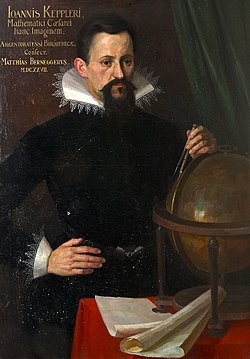
In 1600, Tycho hired Johannes Kepler to assist him in analyzing and publishing his observations, data that would later underpin Kepler's laws of planetary motion.
Image source: Johannes Kepler
1619
% complete
In 1619, René Descartes began writing his first major treatise on proper scientific and philosophical thinking, the unfinished Rules for the Direction of the Mind, continued in his Discourse on Method (1637) and Meditations (1641).
Image source: Rules for the Direction of the Mind
1620
% complete
Francis Bacon explained how his inductive method is applied in his Novum Organum (published 1620), an echo of whose program would influence later statistical reasoning about error.
Image source: Novum Organum
1637
% complete
Descartes clarified his rationalist approach in his 1637 treatise Discourse on Method, taking up the challenge posed by Francisco Sanches and championing reason as the path to certain knowledge.
Image source: Discourse on the Method
1687
% complete
Newton's work became a model that other sciences sought to emulate, and his inductive approach formed the basis for much of natural philosophy through the 18th and early 19th centuries.
Image source: Isaac Newton
1748
% complete
Attempts to systematize a scientific method were confronted in the mid-18th century by the problem of induction, which asserts that nothing can be known with certainty except what is actually observed; Hume's arguments influenced educated thought well into the 19th century.
Image source: Problem of induction
1781
% complete
Many of Hume's radically skeptical arguments were argued against, but not resolutely refuted, by Immanuel Kant's Critique of Pure Reason in the late 18th century.
Image source: Critique of Pure Reason
1811
% complete
Hans Christian Ørsted, heavily influenced by Kant, exemplified in his 'First Introduction to General Physics' (1811) the steps of observation, hypothesis, deduction and experiment.
Image source: Hans Christian Ørsted
1831
% complete
In 1831 John Herschel published A Preliminary Discourse on the study of Natural Philosophy, setting out the principles of science.
Image source: John Herschel
1837 - 1840
% complete
William Whewell regarded his History of the Inductive Sciences (1837) as an introduction to the Philosophy of the Inductive Sciences (1840), which analyzes the method exemplified in the formation of ideas.
Image source: William Whewell
1843
% complete
John Stuart Mill was stimulated to publish A System of Logic (1843) upon reading Whewell's History of the Inductive Sciences, codifying canons of inductive inference.
Image source: A System of Logic
1865
% complete
In An Introduction to the Study of Experimental Medicine (1865), Claude Bernard described what makes a scientific theory good and what makes a scientist a true discoverer, bringing the scientific method to medicine.
Image source: Claude Bernard
1877 - 1883
% complete
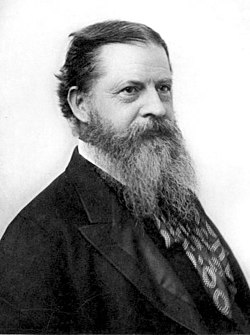
In the late 19th century, Charles Sanders Peirce proposed an influential schema: in 'How to Make Our Ideas Clear' (1878) he outlined an objectively verifiable method testing truth via deduction and induction, and formulated modern statistics in 'Illustrations of the Logic of Science' (1877–1878) and 'A Theory of Probable Inference' (1883).
Image source: Charles Sanders Peirce
1934
% complete
In 1934 Karl Popper published The Logic of Scientific Discovery, repudiating the traditional observationalist-inductivist account of the scientific method and advancing falsifiability.
Image source: The Logic of Scientific Discovery
1935
% complete
Ludwik Fleck, a Polish epidemiologist contemporary with Popper, published Genesis and Development of a Scientific Fact (German 1935, English 1979), influencing Kuhn and others.
1962
% complete
In 1962 Kuhn published The Structure of Scientific Revolutions, suggesting scientists worked within paradigms and arguing there was little evidence of scientists following a falsificationist methodology.
Image source: The Structure of Scientific Revolutions
Or browse the full history timeline directory, with more than 2,000 topics.
This History of Scientific Method timeline was generated with the help of AI, using information found on the internet.
We work hard to keep these timelines accurate, but mistakes do get through. If you spot one, email us at [email protected] and we'll fix it for future visitors.
Generate yours with AI or build it from scratch, for free.
Export your timeline, add your own events, edit or remove AI-generated events, and much more
No credit card required.
Cancel anytime.
Cancel anytime.
You can create an unlimited number of timelines with up to 10 events on each one, customize how they look, export them to PDF, PNG, PowerPoint, CSV, and Excel, and share them with a link. Paid plans raise the event limit and add features like spreadsheet imports and collaborators.
Yes. You can cancel your subscription from your account page at any time, and you will not be charged again. Your subscription stays active for the rest of the period you already paid for.
Yes. We will email you a reminder before the annual renewal, and we will also email you a receipt.
Yes. You can email us within 15 days of any payment, and we will issue you a full refund.
Check out our pricing docs or send us an email anytime: [email protected].