-
Use Cases
-
Resources
-
Pricing
Jun 17, 1703
John Wesley, the principal founder of Methodism, was born at Epworth, Lincolnshire, England. His later preaching, organizing, and theological writings shaped the Methodist movement.
Dec 18, 1707
Charles Wesley was born at Epworth. He became Methodism's most influential hymn writer and a major preacher and theological voice alongside his brother John.
1720
Wesley entered Christ Church, Oxford, beginning the academic and clerical career that placed him at the center of the eighteenth-century Anglican revival.
1729
At Oxford, John and Charles Wesley joined a disciplined group devoted to prayer, Bible study, fasting, charitable work, and frequent Communion. Opponents mockingly called its members Methodists.
Oct 14, 1735 - Dec 22, 1737
John Wesley traveled to the Province of Georgia as an Anglican missionary. The difficult mission ended in frustration, but his encounters with Moravians deeply influenced his later spiritual development.
Feb 1738
John Wesley met the Moravian missionary Peter Böhler in London. Böhler's emphasis on justification by faith and assurance challenged Wesley's understanding of Christian salvation.
May 21, 1738
Charles Wesley underwent a decisive evangelical conversion experience shortly before John at Aldersgate. It strengthened the brothers' commitment to proclaiming salvation by faith.
May 24, 1738
At a meeting in Aldersgate Street, London, Wesley experienced a profound assurance of faith while hearing Luther's preface to Romans. He later described this as his heart being strangely warmed.
1739
George Whitefield became a leading Methodist revival preacher and popularized large-scale open-air evangelism in Britain and North America, while eventually following a Calvinist theological direction.
Image source: George Whitefield
1739
John and Charles Wesley began sustained revival preaching in England, emphasizing repentance, personal faith, disciplined Christian living, and practical works of mercy.
Image source: Methodism
Apr 2, 1739
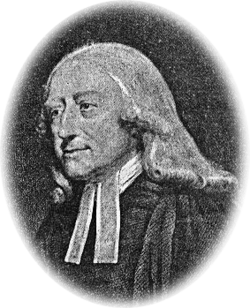
Wesley preached outdoors to coal miners at Kingswood near Bristol, reaching people excluded from many parish churches. Open-air preaching became a defining feature of the revival.
Image source: John Wesley
Nov 1739
A society organized at Wesley's direction in London became an early model for Methodist small groups. Members met regularly for prayer, mutual accountability, instruction, and charitable action.
1740 - 1778
The Foundery in London served as Wesley's principal base for preaching, administration, worship, and charitable work. It became an important early institutional center of British Methodism.
1742
Wesley introduced organized class meetings in which members met in small groups to discuss spiritual life and support one another. The system became central to Methodist discipline.
Jun 25, 1744
John Wesley convened the first Methodist conference in London. The gathering helped establish common preaching practices, doctrine, discipline, and oversight for the growing movement.
1747
Methodist preaching and societies became established in Ireland through Wesleyan missions and local converts. Irish Methodism later developed distinctive institutions and denominations.
1760
Immigrant Methodists and lay preachers carried Wesleyan teaching to the American colonies. Methodist societies grew rapidly, especially through itinerant preaching and revival meetings.
1766
Barbara Heck, an Irish Methodist immigrant, urged Philip Embury to resume preaching and helped organize the early New York Methodist community. She is remembered as a founding figure of North American Methodism.
Oct 1766
Irish immigrant Philip Embury began Methodist preaching in New York City at the request of fellow immigrants. His work helped establish the first Methodist society in the American colonies.
1768
John Street Church opened in New York City as the first Methodist church building in North America. It provided a permanent base for the rapidly expanding movement.
Oct 27, 1771
Francis Asbury arrived from England to serve the American Methodist societies. His itinerant leadership and organizational work made him the central architect of American Methodism.
Image source: Francis Asbury
1813
The Wesleyan Methodist Missionary Society was established in Britain to coordinate overseas evangelism, education, medical work, and church development across the growing British Empire.
1865
William and Catherine Booth founded the East London Christian Mission, which became the Salvation Army in 1878. Its Methodist-rooted revivalism combined evangelism with organized social service.
Image source: The Salvation Army
1784
American Methodists adopted a Discipline based largely on Wesley's doctrinal and organizational guidance. It established standards for ministry, membership, worship, and church governance.
1784
John Wesley issued a document authorizing Thomas Coke to ordain ministers and administer the sacraments in America. It marked his practical recognition of American Methodist independence.
Dec 24, 1784
At the Christmas Conference in Baltimore, American Methodists organized the independent Methodist Episcopal Church. Thomas Coke ordained Francis Asbury as superintendent, creating a distinct American church.
1844
Disagreement over slavery and the episcopacy of James O. Andrew led the Methodist Episcopal Church to divide. Southern delegates formed the Methodist Episcopal Church, South, in 1845.
May 1, 1845
The organizing convention in Louisville established the Methodist Episcopal Church, South. The separation institutionalized the American Methodist division over slavery and regional governance.
Aug 23, 1860
B. T. Roberts and other reformers founded the Free Methodist Church at Pekin, New York. The denomination emphasized holiness, opposition to pew rentals, and greater spiritual and social egalitarianism.
Image source: Free Methodist Church
1888
The Methodist Episcopal Church formally developed deaconess work, expanding women's recognized ministries in nursing, education, missions, and urban social service.
1932
The Wesleyan Methodist Church, the Primitive Methodist Church, and the United Methodist Church united to form the Methodist Church of Great Britain.
1939
The Methodist Episcopal Church, Methodist Episcopal Church, South, and Methodist Protestant Church reunited as The Methodist Church in the United States, ending a division rooted in the nineteenth century.
Image source: Free Methodist Church
1968
The Methodist Church and the Evangelical United Brethren Church united to create The United Methodist Church, one of the world's largest Wesleyan denominations.
Apr 23, 1968
The constituting General Conference in Dallas formally established The United Methodist Church. The new denomination combined Methodist and Evangelical United Brethren traditions.
Image source: United Methodist Church
1867
The National Camp Meeting Association for the Promotion of Holiness helped spread Wesleyan teaching about entire sanctification. The movement influenced later Pentecostal and holiness denominations.
Image source: Holiness movement
1881
International Methodist leaders began the ecumenical body that became the World Methodist Council. It created a continuing forum for cooperation among Methodist and Wesleyan churches.
1907
Methodist reformers organized to address labor, poverty, temperance, racial justice, and other social questions. Their work reflected the movement's growing engagement with the Social Gospel.
1956
American Methodists adopted a formal statement of social principles addressing Christian responsibility in public life, including economic justice, civil rights, peace, and human dignity.
1956
The Methodist Church granted women full clergy rights, allowing them to be ordained and appointed on equal terms with men. This decision advanced a long Methodist tradition of women's ministry.
1986
The World Methodist Council and member churches intensified opposition to apartheid and supported racial justice in Southern Africa, reflecting Methodist engagement with global human-rights issues.
Or browse the full history timeline directory, with more than 2,500 topics.
This History of Methodism timeline was generated with the help of AI, using information found on the internet.
We work hard to keep these timelines accurate, but mistakes do get through. If you spot one, email us at [email protected] and we'll fix it for future visitors.
Generate yours with AI or build it from scratch, for free.
Export your timeline, add your own events, edit or remove AI-generated events, and much more
No credit card required.
Cancel anytime.
Cancel anytime.
You can create an unlimited number of timelines with up to 10 events on each one, customize how they look, export them to PDF, PNG, PowerPoint, CSV, and Excel, and share them with a link. Paid plans raise the event limit and add features like spreadsheet imports and collaborators.
Yes. You can cancel your subscription from your account page at any time, and you will not be charged again. Your subscription stays active for the rest of the period you already paid for.
Yes. We will email you a reminder before the annual renewal, and we will also email you a receipt.
Yes. You can email us within 15 days of any payment, and we will issue you a full refund.
Check out our pricing docs or send us an email anytime: [email protected].