-
Use Cases
-
Resources
-
Pricing
200 AD
% complete
During China's Qin and Han periods, people used hand and finger impressions on contracts, receipts, and legal documents. The practice primarily served as a personal mark or signature rather than relying on a scientifically established system of individual identification.
Image source: Fingerprint
650 AD
% complete
Chinese legal and administrative records from the seventh century describe the use of handprints and fingerprints in documents and investigations. These records are among the earliest evidence that friction-ridge impressions had practical evidentiary value.
1303
% complete
The Persian physician Rashid-al-Din Hamadani discussed the distinctive nature of fingerprints in his work Jami al-Tawarikh. His observation helped preserve an early written recognition that finger patterns vary between individuals.
1684
% complete
English physician Nehemiah Grew published observations of the anatomical structure of the fingers, including the ridges, furrows, and pores that form friction skin. His work is an important early European contribution to the scientific study of fingerprints.
1686
% complete
Italian anatomist Marcello Malpighi examined friction-ridge skin under magnification and described its structure. A layer of skin was later named the Malpighian layer, although Malpighi did not create a forensic classification or identification method.
Image source: Marcello Malpighi
1788
% complete
German anatomist Johann Christoph Andreas Mayer wrote that the arrangement of skin ridges is unique to each person. This was an early explicit statement of the individuality principle that later underpinned forensic fingerprinting.
1823
% complete
Czech physiologist Jan Evangelista Purkyně published a classification of nine fingerprint pattern types, including loops, whorls, and arches. His work supplied a conceptual foundation for later systematic fingerprint filing.
Image source: Jan Evangelista Purkyně
1880
% complete
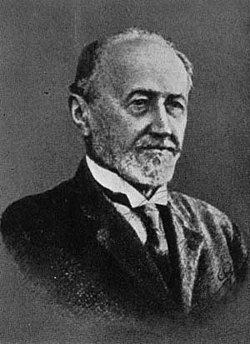
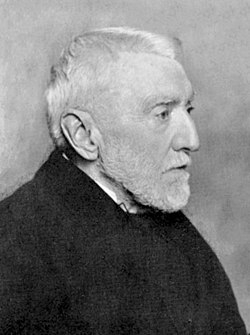
Scottish physician Henry Faulds published a letter in Nature proposing that fingerprints could identify individuals and criminals. He also described recovering latent prints from surfaces and suggested using inked impressions for comparison.
Image source: Henry Faulds
1880
% complete
Faulds investigated fingerprints left on pottery and other objects and experimented with methods for revealing them. His work helped establish the forensic concept of a latent fingerprint, although his priority claims later became controversial.
1883
% complete
Mark Twain's novel Life on the Mississippi included a plot in which a fingerprint helps expose a murderer. The story helped bring the idea of fingerprint-based identification to a broad popular audience before routine police adoption.
Image source: Life on the Mississippi
1892
% complete
Galton's research formalized the major pattern groups of arches, loops, and whorls and promoted the use of ridge details for comparison. His terminology and statistical arguments strongly influenced police identification bureaus worldwide.
Image source: Francis Galton
1892
% complete
Francis Galton published Finger Prints, the first major scientific treatment of fingerprint evidence. He analyzed permanence, individuality, and pattern types and estimated the extremely low probability of two people sharing the same fingerprint patterns.
1858
% complete
British colonial administrator William James Herschel began using handprints and fingerprints on contracts in Jungipoor, India. He found that the impressions helped deter impersonation and later argued that fingerprints remained stable over time.
Image source: Sir William Herschel, 2nd Baronet
1877
% complete
As an administrator in Bengal, Herschel expanded the use of fingerprints for identifying pensioners, prisoners, and contract parties. His administrative experiments became an important precursor to formal forensic fingerprint systems.
1882
% complete
United States Geological Survey employee Gilbert S. Thompson reportedly used his own thumbprint on a document and a check in New Mexico to prevent forgery. The episode is often cited as an early American practical use of fingerprints for authentication.
1892
% complete
In Argentina, police used a bloody fingerprint to identify Francisca Rojas as the murderer of her children. The case is widely regarded as the first murder conviction based substantially on fingerprint evidence.
Image source: Francisca Rojas
1892
% complete
Argentine police official Juan Vucetich began developing a fingerprint-based identification system after studying Galton's work. Argentina became one of the first countries to apply fingerprints systematically in criminal investigations and police records.
Image source: Juan Vucetich
1896
% complete
Vucetich created the Ignofalangometría system, later called the Vucetich classification, for organizing fingerprint records. It used pattern characteristics and became influential across Latin America and other regions.
1896
% complete
Edward Henry, inspector general of police in Bengal, developed a practical classification system based on Galton's work. The Henry Classification System made large collections of paper fingerprint cards searchable and became especially influential in English-speaking jurisdictions.
Image source: Edward Henry
1897
% complete
The Bengal Fingerprint Bureau was established at Calcutta, generally recognized as the world's first government fingerprint bureau. Its work helped replace anthropometry with fingerprint records for identifying repeat offenders.
1897
% complete
The government of British India officially adopted the Henry system for criminal identification. Its successful use demonstrated that fingerprints could support large-scale administrative and police filing.
Image source: Henry Classification System
1901
% complete
London's Metropolitan Police established a fingerprint branch and adopted the Henry system. The move marked a major institutional shift toward fingerprint records in British policing.
Image source: Metropolitan Police
1904
% complete
The U.S. military began using fingerprints for identification, and the practice spread to federal and local law enforcement. Fingerprints increasingly replaced anthropometric measurements as the principal method of recording offenders.
1905
% complete
Alfred and Albert Stratton were convicted in England after a fingerprint found at the crime scene was linked to Alfred Stratton. The case helped establish fingerprints as persuasive courtroom evidence in Britain.
1924
% complete
The Identification Division of the U.S. Bureau of Investigation was formed by consolidating fingerprint records from federal agencies and other contributors. It created the foundation of the United States' national fingerprint repository.
1930
% complete
During the early twentieth century, U.S. courts increasingly accepted expert testimony based on fingerprint comparison. By the 1930s, fingerprint evidence had become a routine component of criminal trials, although standards and terminology varied.
1930
% complete
The FBI expanded standardized fingerprint training, examination, and record services for police agencies. Professionalization helped make fingerprint comparison a specialized forensic discipline.
Image source: Federal Bureau of Investigation
1960
% complete
Government agencies and technology companies began researching computers that could encode and compare fingerprint ridge information. Automation was developed to address the growing size of manually maintained fingerprint files.
1980
% complete
The FBI began deploying an automated fingerprint identification capability to search digitized records. Computer-assisted matching substantially reduced the time required to compare unknown prints against large criminal databases.
1999
% complete
The FBI's Integrated Automated Fingerprint Identification System became operational, replacing older paper-centered processes with a national electronic repository and automated searches. IAFIS supported criminal identification, latent-print searches, and identity checks.
2007
% complete
Fingerprint sensors began appearing in laptops, access-control systems, and other consumer products. Their adoption extended fingerprint recognition beyond police and civil identification into everyday device authentication.
2009
% complete
India's Unique Identification Authority began enrolling residents for Aadhaar, a national identity system using fingerprints, iris scans, and demographic data. The program became one of the world's largest biometric identity initiatives.
Image source: Aadhaar
2013
% complete
Apple introduced Touch ID with the iPhone 5S, bringing capacitive fingerprint authentication to a mass-market smartphone. The feature helped normalize fingerprint unlocking and biometric authorization for consumers.
Image source: Touch ID
2014
% complete
The FBI completed the transition from IAFIS to Next Generation Identification, an expanded biometric platform. NGI improved fingerprint storage and searching and added or integrated capabilities involving palms, faces, irises, and other biometric modalities.
2015
% complete
Fingerprint sensors became common across major smartphone platforms and were increasingly used for unlocking devices, authorizing payments, and protecting applications. This period marked the broad mainstreaming of fingerprint recognition as a consumer technology.
Or browse the full history timeline directory, with more than 2,000 topics.
This History of Fingerprinting timeline was generated with the help of AI, using information found on the internet.
We work hard to keep these timelines accurate, but mistakes do get through. If you spot one, email us at [email protected] and we'll fix it for future visitors.
Generate yours with AI or build it from scratch, for free.
Export your timeline, add your own events, edit or remove AI-generated events, and much more
No credit card required.
Cancel anytime.
Cancel anytime.
You can create an unlimited number of timelines with up to 10 events on each one, customize how they look, export them to PDF, PNG, PowerPoint, CSV, and Excel, and share them with a link. Paid plans raise the event limit and add features like spreadsheet imports and collaborators.
Yes. You can cancel your subscription from your account page at any time, and you will not be charged again. Your subscription stays active for the rest of the period you already paid for.
Yes. We will email you a reminder before the annual renewal, and we will also email you a receipt.
Yes. You can email us within 15 days of any payment, and we will issue you a full refund.
Check out our pricing docs or send us an email anytime: [email protected].