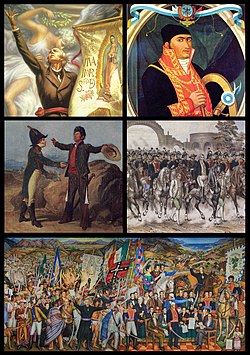
-
Use Cases
-
Resources
-
Pricing
Feb 10, 1763
% complete
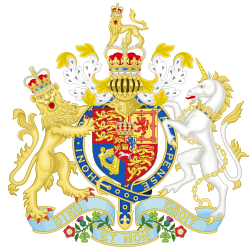
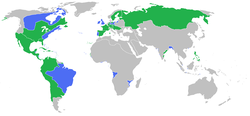
The Treaty of Paris ended the Seven Years' War and strengthened Britain, France, and Spain as imperial powers in the Americas. Its fiscal consequences encouraged European governments to impose new taxes and administrative reforms that intensified colonial grievances and helped create the political environment in which Atlantic revolutions emerged.
Image source: Treaty of Paris (1763)
Jul 4, 1776
% complete
The United States Declaration of Independence announced the separation of thirteen British colonies and articulated ideas of popular sovereignty and natural rights. Its language and eventual military success influenced creole elites and revolutionary thinkers throughout Spanish and Portuguese America.
Image source: United States Declaration of Independence
Nov 4, 1780 - Mar 6, 1781
% complete
José Gabriel Condorcanqui, known as Túpac Amaru II, led a major uprising against Spanish colonial rule in the Andes. The movement challenged forced labor, taxation, and racial hierarchy, mobilizing Indigenous and other communities before Spanish authorities captured and executed its leaders.
Image source: Rebellion of Túpac Amaru II
Mar 16, 1781 - Oct 8, 1781
% complete
The Comuneros Revolt began in the Viceroyalty of New Granada as a popular response to increased taxes and economic controls. Although colonial authorities made temporary concessions, the revolt demonstrated the depth of opposition to Bourbon reforms and became an important precedent for later independence movements.
Image source: Revolt of the Comuneros
Jul 14, 1789
% complete
The French Revolution overturned the established political order in France and popularized arguments about citizenship, equality, and national sovereignty. Its consequences reverberated across the Atlantic, especially in Saint-Domingue, where enslaved people transformed revolutionary ideals into a struggle for emancipation and independence.
Image source: French Revolution
Jun 27, 1806 - Sep 5, 1807
% complete
British forces invaded the Spanish Viceroyalty of the Río de la Plata twice but were defeated by local militias and residents. The victories weakened confidence in Spanish imperial protection and helped develop military and political leadership that later supported the independence of Argentina and neighboring regions.
Image source: British invasions of the River Plate
Oct 27, 1807 - Apr 17, 1814
% complete
Napoleon's invasion of Portugal and Spain destabilized both Iberian monarchies. The removal of the Spanish Bourbon dynasty and the installation of Joseph Bonaparte created a crisis of legitimacy, prompting American colonies to form juntas and debate whether sovereignty reverted to local communities.
Image source: Peninsular War
Aug 22, 1791 - Jan 1, 1804
% complete
A large-scale uprising of enslaved people began in the French colony of Saint-Domingue in August 1791. The revolution developed through war, emancipation, and competing foreign interventions, eventually destroying French colonial control and creating the first independent state founded by formerly enslaved people in the modern era.
Image source: Haitian Revolution
Feb 4, 1794
% complete
The French National Convention abolished slavery in French colonies during the Haitian Revolution. The decree strengthened formerly enslaved revolutionaries who fought to defend emancipation, although Napoleon later attempted to restore slavery, contributing to renewed conflict and the eventual independence of Haiti.
May 1, 1797
% complete
Toussaint Louverture consolidated political and military authority in Saint-Domingue and became its effective governor. He maintained nominal loyalty to France while administering the colony, ending foreign threats and attempting to revive its plantation economy under a system of compulsory labor.
Image source: Toussaint Louverture
Jun 7, 1802
% complete
French forces captured Toussaint Louverture after Napoleon Bonaparte sent an expedition to reassert metropolitan control over Saint-Domingue. Louverture was deported to France and died in prison, but the attempt to restore French authority intensified resistance under Jean-Jacques Dessalines and other revolutionary commanders.
Jan 1, 1804
% complete
Jean-Jacques Dessalines proclaimed the independence of Haiti, ending French rule in Saint-Domingue. Haiti became the first independent nation in Latin America and the first postcolonial state led by formerly enslaved people, though diplomatic isolation and economic penalties followed from its revolutionary example.
Image source: Haitian Declaration of Independence
Dec 25, 1831 - Jan 23, 1832
% complete
The Baptist War was the largest uprising of enslaved people in Jamaica and was led in part by Samuel Sharpe. British authorities suppressed the revolt, but the scale of resistance accelerated the passage of the Slavery Abolition Act and the end of slavery in most British colonies.
Image source: Baptist War
Aug 1, 1834
% complete
The Slavery Abolition Act took effect in most British colonies, beginning a transition away from plantation slavery in the Caribbean. Emancipation was incomplete because many formerly enslaved people were subjected to an apprenticeship system, but the measure transformed the political landscape of the region.
Image source: Slavery Abolition Act 1833
Apr 27, 1848
% complete
The French Second Republic abolished slavery in its colonies for a second and lasting time. The decree ended slavery in Martinique, Guadeloupe, French Guiana, and Réunion, extending the anticolonial and emancipatory consequences of the Atlantic revolutionary era.
Sep 23, 1868
% complete
The Grito de Lares was an unsuccessful uprising against Spanish rule in Puerto Rico. Although quickly suppressed, it reflected the wider nineteenth-century independence movement in the Caribbean and influenced later debates about Puerto Rican autonomy, abolition, and sovereignty.
Image source: Grito de Lares
Oct 10, 1868 - Feb 10, 1878
% complete
Carlos Manuel de Céspedes issued the Grito de Yara and launched the Ten Years' War against Spanish rule in Cuba. The rebellion combined independence with emancipation, though internal divisions and military exhaustion led to the Pact of Zanjón without achieving Cuban independence.
Image source: Ten Years' War
Jan 22, 1808
% complete
The Portuguese royal court arrived in Rio de Janeiro after fleeing Napoleon's invasion. Brazil gained institutions, ports, and commercial privileges previously concentrated in Portugal, accelerating its political and economic autonomy and laying foundations for a relatively centralized path to independence.
Image source: Transfer of the Portuguese court to Brazil
Sep 7, 1822
% complete
Pedro, prince regent of Brazil, proclaimed independence from Portugal in the declaration known as the Cry of Ipiranga. Unlike many Spanish American revolutions, Brazil retained the Braganza monarchy, and independence was consolidated through negotiations and regional military campaigns.
Image source: Independence of Brazil
Aug 25, 1825
% complete
The Congress of Florida declared the Banda Oriental independent from Brazil and sought incorporation into the United Provinces. International mediation during the Cisplatine War eventually produced an independent Uruguay recognized by Brazil and Argentina.
Image source: United States Declaration of Independence
Aug 29, 1825
% complete
The Treaty of Rio de Janeiro secured Portugal's recognition of Brazil's independence. The agreement formally ended the conflict between the two countries while preserving Pedro I's position as emperor of Brazil and king of Portugal for a short period.
Image source: Treaty of Rio de Janeiro (1825)
Feb 20, 1827
% complete
United Provinces of the Río de la Plata forces defeated the Brazilian army at Ituzaingó during the Cisplatine War. The conflict ultimately contributed to the creation of Uruguay as an independent buffer state between Brazil and the Río de la Plata region.
Aug 27, 1828
% complete
The Treaty of Montevideo ended the Cisplatine War and recognized Uruguay as an independent state. British diplomacy helped broker the settlement, which stabilized regional relations while confirming the fragmentation of former Spanish and Portuguese imperial territories.
Apr 19, 1810
% complete
Political leaders in Caracas deposed the captain general and established a junta claiming to govern in the name of the captive Spanish king. The action marked a decisive break with colonial authorities and began the Venezuelan independence process, though royalist resistance soon produced a prolonged war.
Image source: Venezuelan War of Independence
May 25, 1810
% complete
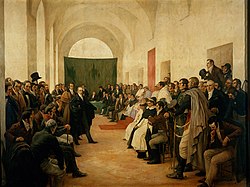
The May Revolution replaced the Spanish viceroy in Buenos Aires with a local Primera Junta. Although the leaders initially used language of loyalty to Ferdinand VII, the event launched the political process that produced Argentine independence and challenged Spanish control across the Río de la Plata.
Image source: May Revolution
Jul 20, 1810
% complete
A confrontation in Bogotá helped trigger the formation of a local governing junta in New Granada. The movement developed amid regional divisions and civil conflict, eventually becoming part of Simón Bolívar's broader campaign to establish an independent Colombia.
Image source: Colombian War of Independence
Sep 16, 1810
% complete
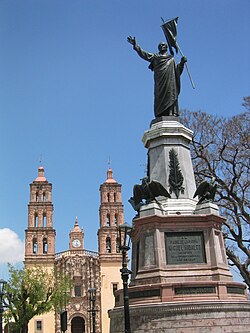
Miguel Hidalgo y Costilla called for rebellion against Spanish rule in the town of Dolores. His appeal mobilized large numbers of Indigenous and mestizo followers and began the Mexican War of Independence, though royalist forces later captured and executed Hidalgo.
Image source: Cry of Dolores
May 14, 1811 - May 15, 1811
% complete
A largely peaceful movement in Asunción displaced Spanish authorities and established Paraguayan self-government. Paraguay preserved its autonomy from both Spain and the revolutionary governments of the Río de la Plata, creating an independent state under strong local leadership.
Image source: Independence of Paraguay
Jul 5, 1811
% complete
The Congress of Venezuela formally declared independence from Spain. The First Republic adopted a republican constitution, but social divisions, military defeats, and a devastating earthquake enabled royalist forces to restore control temporarily.
Image source: Venezuelan Declaration of Independence
Sep 14, 1813
% complete
José María Morelos presented the Sentiments of the Nation at the Congress of Chilpancingo. The document called for national sovereignty, an end to social distinctions and slavery, and independence from Spain, expressing a broader and more socially transformative vision of Mexican revolution.
Jul 9, 1816
% complete
The Congress of Tucumán formally declared independence from Spain and its monarchy. The declaration provided legal and political support for José de San Martín's military strategy of crossing the Andes and attacking Spanish power in Chile and Peru.
Image source: Argentine Declaration of Independence
Feb 12, 1817
% complete
José de San Martín's Army of the Andes defeated Spanish royalist forces at Chacabuco in Chile. The victory opened the way to Santiago and enabled the establishment of an independent Chilean government under Bernardo O'Higgins.
Image source: Battle of Chacabuco
Apr 5, 1818
% complete
Patriot forces led by San Martín defeated the Spanish army at Maipú, securing Chilean independence. The victory ended the immediate royalist threat from central Chile and allowed San Martín to prepare the maritime expedition against Spanish Peru.
Image source: Battle of Maipú
Aug 7, 1819
% complete
Simón Bolívar's army defeated Spanish forces at the Battle of Boyacá, opening Bogotá and decisively weakening Spanish rule in New Granada. The victory helped establish the Republic of Colombia, known as Gran Colombia, which united several former Spanish territories.
Image source: Battle of Boyacá
Jul 28, 1821
% complete
José de San Martín proclaimed the independence of Peru in Lima after patriot forces entered the viceregal capital. Spanish military power remained substantial in the interior, so the declaration required subsequent campaigns led by Bolívar and Sucre to become secure.
Image source: Peruvian War of Independence
May 24, 1822
% complete
Antonio José de Sucre's patriot army defeated Spanish royalists on the slopes of Pichincha above Quito. The victory liberated Quito and incorporated the territory of present-day Ecuador into the revolutionary project associated with Gran Colombia.
Image source: Battle of Pichincha
Jul 26, 1822 - Jul 27, 1822
% complete
Simón Bolívar and José de San Martín met in Guayaquil to discuss the future of South American independence and political organization. San Martín subsequently withdrew from the campaign, leaving Bolívar to lead the final military struggle against Spanish forces in Peru.
Image source: Guayaquil Conference
Dec 9, 1824
% complete
Antonio José de Sucre defeated the principal Spanish army at Ayacucho in southern Peru. The capitulation effectively ended Spain's military power in mainland South America and is widely regarded as the decisive final battle of Spanish American independence.
Aug 6, 1825
% complete
The former Upper Peru declared independence and adopted the name Bolivia in honor of Simón Bolívar. The new republic emerged from the collapse of Spanish authority and chose a separate political path rather than joining Peru or Gran Colombia.
Image source: Bolivian Declaration of Independence
Dec 28, 1836
% complete
Spain formally recognized Mexican independence through the Santa María–Calatrava Treaty. The agreement ended the legal dispute between the former colonial power and Mexico, fifteen years after Mexican forces completed the military and political break with Spain.
Image source: Mexican War of Independence
Or browse the full history timeline directory, with more than 2,000 topics.
This Latin American Independence timeline was generated with the help of AI, using information found on the internet.
We work hard to keep these timelines accurate, but mistakes do get through. If you spot one, email us at [email protected] and we'll fix it for future visitors.
Generate yours with AI or build it from scratch, for free.
Export your timeline, add your own events, edit or remove AI-generated events, and much more
No credit card required.
Cancel anytime.
Cancel anytime.
You can create an unlimited number of timelines with up to 10 events on each one, customize how they look, export them to PDF, PNG, PowerPoint, CSV, and Excel, and share them with a link. Paid plans raise the event limit and add features like spreadsheet imports and collaborators.
Yes. You can cancel your subscription from your account page at any time, and you will not be charged again. Your subscription stays active for the rest of the period you already paid for.
Yes. We will email you a reminder before the annual renewal, and we will also email you a receipt.
Yes. You can email us within 15 days of any payment, and we will issue you a full refund.
Check out our pricing docs or send us an email anytime: [email protected].