-
Use Cases
-
Resources
-
Pricing
Oct 1791
The Society of United Irishmen was founded in Belfast by liberal Protestants including Theobald Wolfe Tone and Henry Joy McCracken. It sought parliamentary reform and cooperation among Catholics, Protestants, and dissenters, eventually developing into a revolutionary republican movement opposed to British rule.
Image source: Society of United Irishmen
May 23, 1798 - Sep 23, 1798
The United Irishmen launched a rebellion against British rule in 1798. The uprising was suppressed after fierce fighting, executions, and reprisals, but it profoundly influenced later Irish nationalism and demonstrated the appeal of an all-Ireland republican movement.
Image source: Irish Rebellion of 1798
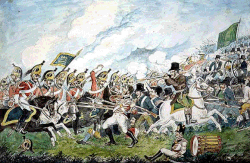
Jul 23, 1803
Robert Emmet led a short-lived republican insurrection in Dublin in 1803. The revolt failed to mobilize the country, and Emmet was executed, but his speech from the dock and his willingness to die for Irish independence made him a lasting nationalist symbol.
Image source: Robert Emmet
Jul 29, 1848
Young Ireland nationalists attempted an uprising at Ballingarry during the revolutionary wave of 1848. The poorly supported rebellion was quickly defeated, but its leaders helped transmit a more militant, culturally nationalist vision of Irish self-government.
Image source: Young Ireland rebellion
Mar 17, 1858
James Stephens founded the Irish Republican Brotherhood, a secret organization dedicated to establishing an independent Irish republic by force if necessary. Its networks later influenced the Fenian movement, the Easter Rising, and the political development of Sinn Féin.
Image source: Irish Republican Brotherhood
Mar 5, 1867
The Irish Republican Brotherhood attempted an armed rising in Ireland in 1867, supported by Fenian activity in Britain and plans for attacks in Canada. The revolt was rapidly suppressed, but the movement kept physical-force republicanism alive and provoked severe British security measures.
Nov 25, 1913
The Irish Volunteers were established in response to the creation of the unionist Ulster Volunteers. Intended to defend Home Rule, the organization soon contained a radical minority that later formed the military core of the Easter Rising and the Irish War of Independence.
Image source: Irish Volunteers
Jul 26, 1914
The Asgard landed rifles and ammunition at Howth for the Irish Volunteers. The successful operation strengthened the movement's capacity and demonstrated the growing militarization of Irish politics shortly before the First World War.
Apr 24, 1916 - Apr 29, 1916
Irish republicans seized strategic buildings in Dublin and proclaimed an Irish Republic. British forces suppressed the rising within a week and executed its leaders, but the executions transformed public opinion and turned a previously minority revolutionary project into a mass independence movement.
Image source: Easter Rising
Dec 14, 1918
Sinn Féin won most Irish seats in the 1918 general election on a platform of establishing an independent republic rather than attending Westminster. The result provided an electoral mandate for the creation of a separate Irish political authority.
Image source: 1918 United Kingdom general election in Ireland
Jan 21, 1919
Elected Sinn Féin deputies assembled in Dublin as Dáil Éireann, declaring themselves the parliament of an Irish Republic. They adopted a declaration of independence, a democratic program, and an appeal for international recognition.
Jan 1, 1801
The Acts of Union created the United Kingdom of Great Britain and Ireland and abolished the Irish Parliament. The measure followed the defeat of the 1798 rebellion and was promoted by the British government as a means of strengthening imperial control, though opposition to the union remained central to Irish politics.
Image source: Acts of Union 1800
1823
Daniel O'Connell founded the Catholic Association to organize Catholics through petitions, meetings, and electoral pressure. Its mass campaign made Catholic emancipation a national political demand and created a model for constitutional nationalist mobilization.
Image source: Catholic Association
Apr 13, 1829
The Roman Catholic Relief Act allowed Catholics to sit in the Westminster Parliament and hold most public offices. The concession followed Daniel O'Connell's election and the threat of mass unrest, although restrictive property qualifications and the continued union remained.
Image source: Roman Catholic Relief Act 1829
1840
Daniel O'Connell established the Repeal Association to campaign for restoration of an Irish legislature within the United Kingdom. The movement organized large public gatherings and became the leading constitutional nationalist force before the Great Famine.
1845 - 1852
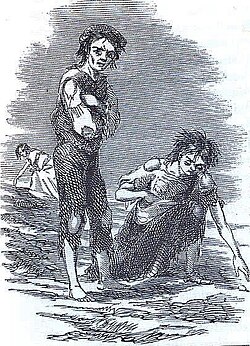
Potato blight caused repeated crop failures, producing mass starvation, disease, eviction, and emigration. British relief policies and the political structure of the union were widely condemned, and the demographic and social trauma radicalized later generations of Irish nationalists.
Image source: Great Famine (Ireland)
1879 - 1882
The Land War was a mass campaign by tenant farmers against high rents, eviction, and landlord power. Led politically by the Irish National Land League and Charles Stewart Parnell, it linked agrarian reform with the broader struggle for Irish self-government.
Image source: Land War
Oct 21, 1879
Michael Davitt and Charles Stewart Parnell helped establish the Irish National Land League in Dublin. The organization used rent strikes, boycotts, and mass meetings to demand tenant rights, making popular organization a powerful instrument of Irish nationalism.
Apr 11, 1912
The Liberal government introduced the Third Home Rule Bill, which proposed an Irish parliament with limited powers while retaining Ireland within the United Kingdom. Unionist resistance in Ulster and nationalist impatience transformed the debate into a constitutional crisis.
Image source: Government of Ireland Act 1914
Sep 28, 1912
Hundreds of thousands of unionists signed the Ulster Covenant, pledging to resist Home Rule. The campaign, led by Edward Carson and James Craig, established organized armed opposition and helped create the political and military conditions for partition.
Image source: Ulster Covenant
Jan 21, 1919
Irish Volunteers in County Tipperary ambushed and killed two Royal Irish Constabulary officers escorting gelignite. The action is commonly regarded as the opening engagement of the Irish War of Independence, although the conflict developed unevenly across the country.
Image source: Soloheadbeg ambush
Jan 21, 1919 - Jul 11, 1921
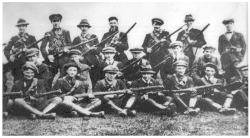
The Irish Republican Army waged a guerrilla campaign against the British state, using ambushes, intelligence networks, and attacks on the police and military. British reprisals, internment, and the deployment of the Black and Tans produced widespread violence before a truce opened negotiations.
Image source: Irish War of Independence
Dec 23, 1920
The Government of Ireland Act created separate parliaments for Northern Ireland and Southern Ireland. Although the southern institution never functioned as intended, the act established the legal framework for partition and confirmed Northern Ireland's place within the United Kingdom.
Dec 6, 1921
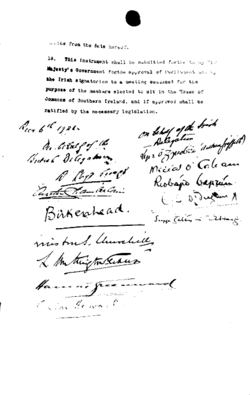
The Anglo-Irish Treaty established the Irish Free State as a self-governing dominion and ended the war, while requiring an oath to the Crown and allowing Northern Ireland to opt out. The compromise fell short of a republic and divided the nationalist movement.
Image source: Anglo-Irish Treaty
Jun 28, 1922 - May 24, 1923
Pro-Treaty forces of the Free State fought anti-Treaty republicans who rejected partition, the oath, and dominion status. The government secured victory through conventional operations, executions, and internment, but the conflict left a lasting political and social divide.
Image source: Irish Civil War
1967 - 1969
Civil rights organizations mobilized against discrimination in housing, employment, voting arrangements, and local government in Northern Ireland. Marches and government responses intensified communal tensions and helped precipitate the wider Troubles.
Image source: Northern Ireland Civil Rights Association
Aug 14, 1969 - Apr 10, 1998
Communal violence, political conflict, and armed campaigns by republican and loyalist paramilitaries engulfed Northern Ireland and affected Britain and the Republic of Ireland. The conflict caused thousands of deaths and made constitutional questions central to international diplomacy.
Image source: The Troubles
Dec 6, 1922
The Irish Free State formally came into existence under the treaty settlement. It possessed substantial domestic autonomy but remained constitutionally linked to the British Crown, while Northern Ireland exercised its right to remain within the United Kingdom.
Image source: Irish Free State
Mar 16, 1926
Éamon de Valera founded Fianna Fáil after breaking with Sinn Féin over abstentionism. The party entered the Dáil in 1927 and pursued the dismantling of the treaty settlement through constitutional and political means.
Image source: Fianna Fáil
Mar 9, 1932
Fianna Fáil formed a government under Éamon de Valera, beginning a period of constitutional transformation. His administration removed the oath to the Crown, reduced the governor-general's role, and challenged remaining treaty obligations.
Image source: Éamon de Valera
Jul 1, 1937
A referendum approved Bunreacht na hÉireann, replacing the Free State constitution. It created the offices of president and Taoiseach, asserted sovereignty over the island in constitutional language, and further separated the state from Britain while leaving partition unresolved.
Image source: Constitution of Ireland
Apr 18, 1949
The Republic of Ireland Act came into force, ending the remaining formal role of the British monarch in the state and transferring external relations to the president. Ireland thus became a republic outside the Commonwealth, while Northern Ireland remained part of the United Kingdom.
Image source: The Republic of Ireland Act 1948
Dec 14, 1955
Ireland was admitted to the United Nations after earlier applications had been blocked in the context of the Cold War. Membership gave the republic a wider international platform and reinforced its independent diplomatic identity.
Nov 15, 1985
The governments of Ireland and the United Kingdom signed the Anglo-Irish Agreement, giving Dublin an advisory role in Northern Ireland's affairs. Though opposed by most unionist politicians, it established important principles of intergovernmental cooperation and consent.
Image source: Anglo-Irish Agreement
Aug 31, 1994
The Provisional IRA announced a complete cessation of military operations, following secret contacts and growing political pressure for a negotiated settlement. The ceasefire enabled multi-party talks, though it was temporarily broken in 1996 before being restored.
Apr 10, 1998
The Belfast, or Good Friday, Agreement established a power-sharing framework for Northern Ireland, recognized the principle of consent regarding its constitutional status, and created institutions for cooperation between Northern Ireland, Ireland, and the United Kingdom. It became the central political settlement of the peace process.
Image source: Good Friday Agreement
May 22, 1998
Voters in the Republic of Ireland approved the constitutional changes required by the Good Friday Agreement. The amendments replaced the territorial claim to Northern Ireland with a commitment to unity only by consent, marking a major adjustment in the constitutional understanding of Irish nationalism.
Or browse the full history timeline directory, with more than 2,500 topics.
This Irish Independence timeline was generated with the help of AI, using information found on the internet.
We work hard to keep these timelines accurate, but mistakes do get through. If you spot one, email us at [email protected] and we'll fix it for future visitors.
Generate yours with AI or build it from scratch, for free.
Export your timeline, add your own events, edit or remove AI-generated events, and much more
No credit card required.
Cancel anytime.
Cancel anytime.
You can create an unlimited number of timelines with up to 10 events on each one, customize how they look, export them to PDF, PNG, PowerPoint, CSV, and Excel, and share them with a link. Paid plans raise the event limit and add features like spreadsheet imports and collaborators.
Yes. You can cancel your subscription from your account page at any time, and you will not be charged again. Your subscription stays active for the rest of the period you already paid for.
Yes. We will email you a reminder before the annual renewal, and we will also email you a receipt.
Yes. You can email us within 15 days of any payment, and we will issue you a full refund.
Check out our pricing docs or send us an email anytime: [email protected].