
-
Use Cases
-
Resources
-
Pricing
The Great Famine, also known as the Irish Potato Famine, was a period of mass starvation, disease, and emigration in Ireland between 1845 and 1852. It was caused by potato blight (Phytophthora infestans), which destroyed the staple food crop of much of Ireland's population. The catastrophe resulted in approximately one million deaths and drove over a million people to emigrate, profoundly reshaping Ireland's demographics, culture, and history. More Less
Sep 1845
% complete
In September 1845, the water mold Phytophthora infestans, commonly known as potato blight, was first observed in Ireland. The blight rapidly destroyed much of the potato crop, which was the staple food of a large portion of the Irish population, setting the stage for one of the deadliest famines in European history.
Image source: Great Famine (Ireland)
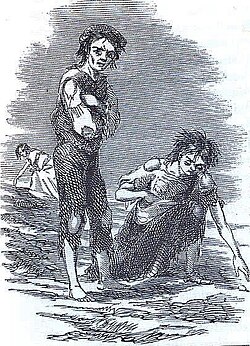
Aug 1846
% complete
The potato blight returned in August 1846 with catastrophic force, destroying nearly the entire potato harvest across Ireland. Unlike 1845, when about half the crop survived, virtually nothing remained, transforming hardship into mass starvation throughout the winter of 1846–47.
1848
% complete
The blight struck again in 1848, though the harvest was somewhat better than in 1846. Nevertheless, continued crop failures, combined with exhausted resources and weakened populations, prolonged suffering and death well into the following years.
Oct 1845
% complete
Prime Minister Robert Peel established a scientific commission to investigate the mysterious disease destroying Ireland's potato crop. The commission incorrectly concluded that the cause was static electricity or atmospheric conditions rather than a fungal-like organism, delaying effective understanding of the blight.
Nov 1845
% complete
Without informing his own cabinet, Prime Minister Robert Peel secretly arranged the purchase of £100,000 worth of Indian corn (maize) from America to serve as emergency food relief. This action anticipated the failure of the potato harvest and became a cornerstone of early famine relief efforts.
Jun 1846
% complete
The British Parliament repealed the Corn Laws, which had imposed protective tariffs on imported grain. While partly motivated by the Irish famine, the repeal primarily reflected broader free trade debates in Britain and split the Conservative Party, leading to Peel's resignation as prime minister.
Image source: Corn Laws
Jun 30, 1846
% complete
Lord John Russell of the Whig Party succeeded Robert Peel as Prime Minister in June 1846. His government adopted a more laissez-faire approach to famine relief than Peel's administration, believing that markets should be left alone and that Irish landlords should bear greater responsibility for relief costs.
Image source: John Russell, 1st Earl Russell
Nov 1846
% complete
The Society of Friends (Quakers) organized extensive private relief efforts, establishing soup kitchens, distributing food, and providing clothing and employment. Their Central Relief Committee raised substantial funds from America and Britain and earned widespread respect for efficient, non-sectarian aid.
Feb 1847
% complete
Parliament passed the Temporary Relief Act, also known as the Soup Kitchen Act, which funded free soup kitchens across Ireland. At their height in July 1847, over three million people were being fed daily through this system, which proved far cheaper and more efficient than public works.
Image source: Soup kitchen
Mar 1847
% complete
Despite having recently endured the Trail of Tears themselves, the Choctaw Nation collected $170 to send to Irish famine victims. This remarkable act of generosity from an impoverished people has become a lasting symbol of solidarity between the two nations.
Image source: Native American and Irish interactions
Jun 1847
% complete
The Gregory clause, inserted into the Poor Law Amendment Act at the urging of William Gregory, required tenants holding more than a quarter acre of land to surrender it before receiving relief. This provision led to mass evictions, as destitute families abandoned their plots to enter workhouses.
Image source: Sir Charles Trevelyan, 1st Baronet
Jun 1847
% complete
The Poor Law Amendment Act transferred responsibility for famine relief from the British Treasury to Irish poor law unions, funded by local taxes levied largely on landlords. This policy, known as 'Irish property must pay for Irish poverty,' placed enormous strain on already impoverished districts.
Image source: Irish Poor Law Extension Act 1847
1848 - 1850
% complete
Landlords, burdened with poor rates for impoverished tenants, carried out mass evictions, demolishing cabins and clearing estates. Tens of thousands of families were forcibly removed from their homes during these years, adding homelessness to hunger and accelerating emigration.
Jul 29, 1848
% complete
Frustrated by British policies during the famine, the Young Ireland movement launched an ill-fated rebellion in County Tipperary. The uprising, known as the Battle of Ballingarry or the 'Cabbage Patch rebellion,' was quickly suppressed, and its leaders were transported to Australia.
Image source: Young Ireland rebellion
Jul 1849
% complete
The Encumbered Estates Act created a court to facilitate the sale of heavily indebted Irish estates. Intended to inject capital and improve agriculture, it instead accelerated the transfer of land from indebted Anglo-Irish landlords to new owners, often resulting in further tenant displacement.
Aug 1849
% complete
Queen Victoria made her first visit to Ireland in August 1849, touring Dublin, Belfast, and Cork. Her visit was carefully choreographed to project normalcy, and while she received warm welcomes in some quarters, critics noted the stark contrast between royal pageantry and ongoing famine misery.
Image source: Queen Victoria
Jan 1847 - Dec 1847
% complete
The winter and spring of 1847, known as 'Black '47,' marked the worst period of the famine. Mass starvation peaked, and diseases such as typhus, dysentery, and cholera swept through the weakened population, killing tens of thousands even as some food supplies improved.
1847 - 1848
% complete
A massive typhus epidemic, spread by lice and exacerbated by overcrowding in workhouses and fever sheds, killed hundreds of thousands during 1847 and 1848. Doctors, priests, and relief workers who tended the sick died in large numbers, including many clergy and medical professionals.
1847 - 1850
% complete
Irish workhouses, designed under the Poor Law system to hold modest numbers of inmates, were swamped by desperate applicants. Designed for roughly 100,000 people total, they held over 200,000 by 1848. Overcrowding, filth, and disease made workhouses deadly, with mortality rates reaching catastrophic levels.
Image source: Workhouse
Dec 1848 - 1849
% complete
A cholera epidemic that had begun sweeping Europe reached Ireland in late 1848, killing tens of thousands of people already weakened by years of malnutrition. The disease spread rapidly through crowded towns, workhouses, and emigrant ships.
1850
% complete
By 1850, famine-related deaths began to decline significantly as successive harvests improved and the worst of the epidemics subsided. However, the population continued to fall due to sustained emigration, and recovery would take decades.
1851
% complete
The 1851 census revealed the devastating toll of the famine: Ireland's population had fallen from approximately 8.5 million in 1845 to around 6.5 million. Roughly one million people had died from starvation and disease, while another million or more had emigrated.
1847
% complete
As conditions deteriorated, hundreds of thousands of desperate Irish people fled to North America. Many traveled on overcrowded, disease-ridden vessels known as 'coffin ships,' where mortality rates were horrific. Roughly 100,000 emigrants departed in 1847 alone.
Image source: Irish diaspora
1852
% complete
Even after the acute famine ended, emigration from Ireland continued at extraordinary rates, becoming a defining feature of Irish life for the next century. Millions more left over subsequent decades, establishing large Irish communities in America, Canada, Australia, and Britain.
Or browse the full history timeline directory, with more than 2,000 topics.
This Irish Potato Famine timeline was generated with the help of AI, using information found on the internet.
We work hard to keep these timelines accurate, but mistakes do get through. If you spot one, email us at [email protected] and we'll fix it for future visitors.
Generate yours with AI or build it from scratch, for free.
Export your timeline, add your own events, edit or remove AI-generated events, and much more
No credit card required.
Cancel anytime.
Cancel anytime.
You can create an unlimited number of timelines with up to 10 events on each one, customize how they look, export them to PDF, PNG, PowerPoint, CSV, and Excel, and share them with a link. Paid plans raise the event limit and add features like spreadsheet imports and collaborators.
Yes. You can cancel your subscription from your account page at any time, and you will not be charged again. Your subscription stays active for the rest of the period you already paid for.
Yes. We will email you a reminder before the annual renewal, and we will also email you a receipt.
Yes. You can email us within 15 days of any payment, and we will issue you a full refund.
Check out our pricing docs or send us an email anytime: [email protected].