-
Use Cases
-
Resources
-
Pricing
The Great Chinese Famine was a catastrophic famine that struck mainland China between 1959 and 1961, resulting in an estimated 15 to 45 million deaths. It was largely triggered by the policies of the Great Leap Forward, including forced collectivization, unrealistic production targets, diversion of labor to steel production, poor weather conditions, and the suppression of accurate reporting on food shortages. More Less
1957
% complete
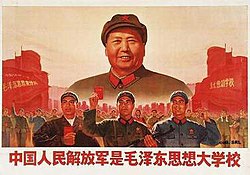
Beginning in 1957, the Chinese Communist Party began to report excessive production of grain because of pressure from superiors. However, the actual production of grain throughout China was decreasing from 1957 to 1961, creating a dangerous gap between reported figures and reality.
Image source: Great Chinese Famine
1957
% complete
The Statistical Exchange Meeting (SEM), established in 1957, led to the severity of the famine in various ways, including causing the 'illusion of superabundance' (浮夸风), in which inflated production figures distorted central planning decisions.
1958 - 1962
% complete
The Great Leap Forward, launched by Chairman Mao Zedong from 1958 to 1962, was a major contributing factor in the famine. Its policies included inefficient food distribution within the planned economy, extremely high grain confiscation rates for foreign exports, poor agricultural techniques and irrigation projects, and the rapid transition of millions of farmers to industrial labor, iron production, and steel production.
Image source: Great Leap Forward
1958
% complete
As part of the Great Leap Forward, people's communes were launched across China under Mao Zedong's leadership. The collectivization disrupted agricultural incentives and food distribution, becoming a major contributing factor to the famine that followed.
Image source: People's commune
1958
% complete
The Eliminate Sparrows Campaign significantly disrupted the Chinese ecosystem by wiping out sparrows, which allowed insect populations to flourish and devastate crops. This campaign was one of the major contributing factors in the Great Chinese Famine.
Image source: Four Pests campaign
1958
% complete
The Three Red Banners of the Chinese Communist Party—the General Line, the Great Leap Forward, and the people's communes—'sparked the fanaticism of 1958', driving radical policies and unrealistic production targets that contributed to the famine.
1958
% complete
In visits to Henan province in 1958, Mao observed what local officials claimed were increases in crop yield of one thousand to three thousand percent, supposedly achieved in massive 24-hour pushes organized by the officials which they called 'sputnik launches'. These inflated claims reinforced false beliefs about record harvests.
1958 - 1961
% complete
In Sichuan Province, even though the collected grain was decreasing from 1958 to 1961, the numbers reported to the central government kept increasing, exemplifying how falsified statistics worsened the famine by prompting excessive state requisitions.
1959 - 1961
% complete
At the worst time of the famine, the government was still exporting grain. The state's extremely high grain confiscation rates for foreign exports deprived rural populations of food supplies and is considered a major man-made cause of the disaster.
1957 - 1961
% complete
In Gansu province, the grain yield declined by 4,273,000 tonnes from 1957 to 1961, illustrating the dramatic collapse of agricultural output in some of the hardest-hit regions during the famine years.
Jul 1958
% complete
In July 1958, a notable regional flood of the Yellow River affected part of Henan Province and Shandong Province. It was reported as the most severe flood of the Yellow River since 1933, affecting 741,000 people in 1708 villages and inundating over 3.04 million mu (over half a million acres) of cultivated fields.
1959
% complete
Mao was kept unaware of some of the starvation of villagers in the rural areas who were suffering, as the birth rate began to plummet and deaths increased in 1958 and 1959. Political suppression within the CCP discouraged honest reporting of conditions.
1959
% complete
According to China's governmental data, crop production decreased from 200 million tons (400 billion jin) in 1958 to 170 million tons (340 billion jin) in 1959, and further to 143.5 million tons (287 billion jin) in 1960, deepening the food crisis.
1959
% complete
Weather had been relatively mild for much of the 1950s, but became particularly bad by 1959, driving down crop yields. The harvest was down by 15% in 1959 compared to 1958, and by 1960 it was at 70% of its 1958 level.
1959 - 1961
% complete
The Great Chinese Famine, also known as the 'three years of great famine', occurred between 1959 and 1961 in the People's Republic of China. Some scholars have also included the years 1958 or 1962. It became one of the deadliest famines in human history.
1960
% complete
Beijing believed that 'in 1960 state granaries would have 50 billion jin of grain', when they actually contained only 12.7 billion jin. This massive discrepancy between expectation and reality left the government unable to respond effectively to shortages.
Nov 1960
% complete
In November 1960, a special supply system (tegong) was established nationwide during the Great Famine, providing food and daily necessities exclusively to high-ranking officials of the Chinese Communist Party and Chinese government, while ordinary citizens faced severe shortages.
1958 - 1961
% complete
Due to the lack of food and incentive to marry, China's birth rate decreased from 2.922% (1958) to 2.086% (1960) and the death rate increased from 1.198% (1958) to 2.543% (1960). Mortality peaked in 1961 and began recovering rapidly after that.
1959 - 1961
% complete
According to China's official statistics, China's population in 1961 was about 658,590,000, some 14,580,000 lower than in 1959, reflecting both excess deaths and a collapse in births caused by the famine.
1960
% complete
In 1960, as gestures of solidarity with the starving population, Mao reportedly ate no meat for seven months and Zhou Enlai cut his monthly grain consumption, symbolic acts during the height of the famine.
1960
% complete
It is estimated that in 1960 alone, more than 10 million people died as the famine reached its most devastating point, with death rates soaring across rural China due to starvation and related causes.
1960
% complete
Dire hunger did not set in to places like Da Fo village until 1960. Studies also found that public dining hall participation rates were not a meaningful cause of famine in Anhui and Jiangxi, suggesting local variation in how the famine unfolded.
1961 - 1963
% complete
Beginning in 1961, China increased grain purchases and imports. Between 1961 and 1963, China imported grain from countries including Australia and Canada; these imports supplied cities and made it possible to reduce grain collections demanded from rural producers.
Jan 1961
% complete
In January 1961, the 9th Plenary Session of the 8th Central Committee initiated a policy of readjustment summarized as 'adjustment, consolidation, filling out, and improvement', marking a shift away from some of the Great Leap Forward's most extreme measures.
Apr 1961 - May 1961
% complete
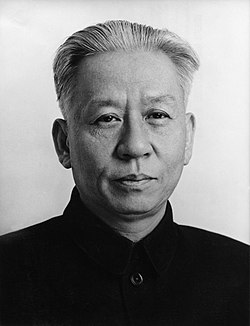
In April and May 1961, Liu Shaoqi, then President of China, concluded after 44 days of field research in villages of Hunan that the causes of the famine were 30% natural disaster and 70% human error (三分天灾,七分人祸).
Image source: Liu Shaoqi
Jan 1962 - Feb 1962
% complete
In January and February 1962, the '7000 Cadres Conference' took place in Beijing, attended by more than 7,000 CCP officials nationwide. During the conference, Liu Shaoqi formally attributed 30% of the famine to natural disasters and 70% to man-made errors (三分天灾,七分人祸).
Image source: Seven Thousand Cadres Conference
1963
% complete
In 1963, Mao launched the Socialist Education Movement, part of his political response following the famine years, which preceded the Cultural Revolution and intensified ideological campaigns within the party.
Image source: Socialist Education Movement
1966 - 1969
% complete
In 1966, Mao launched the Cultural Revolution, during which Liu Shaoqi was accused of being a traitor and enemy agent for attributing only 30% of the famine to natural calamities. Liu was beaten and denied medicine for diabetes and pneumonia; he died in 1969.
Image source: Cultural Revolution
Dec 1978
% complete
In December 1978, Deng Xiaoping became the new Paramount Leader of China and launched the historic Reform and opening up program, which fundamentally changed the agricultural and industrial system in China and paved the way for official reassessment of the famine.
1980
% complete
Academic studies on the Great Chinese Famine became more active in mainland China after 1980, when the government started to release some demographic data to the public, enabling scholars to research the famine's causes and toll more openly.
Jun 1981
% complete
During the 'Boluan Fanzheng' period in June 1981, the CCP officially changed the name of the famine to 'Three Years of Difficulty' (三年困难时期), thus no longer blaming nature alone. The party stated the famine was mainly due to the mistakes of the Great Leap Forward as well as the Anti-Right Deviation Struggle, in addition to some natural disasters and the Sino-Soviet split.
Image source: Boluan Fanzheng
Or browse the full history timeline directory, with more than 2,000 topics.
This Great Chinese Famine timeline was generated with the help of AI, using information found on the internet.
We work hard to keep these timelines accurate, but mistakes do get through. If you spot one, email us at [email protected] and we'll fix it for future visitors.
Generate yours with AI or build it from scratch, for free.
Export your timeline, add your own events, edit or remove AI-generated events, and much more
No credit card required.
Cancel anytime.
Cancel anytime.
You can create an unlimited number of timelines with up to 10 events on each one, customize how they look, export them to PDF, PNG, PowerPoint, CSV, and Excel, and share them with a link. Paid plans raise the event limit and add features like spreadsheet imports and collaborators.
Yes. You can cancel your subscription from your account page at any time, and you will not be charged again. Your subscription stays active for the rest of the period you already paid for.
Yes. We will email you a reminder before the annual renewal, and we will also email you a receipt.
Yes. You can email us within 15 days of any payment, and we will issue you a full refund.
Check out our pricing docs or send us an email anytime: [email protected].