-
Use Cases
-
Resources
-
Pricing
The history of potatoes traces the journey of one of the world's most important food crops, from its domestication in the Andean region of South America thousands of years ago, through its introduction to Europe by Spanish explorers in the 16th century, its transformative role in feeding growing populations, devastating events like the Irish Potato Famine, and its eventual establishment as a dietary staple across nearly every continent. More Less
8000 BC - 5000 BC
% complete
The potato was the first domesticated root vegetable in the region of modern-day southern Peru and extreme northwestern Bolivia between 8000 and 5000 BC, beginning its long history as a staple crop of Andean civilizations.
Image source: History of the potato
3400 BC
% complete
Recent evidence from stone tools suggests that potatoes existed as far back as 3400 BC, providing some of the earliest indications of human use of the tuber in the Andean region.
2500 BC
% complete
The earliest archaeologically verified potato tuber remains were found at the coastal site of Ancón in central Peru, dating to 2500 BC, confirming the potato's ancient presence along the Peruvian coast.
2000 BC - 500 BC
% complete
Potatoes dating to about 2000 BC were found at Huaynuma in the Casma Valley of Peru, and early potatoes dating to 800–500 BC were uncovered at the Altiplano site of Chiripa on the east side of Lake Titicaca.
1500 BC - 500 BC
% complete
Archaeological evidence shows that throughout the formative period from 1500 BC to 500 BC and the Tiwanaku period in the Andes, potatoes and other tubers became increasingly popular as a crop and food.
1557
% complete
The potato was cultivated by the Chono tribe in Guaitecas Archipelago in Patagonia, the southern limit of Pre-Hispanic agriculture, as noted by a Spanish expedition's mention of Chiloé potato cultivation in 1557.
Image source: Guaitecas Archipelago
1537
% complete
In 1537, a group of Spanish conquistadors became the first Europeans to encounter the potato while campaigning in South America.
1553
% complete
In 1553, Pedro Cieza de León referred to the plant as a 'battata' in his Crónica del Peru, also mentioning he had seen it in Quito, Popayán and Pasto in 1538.
Image source: Pedro Cieza de León
1562
% complete
Shipping records show potatoes were introduced to the Canary Islands from South America around 1562, making them the first place outside Central and South America where potatoes were grown outside their native range.
Nov 28, 1567
% complete
The first written mention of the potato is a receipt for delivery dated 28 November 1567 between Las Palmas de Gran Canaria and Antwerp, documenting early transatlantic trade in the tuber.
1570
% complete
The potato arrived in mainland Europe sometime before the end of the 16th century via two ports of entry, the first being Spain around 1570.
1588 - 1593
% complete
Historians speculate leftover tubers were carried ashore and planted, with a second entry point for the potato into Europe coming via the British Isles between 1588 and 1593.
1588
% complete
In 1588, botanist Carolus Clusius made a painting of what he called 'Papas Peruanorum' from a specimen in the Low Countries; in 1601 he reported potatoes were in common use in northern Italy for animal fodder and human consumption.
Image source: Carolus Clusius
1590
% complete
Basque fishermen from Spain used potatoes as ships' stores for voyages across the Atlantic in the 16th century and introduced the tuber to western Ireland, where they landed to dry their cod.
1600
% complete
By the end of the 16th century in France, the potato had been introduced to Franche-Comté, the Vosges of Lorraine and Alsace, marking early continental spread beyond Iberia.
1625
% complete
Ireland was probably the first area of Europe to cultivate the potato on a wide scale in the early 17th century; by the 18th century the Irish population exploded and its people subsisted almost entirely on the crop.
1675
% complete
Edward Terry mentioned the potato in his travel accounts of the banquet at Ajmer by Asaph Khan for Sir Thomas Roe, the British Ambassador, in 1675, an early record of the potato in India.
1675
% complete
Fyer's travel record of 1675 noted potatoes among the vegetable gardens of Surat and Karnataka, showing the crop was taking root in the Indian subcontinent.
1719
% complete
The earliest certain potato crop in North America was brought to New Hampshire in 1719 from Derry, establishing a foothold for cultivation in colonial America.
1740 - 1796
% complete
After the middle period of the Qianlong era (1735–1796) in the Qing dynasty, population increases, grain yield needs, and greater peasant mobility led to rapid spread of potato cultivation throughout China.
Image source: Qianlong Emperor
1744 - 1756
% complete
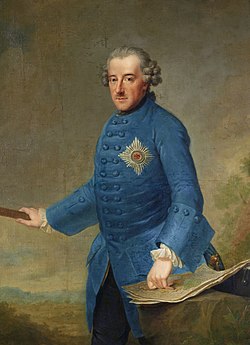
Frederick II of Prussia strove to overcome farmers' skepticism about the potato, firmly establishing it in his kingdom from 1744, and in 1756 issued an official proclamation mandating its cultivation.
Image source: Frederick the Great
1750
% complete
In France and Germany, government officials and noble landowners promoted the rapid conversion of fallow land into potato fields after 1750, accelerating adoption across the continent.
1774
% complete
French physician Antoine Parmentier studied the potato intensely and in Examen chymique des pommes de terres (Paris, 1774) showed its enormous nutritional value, boosting French acceptance of the crop.
Image source: Antoine-Augustin Parmentier
1785
% complete
The 1785 edition of Bon Jardinier declared there was no vegetable about which so much had been written or shown such enthusiasm, reflecting the potato's rising status across Europe by the late 18th century.
1800
% complete
By the end of the 18th century, the potato was cultivated across the northern hill areas of India, extending the crop's reach deep into Asia.
1812
% complete
In 1812 the Russian-American Company's Fort Ross planted a potato crop, the first in western North America and possibly a second, independent introduction of the potato into the continent.
Image source: Fort Ross, California
1820
% complete
During the 1820 Cass Expedition, James Duane Doty wrote of crops grown around Leech Lake, Sandy Lake, and Fond du Lac in present-day Minnesota, which the Ojibwe called waub-es-see-pin, indicating a type of potato.
1838
% complete
Potatoes were planted in Idaho as early as 1838; by 1900 the state's production exceeded a million bushels (about 27,000 tonnes), laying the foundation for Idaho's famous potato industry.
Image source: Potato
1815 - 1840
% complete
France's annual potato crop soared to 21 million hectoliters in 1815 and 117 million in 1840, allowing population growth while avoiding the Malthusian trap.
1838 - 1839
% complete
Though familiar in Russia by 1800, potatoes were confined to garden plots until the grain failure of 1838–39 persuaded peasants and landlords in central and northern Russia to devote fallow fields to raising potatoes.
1845 - 1849
% complete
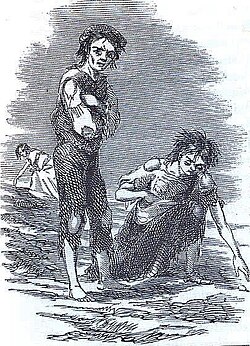
The blight arrived in Ireland in 1845, devastating a nation where the potato occupied one-third of arable land. The resulting famine led to approximately one million deaths and massive emigration to Britain, the U.S., Canada and elsewhere.
Image source: Great Famine (Ireland)
Or browse the full history timeline directory, with more than 2,000 topics.
This History of Potatoes timeline was generated with the help of AI, using information found on the internet.
We work hard to keep these timelines accurate, but mistakes do get through. If you spot one, email us at [email protected] and we'll fix it for future visitors.
Generate yours with AI or build it from scratch, for free.
Export your timeline, add your own events, edit or remove AI-generated events, and much more
No credit card required.
Cancel anytime.
Cancel anytime.
You can create an unlimited number of timelines with up to 10 events on each one, customize how they look, export them to PDF, PNG, PowerPoint, CSV, and Excel, and share them with a link. Paid plans raise the event limit and add features like spreadsheet imports and collaborators.
Yes. You can cancel your subscription from your account page at any time, and you will not be charged again. Your subscription stays active for the rest of the period you already paid for.
Yes. We will email you a reminder before the annual renewal, and we will also email you a receipt.
Yes. You can email us within 15 days of any payment, and we will issue you a full refund.
Check out our pricing docs or send us an email anytime: [email protected].