-
Use Cases
-
Resources
-
Pricing
The tomato (Solanum lycopersicum) originated in western South America and was domesticated by the Aztecs in Mesoamerica. After the Spanish colonization of the Americas in the 16th century, tomatoes were introduced to Europe, where they were initially grown as ornamental plants due to suspicions of toxicity. Over time, they became a staple ingredient in Mediterranean cuisine, particularly Italian dishes. In the 19th century, tomatoes spread across North America and became widely cultivated worldwide. Today, tomatoes are one of the most consumed vegetables globally, essential to cuisines and food industries everywhere. More Less
1500 - 1600
% complete
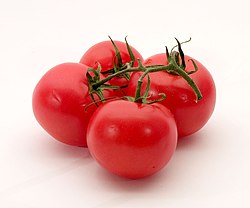
The Spanish introduced tomatoes to Eurasia during the Columbian exchange in the 16th century, beginning the fruit's long journey into European, Asian, and Middle Eastern cuisines.
Image source: Tomato
1521
% complete
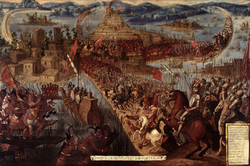
The Spanish conquistador Hernán Cortés's capture of the Aztec capital of Tenochtitlan initiated the widespread cultural and biological interchange known as the Columbian exchange, through which tomatoes would eventually travel from the Americas to Europe and beyond.
Image source: Fall of Tenochtitlan
1544
% complete
Pietro Andrea Mattioli's herbal contained the earliest mention of the tomato in European literature, documenting the newly arrived fruit from the Americas.
Oct 31, 1548
% complete
The house steward of Cosimo de' Medici, grand duke of Tuscany, wrote to the Medici private secretary confirming that a basket of tomatoes sent from the Florentine estate at Torre del Gallo 'had arrived safely', an early record of tomatoes in Italy.
1550 - 1600
% complete
The tomato was introduced to China, likely via the Philippines or Macau, in the 16th century, marking its entry into East Asian agriculture and cuisine.
1597
% complete
Gerard's Herbal, published in 1597 and largely plagiarized from continental sources, is one of the earliest discussions of the tomato in England.
Image source: John Gerard
1710
% complete
The earliest reference to tomatoes grown in British North America comes from herbalist William Salmon, who saw them in what is today South Carolina, perhaps introduced from the Caribbean.
Image source: William Salmon
1750
% complete
By the mid-18th century, tomatoes were cultivated on some Carolina plantations, and probably in other parts of the American Southeast.
Image source: History of slavery in South Carolina
1799 - 1825
% complete
John Barker, British consul in Aleppo, introduced the tomato to cultivation in the Middle East during his tenure from roughly 1799 to 1825.
Image source: Aleppo
1560
% complete
Luigi Anguillara speculated that Galen's lycopersicum might be the tomato. Despite the impossibility of this identification, the name lycopersicum entered scientific use as a name for the fruit.
1753
% complete
In 1753, Carl Linnaeus placed the tomato in the genus Solanum alongside the potato, naming it Solanum lycopersicum.
Image source: Carl Linnaeus
1768
% complete
In 1768, Philip Miller moved the tomato to its own genus, naming it Lycopersicon esculentum, beginning centuries of taxonomic debate over its proper classification.
Image source: Philip Miller
1888
% complete
Although Karsten suggested the name Lycopersicum lycopersicum in 1888, it is not used because it violates the International Code of Nomenclature barring tautonyms in botanical nomenclature.
Image source: Botanical nomenclature
1974
% complete
The corrected name Lycopersicon lycopersicum (Nicolson 1974) was technically valid because Miller's genus name and Linnaeus's species name differ in exact spelling.
1983
% complete
Because Lycopersicon esculentum had become so well known, it was officially listed as a nomen conservandum in 1983, making it the correct name in classifications not placing the tomato in the genus Solanum.
1618
% complete
By the early 17th century tomatoes were used as food in Spain, as documented in Lope de Vega's play La octava maravilla, which praised something 'lovelier than' the fruit.
1650 - 1800
% complete
In certain areas of Italy, such as Florence, the fruit was used solely as a tabletop decoration until it was incorporated into the local cuisine in the late 17th or early 18th century.
1692
% complete
The earliest discovered cookbook with tomato recipes was published in Naples in 1692, though the author had apparently obtained these recipes from Spanish sources.
1820
% complete
By 1820, tomatoes were described as 'to be seen in great abundance in all our vegetable markets' and used by all the best cooks, though garden cultivation was still sometimes noted merely for their unusual appearance, and cooking with them was associated with exotic Italian or Jewish cuisine.
1860
% complete
After 1860, it was often claimed that Americans believed tomatoes were poisonous into the 1820s, but historical evidence suggests the belief was never actually widespread.
1850 - 1898
% complete
Livingston began developing the tomato as a commercial crop, aiming to grow tomatoes smooth in contour, uniform in size, and sweet in flavor, transforming the tomato into a reliable agricultural product.
1870
% complete
Livingston's first breed of tomato, the Paragon, was introduced in 1870, launching a series of influential commercial varieties.
1875
% complete
In 1875 Livingston introduced the Acme, said to be in the parentage of most tomato cultivars developed over the next twenty-five years.
May 10, 1893
% complete
The U.S. Supreme Court settled the controversy on 10 May 1893 by declaring that, for purposes of the Tariff of 1883 only, the tomato is a vegetable, based on the popular definition classifying vegetables by use—they are generally served with dinner and not dessert.
Image source: Nix v. Hedden
1950
% complete
A mutant 'u' phenotype discovered in the mid-20th century caused fruits to ripen uniformly, changing how commercial tomatoes were bred—though uniform ripening later proved detrimental to flavor.
1937
% complete
Ira and George Gershwin immortalized the word's dual pronunciations ('tomahto' vs 'tomayto') in their 1937 song 'Let's Call the Whole Thing Off'.
Image source: Let's Call the Whole Thing Off
1963
% complete
In 1963, The New York Times explained the name 'Love Apple' as a French misreading of the Italian pomo dei Mori ('the Moors' apple') as pomme d'amour ('apple of love').
Image source: Tomato
1992
% complete
The review-aggregation website Rotten Tomatoes evokes the meaning of pelted rotten produce, though its founder cites a scene in the 1992 film Leolo as the immediate source of the name.
Image source: Rotten Tomatoes
2004
% complete
An international consortium of researchers from 10 countries began sequencing the tomato genome in 2004, laying groundwork for one of the most complete plant genome projects.
Aug 30, 2007
% complete
On 30 August 2007, as many as 40,000 Spaniards gathered in Buñol to throw 115,000 kg of tomatoes at each other during La Tomatina, the famous tomato-throwing festival.
Image source: La Tomatina
2008
% complete
A 2008 salmonella outbreak caused the temporary removal of tomatoes from stores and restaurants across the United States and parts of Canada.
Image source: 2008 United States salmonellosis outbreak
2009
% complete
In 2009, Ohio passed a law making the tomato the state's official fruit; tomato juice had already been the state's official beverage since 1965.
Image source: Ohio
Dec 2009
% complete
A prerelease version of the sequenced tomato genome was made available in December 2009, giving researchers early access to the genetic data.
2011
% complete
In a 2011 scientific review, the European Food Safety Authority concluded that lycopene did not favorably influence DNA, skin exposed to ultraviolet radiation, heart function, or vision.
Image source: Lycopene
May 31, 2012
% complete
The complete genome for the cultivar Heinz 1706 was published on 31 May 2012 in the journal Nature, a milestone in plant genomics.
Image source: Heinz
2019
% complete
Wang et al., 2019 found phage combination therapies could reduce the impact of bacterial wilt in tomatoes, either by reducing bacterial abundance or selecting for resistant but slow-growing genetics.
Image source: Phage therapy
2021
% complete
The latest reference tomato genome published in 2021 measured 799 MB and encoded 34,384 predicted proteins spread over 12 chromosomes.
2023
% complete
In 2023, world production of tomatoes reached 192 million tonnes, led by China with 36% of the total, followed by India, Turkey, and the United States.
2025
% complete
A 2025 study suggests the potato lineage may have been created by hybridization of a plant from the tomato lineage with a plant from a related Solanum species, deepening the evolutionary connection between the two crops Linnaeus first grouped together in 1753.
Image source: Potato
Or browse the full history timeline directory, with more than 2,000 topics.
This History of Tomatoes timeline was generated with the help of AI, using information found on the internet.
We work hard to keep these timelines accurate, but mistakes do get through. If you spot one, email us at [email protected] and we'll fix it for future visitors.
Generate yours with AI or build it from scratch, for free.
Export your timeline, add your own events, edit or remove AI-generated events, and much more
No credit card required.
Cancel anytime.
Cancel anytime.
You can create an unlimited number of timelines with up to 10 events on each one, customize how they look, export them to PDF, PNG, PowerPoint, CSV, and Excel, and share them with a link. Paid plans raise the event limit and add features like spreadsheet imports and collaborators.
Yes. You can cancel your subscription from your account page at any time, and you will not be charged again. Your subscription stays active for the rest of the period you already paid for.
Yes. We will email you a reminder before the annual renewal, and we will also email you a receipt.
Yes. You can email us within 15 days of any payment, and we will issue you a full refund.
Check out our pricing docs or send us an email anytime: [email protected].