
-
Use Cases
-
Resources
-
Pricing
Apples have been cultivated by humans for thousands of years. Originating in the mountainous region of Central Asia, apples spread along trade routes such as the Silk Road and became one of the most widely grown fruits in the world. Over centuries, selective breeding produced thousands of varieties, and apples became deeply embedded in culture, religion, science, and cuisine across civilizations. More Less
4000 BC
% complete
Nomadic peoples traveling along ancient trade routes across Central Asia carried wild apple seeds and fruits westward. Through hybridization with other wild species like Malus sylvestris and Malus orientalis, larger, sweeter cultivated apples emerged over thousands of years.
Image source: Apple
2000 BC
% complete
Cuneiform tablets from Mesopotamia reference apples among cultivated orchard fruits, suggesting the fruit had spread from its Central Asian homeland into the Fertile Crescent by the early second millennium BC.
Image source: History of agriculture
77
% complete
In his encyclopedic Natural History, Pliny the Elder described roughly two dozen varieties of cultivated apples grown in the Roman Empire, providing one of the earliest written records of distinct apple cultivars.
Image source: Natural History (Pliny)
Aug 2010
% complete
An international team published the first complete genome sequence of the apple (Golden Delicious), confirming that its domesticated genome traces largely to Malus sieversii and identifying genes controlling flavor and disease resistance.
Image source: Human Genome Project

1500 BC
% complete
Chinese horticulturists pioneered grafting methods that allowed desirable apple varieties to be propagated reliably, since apples do not grow true from seed. This innovation became fundamental to all subsequent apple cultivation.
Image source: Grafting
300 BC
% complete
Theophrastus described apple cultivation in Greece around 300 BC, and Romans later expanded orcharding throughout their empire. Roman writers like Pliny the Elder documented numerous named apple varieties, spreading grafting knowledge across Europe.
Image source: Agriculture in ancient Rome
800 - 1300
% complete
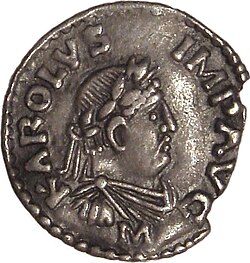
Charlemagne's Capitulare de villis ordered imperial estates to plant apple trees, and medieval monasteries maintained orchards and grafted varieties through the turbulent centuries following Rome's fall, keeping horticultural knowledge alive.
Image source: Charlemagne
1625
% complete
European settlers planted the first apple orchard in Boston on Beacon Hill around 1625. Apple seeds and saplings were brought aboard ships to provide hardy food for New World settlements.
Image source: Apple
1801 - 1845
% complete
John Chapman, known as Johnny Appleseed, spent four decades planting apple nurseries across Pennsylvania, Ohio, Indiana, and Illinois. His seedlings supplied frontier homesteads, where apples were often used for cider rather than fresh eating.
Image source: Johnny Appleseed
1600
% complete
English wassailing customs involved singing and pouring cider on tree roots each winter to bless orchards and scare away evil spirits. Revived in recent decades, wassails remain a beloved rural tradition celebrating apple heritage.
Image source: Wassail
1700 - 1850
% complete
Hard cider was a staple beverage of colonial America, safer than water and easy to produce. Nearly every farm maintained a cider orchard until temperance movements and Prohibition devastated American cider culture.
Image source: Apple cider
1726
% complete
William Stukeley recorded Isaac Newton's own account of watching an apple fall at Woolsthorpe Manor, inspiring his thoughts on gravitation. The story became one of science's most enduring legends, celebrated by the Royal Society in 2010.
Image source: Isaac Newton
1809
% complete
A seedling planted by Mary Ann Brailsford in Southwell, Nottinghamshire was later purchased by Matthew Bramley. The vigorous, acidic Bramley became Britain's dominant cooking apple, prized for pies and sauces.
Image source: Bramley apple
1811
% complete
John McIntosh discovered the McIntosh seedling on his Ontario farm. Its tender, aromatic flesh made it beloved across Canada and the northern United States, and it became the parent of famous varieties such as Cortland and Empire.
Image source: McIntosh (apple)
1868
% complete
Maria Ann 'Granny' Smith discovered a chance green seedling at her orchard in Ryde, New South Wales, Australia. The tart, crisp apple gained commercial fame after being exhibited in 1891 and became an iconic export variety.
Image source: Granny Smith
1872
% complete
Jesse Hiatt found a chance seedling on his Peru, Iowa farm and called it Hawkeye. After winning a Stark Bro's competition in 1893, it was renamed Red Delicious and became one of America's most widely grown apples.
Image source: Red Delicious
1890
% complete
A chance yellow seedling on the Mullins family farm in Clay County, West Virginia, became the Golden Delicious. Stark Bro's purchased rights to the variety in 1914, and it later became a key parent in many modern cultivars including Gala and Fuji.
Image source: Golden Delicious
1939 - 1962
% complete
Japanese breeders at Tohoku Research Station crossed Red Delicious and Ralls Janet to create the Fuji apple. Released commercially in 1962, its sweetness and long shelf life made it hugely popular across Asia and beyond.
Image source: Fuji (apple)
1957
% complete
New Zealand breeder J.H. Kidd crossed Kidd's Orange Red with Golden Delicious to produce the Gala apple. Its mild, sweet flavor led to worldwide adoption and many sport mutations like Royal Gala and Jazz.
Image source: Gala (apple)
1973
% complete
Western Australian researcher John Cripps crossed Golden Delicious with Lady Williams to create Cripps Pink. Marketed under the trademarked name Pink Lady, it became a premium brand recognized globally for its sweet-tart flavor and blush coloring.
1980
% complete
As commercial growing narrowed to a handful of varieties, organizations began preserving thousands of heirloom cultivars. Collections like Seed Savers Exchange's Heritage Farm and national germplasm repositories safeguarded genetic diversity for future breeding.
Image source: Seed Savers Exchange
1991
% complete
The University of Minnesota released Honeycrisp after decades of breeding work. Its explosive crunch and balanced sweet-tart taste created consumer demand so strong it commanded premium prices and reshaped American apple economics.
Image source: Honeycrisp
1993
% complete
Sally Mennell found a chance seedling in her Cawston, British Columbia orchard. The low-acid, honeyed Ambrosia apple received Canadian recognition in the early 2000s and became a major premium variety in North American markets.
Image source: Ambrosia (apple)
Dec 2019
% complete
Washington State University released the Cosmic Crisp (WA 38), bred from Honeycrisp and Enterprise. Backed by a massive marketing campaign, it was the first apple variety developed specifically for Washington growers and saw the largest launch of any new variety.
Image source: Cosmic Crisp
1900
% complete
Irrigation projects in central Washington transformed the arid Yakima Valley into prime orchard land. Washington eventually grew more than half of all American apples, making it the nation's apple capital.
1929
% complete
Scientists developed controlled atmosphere storage, reducing oxygen and raising carbon dioxide levels in sealed rooms to dramatically slow apple ripening. This technology allowed year-round supply of fresh apples instead of seasonal-only availability.
Image source: Controlled atmosphere
1990
% complete
Rapid expansion of Fuji-dominated orchards in provinces like Shaanxi and Shandong propelled China past the United States to become the world's leading apple producer, now accounting for nearly half of global output.
Image source: List of countries by apple production
2015
% complete
Okanagan Specialty Fruits received USDA approval for Arctic Golden and Arctic Granny apples, genetically modified to resist browning when sliced. They reached retail stores in 2017 as the first non-browning apples sold in the United States.
2018
% complete
Newer club varieties like SnapDragon (Cornell University) and Opal (a natural non-browning cross from Czech breeding) expanded rapidly in American supermarkets, reflecting the industry shift toward branded, proprietary cultivars with distinctive traits.
Image source: Opal (apple)
Or browse the full history timeline directory, with more than 2,000 topics.
This History of Apples timeline was generated with the help of AI, using information found on the internet.
We work hard to keep these timelines accurate, but mistakes do get through. If you spot one, email us at [email protected] and we'll fix it for future visitors.
Generate yours with AI or build it from scratch, for free.
Export your timeline, add your own events, edit or remove AI-generated events, and much more
No credit card required.
Cancel anytime.
Cancel anytime.
You can create an unlimited number of timelines with up to 10 events on each one, customize how they look, export them to PDF, PNG, PowerPoint, CSV, and Excel, and share them with a link. Paid plans raise the event limit and add features like spreadsheet imports and collaborators.
Yes. You can cancel your subscription from your account page at any time, and you will not be charged again. Your subscription stays active for the rest of the period you already paid for.
Yes. We will email you a reminder before the annual renewal, and we will also email you a receipt.
Yes. You can email us within 15 days of any payment, and we will issue you a full refund.
Check out our pricing docs or send us an email anytime: [email protected].