-
Use Cases
-
Resources
-
Pricing
2900 BC
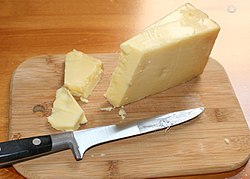
Remains identified as cheese were found among the provisions of a funeral meal in an Egyptian tomb dating to around 2900 BC.
Image source: History of cheese
2000 BC
Egyptian tomb murals made at approximately 2000 BC provide visual evidence of cheesemaking practices in ancient Egypt.
1615 BC
Preserved cheese dating from 1615 BC was found in the Taklamakan Desert in Xinjiang, China.
2018
The 2018 report by archaeologists from Cairo University and the University of Catania identified an Egyptian find as the oldest known cheese.
2018
Archaeologists from Cairo University participated in the 2018 report concerning the discovery of the oldest known cheese from Egypt.
2018
Archaeologists from the University of Catania participated in the 2018 report concerning the discovery of the oldest known cheese from Egypt.
2018
Archaeologists from Cairo University and the University of Catania reported the discovery of what was then identified as the oldest known cheese from Egypt.
476
After the fall of Rome, the advancement of the art of cheesemaking in Europe proceeded slowly for centuries.
1200
1500
1697
1791
The production of Camembert began in 1791.
1546
Variations on the sentiment that the Moon is made of cheese were repeated for centuries.
1546
In 1546, John Heywood's work The Proverbs of John Heywood claimed that “the moon is made of a greene cheese.” Here, “greene” referred to cheese that was new or unaged.
1546
The 1546 reference helped establish the enduring humorous association between the Moon and green, or unaged, cheese.
1900 - 1913
Cheese remained popular in most households until the introduction of the home refrigerator.
1913
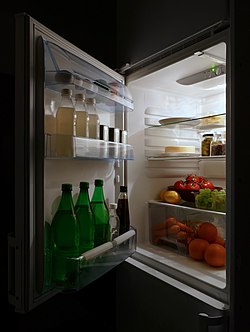
The introduction of the home refrigerator in 1913 marked a change in household food storage and ended the period described as one in which cheese remained popular in most households.
Image source: Refrigerator
2006
NASA exploited the long-repeated Moon-and-cheese myth in an April Fools' Day spoof announcement in 2006.
Apr 1, 2006
On April Fools' Day in 2006, NASA used the popular belief that the Moon was made of cheese as the basis for a spoof announcement.
1800
The rise of factory-made cheese in the early 19th century contributed to the increasing inclusion of cheese products in the diets of developed nations, including the United States.
1800
Since the advent of factory-made cheese in the early 19th century, diets in developed nations such as the United States increasingly included cheese products among popular consumption items.
1800
The early 19th century saw the advent of factory-made cheese, beginning a major transformation in how cheese was produced and distributed.
1815
Switzerland became the site of the first factory dedicated to industrial cheese production in 1815.
1815
The first factory for the industrial production of cheese opened in Switzerland in 1815.
1851
The 1851 assembly-line operation attributed to Williams relied on milk collected from neighbouring farms.
1851
In 1851, Williams began making cheese in an assembly-line fashion.
1851
Williams's 1851 assembly-line cheesemaking operation used milk supplied by neighbouring farms.
1900
By the turn of the century, scientists were producing pure microbial cultures, an important development for controlled food production.
2004
In 2004, Americans were reported to have purchased more processed cheese than “real,” factory-made cheese.
2004
The 2004 comparison reported that processed cheese purchases in the United States exceeded purchases of real, factory-made cheese.
Or browse the full history timeline directory, with more than 2,500 topics.
This History of Cheese timeline was generated with the help of AI, using information found on the internet.
We work hard to keep these timelines accurate, but mistakes do get through. If you spot one, email us at [email protected] and we'll fix it for future visitors.
Generate yours with AI or build it from scratch, for free.
Export your timeline, add your own events, edit or remove AI-generated events, and much more
No credit card required.
Cancel anytime.
Cancel anytime.
You can create an unlimited number of timelines with up to 10 events on each one, customize how they look, export them to PDF, PNG, PowerPoint, CSV, and Excel, and share them with a link. Paid plans raise the event limit and add features like spreadsheet imports and collaborators.
Yes. You can cancel your subscription from your account page at any time, and you will not be charged again. Your subscription stays active for the rest of the period you already paid for.
Yes. We will email you a reminder before the annual renewal, and we will also email you a receipt.
Yes. You can email us within 15 days of any payment, and we will issue you a full refund.
Check out our pricing docs or send us an email anytime: [email protected].