-
Use Cases
-
Resources
-
Pricing
7000 BC
% complete
A genetic study in 2011 showed that all forms of Asian rice, both indica and japonica, sprang from a single domestication event that occurred some 9,000 years ago in China from the wild rice Oryza rufipogon.
Image source: History of rice cultivation
6000 BC
% complete
Evidence for rice consumption in India since 6000 BCE is found at Lahuradewa in Uttar Pradesh. Several wild cereals, including rice, grew in the Vindhyan Hills, and rice appeared in the Ganges valley regions of northern India as early as 4530 BC and 5440 BC.
5000 BC
% complete
Rice was consumed in the Indian subcontinent from as early as 5,000 BC. Rice cultivation, at sites such as Chopani-Mando and Mahagara, may have been underway as early as 7,000 BP.
4000 BC
% complete
By around 4000 to 3800 BC, rice was a regular secondary crop among southernmost Sino-Tibetan cultures.
3500 BC - 2500 BC
% complete
By the late Neolithic (3500 to 2500 BC), population in the rice cultivating centers had increased rapidly, centered around the Qujialing-Shijiahe culture and the Liangzhu culture.
2800 BC
% complete
Archaeological deposits dating to 2800 BC have yielded numerous carbonized remains of both rice and millet in waterlogged conditions, indicating intensive wetland rice cultivation and dryland millet cultivation.
2500 BC - 2000 BC
% complete
Liangzhu and Shijiahe declined abruptly in the terminal Neolithic (2500 to 2000 BC), marking the end of these major rice-cultivating centers.
Image source: Liangzhu culture
2000 BC
% complete
In the Ganges Plain, the unambiguous beginning of Neolithic sites with evidence of rice farming is after mid-3rd millennium BCE, and mainly after 2000 BCE, with older possible origins in the 4th millennium BCE. The japonica variety arrived around 2000 BC.
Image source: Ganges
2003
% complete
In 2003, Korean archaeologists announced they discovered rice husks in Soro-ri, Korea, dated to 13,000 BC, claiming signs of cutting by stone tools. A 2013 study using AMS carbon dating found only one sample dated to 12,520 ± 150 BP, with the other six dating to modern times.
Image source: Rice
2008 - 2012
% complete
Research in 2008 determined a single domestication event for Oryza sativa, supported by a 2011 genetic study. A 2012 study through genome sequencing of hundreds of rice varieties indicated domestication occurred around the central Pearl River valley region of southern China.
Image source: Oryza sativa
3500 BC - 2000 BC
% complete
The spread of japonica rice cultivation to Southeast Asia started with the migrations of the Austronesian Dapenkeng culture into Taiwan between 3500 and 2000 BC (5,500 BP to 4,000 BP).
Image source: Austronesian peoples
3500 BC - 1200 BC
% complete
Mainstream archaeological evidence derived from paleoethnobotanical investigations indicate dry-land rice was introduced to Korea and Japan sometime between 3500 and 1200 BC.
Image source: Japanese rice
3000 BC
% complete
Evidence for rice cultivation in these regions dates to slightly later than the Dapenkeng settlement of Taiwan, at around 3000 BC. Evidence of wild rice on the island of Sulawesi also dates from 3000 BC.
Image source: Dapenkeng culture
2000 BC - 1500 BC
% complete
From about 2000 to 1500 BC, the Austronesian expansion began, with settlers from Taiwan moving south to colonize Luzon in the Philippines, bringing rice cultivation technologies with them. Sites such as An Sơn in southern Vietnam also date to this era.
1500 BC - 800 BC
% complete
Between 1500 and 800 BC, Oryza glaberrima propagated from its original centre, the Niger River delta, and extended to Senegal.
Image source: Oryza glaberrima
1500 BC
% complete
The technological, subsistence, and social impact of rice and grain cultivation is not evident in archaeological data until after 1500 BC.
Image source: History of agriculture
700 - 799
% complete
Historic written evidence for the earliest cultivation in Indonesia comes from eighth century stone inscriptions from the central island of Java, which show kings levied taxes in rice.
Image source: Java
800 - 899
% complete
Divisions of labour between men, women, and animals still in place in Indonesian rice cultivation were carved into relief friezes on the ninth century Prambanan temples in Central Java: a water buffalo attached to a plough; women planting seedlings and pounding grain; and a man carrying sheaves of rice on a shoulder pole.
Image source: Prambanan
900 - 1700
% complete
Much later Austronesian voyages from Island Southeast Asia succeeded in bringing rice to Guam during the Latte Period (AD 900 to AD 1700).
Image source: Latte stone
2000 BC
% complete
There are at least two native species of rice present in the Amazon region of South America, and one or both were used by indigenous inhabitants to create a domesticated form of Oryza some 4,000 years ago. Recent research indicates this independent domestication occurred before the 14th century.
Image source: Oryza rufipogon
1694
% complete
In 1694, rice arrived in South Carolina, probably originating from Madagascar. The invention of the rice mill increased profitability of the crop, and the addition of waterpower for the mills in 1787 by millwright Jonathan Lucas was another step forward.
Image source: History of South Carolina
1788 - 1796
% complete
Royal Governor Ambrosio O'Higgins was an early proponent of rice cultivation in Chile during his rule between 1788 and 1796. However, the first rice cultivation occurred much later, around 1920, yielding mixed results.
Image source: Ambrosio O'Higgins, 1st Marquess of Osorno
1850
% complete
In the southern United States, rice has been grown in southern Arkansas, Louisiana, and east Texas since the mid-19th century. By 2006, California produced the second-largest rice crop in the United States, after Arkansas.
Image source: Rice production in the United States
1865 - 1905
% complete
Carolina rice became less profitable with the loss of slave labor after the American Civil War, and it finally died out just after the turn of the 20th century. Today, people can visit the only remaining rice plantation in South Carolina with its original winnowing barn and rice mill at the historic Mansfield Plantation in Georgetown.
Image source: Mansfield Plantation
1912
% complete
Commercial rice production began in 1912 in the town of Richvale in Butte County, California. Californian varieties of rice were later found suitable for the climate in the Riverina of Australia, and the first mill opened at Leeton in 1951.
Image source: Richvale, California
1939 - 1940
% complete
In 1939 a division of the Ministry of Agriculture of Chile began to study rice cultivated in Chile. In the 1939–1940 season 13,190 hectares of rice existed in Chile, and by this time rice cultivation had become one of the most profitable agricultural businesses in the country. However, as salaries increased between 1940 and 1964 profitability decreased, though by 1964 38,000 ha were cultivated.
Image source: Agriculture in Chile
100 BC
% complete
Diodorus (first century BCE) recognized rice as a significant Indian crop during the subcontinent's busy agricultural season.
Image source: Diodorus Siculus
100
% complete
Rice of the species Oryza sativa was recovered from a grave at Susa in Iran (dated to the first century AD), while at the same time rice was grown in the Po valley in Italy. Large deposits of rice from the first century AD have been found in Roman camps in Germany.
Image source: Rice
150
% complete
Galen recommended the grain as a medicament in the second century, and his disciple Oribasius followed him in recommending it in the fourth century.
Image source: Galen
700 - 799
% complete
The Ummayad Caliphate brought Asiatic rice to the Iberian Peninsula in the 8th century where it expanded progressively from the south.
Image source: Al-Andalus
800 - 899
% complete
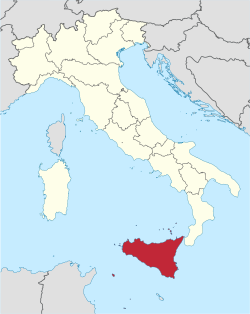
The Islamic powers may have brought rice to Sicily, with cultivation starting in the 9th century, where it was an important crop long before it was noted in the plain of Pisa (1468) or the Lombard plain (1475).
Image source: Sicily
1475
% complete
Rice cultivation in northern Italy was noted in the plain of Pisa (1468) and in the Lombard plain (1475), where its cultivation was promoted by Ludovico Sforza, Duke of Milan, and demonstrated in his model farms. After the 15th century, rice spread throughout Italy and then France, later propagating to all continents during the age of European exploration.
Image source: Ludovico Sforza
2018 - 2021
% complete
Rice is grown on 1.49 million ha in Nepal with total annual production of 5.6 million tons in 2018. Rice of different varieties are cultivated in 3.35 million hectares elsewhere with an annual production of 8.5 million metric tons as of 2021, and Pakistan is the top exporter of brown rice as of 2019.
Image source: Rice
Or browse the full history timeline directory, with more than 2,000 topics.
This History of Rice Cultivation timeline was generated with the help of AI, using information found on the internet.
We work hard to keep these timelines accurate, but mistakes do get through. If you spot one, email us at [email protected] and we'll fix it for future visitors.
Generate yours with AI or build it from scratch, for free.
Export your timeline, add your own events, edit or remove AI-generated events, and much more
No credit card required.
Cancel anytime.
Cancel anytime.
You can create an unlimited number of timelines with up to 10 events on each one, customize how they look, export them to PDF, PNG, PowerPoint, CSV, and Excel, and share them with a link. Paid plans raise the event limit and add features like spreadsheet imports and collaborators.
Yes. You can cancel your subscription from your account page at any time, and you will not be charged again. Your subscription stays active for the rest of the period you already paid for.
Yes. We will email you a reminder before the annual renewal, and we will also email you a receipt.
Yes. You can email us within 15 days of any payment, and we will issue you a full refund.
Check out our pricing docs or send us an email anytime: [email protected].