
-
Use Cases
-
Resources
-
Pricing
Olive oil has been produced and cherished for thousands of years, originating in the Mediterranean basin. From its early cultivation by ancient civilizations such as the Minoans, Phoenicians, Greeks, and Romans, olive oil became central to food, religion, medicine, and trade. Its production techniques evolved over centuries, and today it remains a cornerstone of Mediterranean culture and cuisine worldwide. More Less
6000 BC
% complete
Archaeological evidence in Galilee shows that by 6000 BC olives were being turned into olive oil, marking one of the earliest known instances of olive oil production in human history.
4500 BC
% complete
Archaeological evidence from a now-submerged prehistoric settlement south of Haifa shows that olive oil was being produced there as early as 4500 BC.
3500 BC
% complete
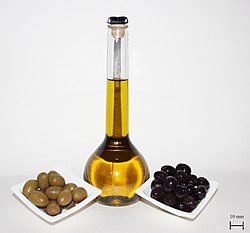
The earliest surviving olive oil amphorae date to 3500 BC during Early Minoan times, though the production of olive oil is assumed to have started before 4000 BC.
Image source: Olive oil
2600 BC - 2240 BC
% complete
Olive trees and oil production in the Eastern Mediterranean can be traced to the archives of the ancient city-state Ebla, located on the outskirts of Aleppo.
2500 BC
% complete
Evidence suggests that olives were being grown in Crete as long ago as 2500 BC, establishing the island as an early center of olive cultivation.
2400 BC
% complete
Some dozen documents dated 2400 BC from Ebla describe the lands of the king and the queen, providing early written evidence of olive cultivation and oil production in the region.
1500 BC
% complete
Olive trees were certainly cultivated by the Late Minoan period (1500 BC) in Crete, and perhaps as early as the Early Minoan period.
2800 BC
% complete
The olive tree reached Greece, Carthage and Libya sometime in the 28th century BC, having been spread westward by the Phoenicians.
2000 BC
% complete
Dynastic Egyptians before 2000 BC imported olive oil from Crete, Syria, and Canaan, and oil was an important item of commerce and wealth.
1960 BC
% complete
Sinuhe, the Egyptian exile who lived in northern Canaan around 1960 BC, wrote of abundant olive trees in the region.
1500 BC
% complete
Until around 1500 BC, eastern coastal areas of the Mediterranean were the most heavily cultivated regions for olives and olive oil production.
700 BC
% complete
From its beginnings early in the 7th century BC, the cosmetic use of olive oil quickly spread to all of the Hellenic city-states, together with athletes training in the nude, and lasted close to a thousand years despite its great expense.
1500 - 1600
% complete
Olive trees were introduced to the Americas in the 16th century, when cultivation began in areas with a climate similar to the Mediterranean, such as Chile, Argentina, and California.
1795
% complete
Productivity was greatly improved by Joseph Graham's development of the hydraulic pressing system in 1795, revolutionizing olive oil extraction.
Jan 1, 0001
% complete
According to the historian Pliny the Elder, Italy had excellent olive oil at reasonable prices by the 1st century AD, which he described as the best in the Mediterranean.
2022
% complete
In 2022, world production of olive oil reached 2.7 million tonnes, led by Spain with 24% of the total output.
2022
% complete
In 2022, Spain was the world's largest olive oil producer, manufacturing 24% of the world's total.
2023
% complete
The FAO lists different statistics in 2023, namely for Spain (9 kg), Greece (8.8 kg), and Italy (8.6 kg) of olive oil per person.
2007
% complete
Extensive fraud prompted the Italian government to mandate a new labeling law in 2007 requiring every bottle of Italian olive oil to declare the farm and press on which it was produced, as well as display a precise breakdown of the oils used for blended oils.
2008 - 2011
% complete
Journalist Tom Mueller investigated crime and adulteration in the olive oil business, publishing the article 'Slippery Business' in New Yorker magazine, followed by the 2011 book Extra Virginity.
Feb 2008
% complete
In February 2008, EU officials took issue with Italy's new labeling law, stating that under EU rules such labeling should be voluntary rather than compulsory.
Mar 2008
% complete
In March 2008, 400 Italian police officers conducted Operation Golden Oil, arresting 23 people and confiscating 85 farms after an investigation revealed a large-scale scheme to relabel oils from other Mediterranean nations as Italian.
Apr 2008
% complete
In April 2008, another operation impounded seven olive oil plants and arrested 40 people in nine provinces of northern and southern Italy for adding chlorophyll to sunflower and soya bean oil and selling it as extra virgin olive oil; 25,000 liters of fake oil were seized.
Oct 25, 2010
% complete
The United States is not a member of the International Olive Council and is not subject to its authority, but on October 25, 2010, the U.S. adopted standards aligning with IOC rules for olive oil sold domestically.
Mar 15, 2011
% complete
On March 15, 2011, the prosecutor's office in Florence, working with the forestry department, indicted two managers and an officer of Carapelli, a brand of the Spanish company Grupo SOS, which recently changed its name to Deoleo.
Feb 2012
% complete
In February 2012, Spanish authorities investigated an international olive oil fraud in which palm, avocado, sunflower, and other cheaper oils were passed off as Italian olive oil.
May 16, 2012
% complete
Commission Regulation (EU) 432/2012 of May 16, 2012 formalized authorized health claims in the European Union, including claims relating to olive oil polyphenols and oleic acid.
2014
% complete
In 2014, California adopted a set of olive oil standards for olive oil made from California-grown olives, aiming to ensure quality and combat mislabeling.
Jan 3, 2016
% complete
On January 3, 2016, Bill Whitaker presented a program on CBS News about olive oil fraud, including interviews with Tom Mueller and with Italian authorities.
Feb 2017
% complete
In early February 2017, the Carabinieri police arrested 33 suspects in the Calabrian mafia's Piromalli 'ndrina ('Ndrangheta), which was allegedly exporting fake extra virgin olive oil to the U.S.; the product was actually inexpensive olive pomace oil fraudulently labeled.
Jul 2024
% complete
In July 2024, the European Union reported a significant increase in olive oil fraud and mislabeling cases, highlighting ongoing challenges in policing the global olive oil market.
2011
% complete
In a review by the European Food Safety Authority in 2011, health claims on olive oil were approved for protection by its polyphenols against oxidation of blood lipids, and for maintenance of normal blood LDL-cholesterol levels by replacing saturated fats with oleic acid.
2014
% complete
A 2014 meta-analysis concluded that increased consumption of olive oil was associated with reduced risk of all-cause mortality, cardiovascular events and stroke, while monounsaturated fatty acids of mixed animal and plant origin showed no significant effects.
2018
% complete
A 2018 meta-analysis found high-polyphenol olive oil intake was associated with improved measures of total cholesterol, HDL cholesterol, malondialdehyde, and oxidized LDL when compared to low-polyphenol olive oils, although it recommended longer studies and more research on non-Mediterranean populations.
Or browse the full history timeline directory, with more than 2,000 topics.
This History of Olive Oil timeline was generated with the help of AI, using information found on the internet.
We work hard to keep these timelines accurate, but mistakes do get through. If you spot one, email us at [email protected] and we'll fix it for future visitors.
Generate yours with AI or build it from scratch, for free.
Export your timeline, add your own events, edit or remove AI-generated events, and much more
No credit card required.
Cancel anytime.
Cancel anytime.
You can create an unlimited number of timelines with up to 10 events on each one, customize how they look, export them to PDF, PNG, PowerPoint, CSV, and Excel, and share them with a link. Paid plans raise the event limit and add features like spreadsheet imports and collaborators.
Yes. You can cancel your subscription from your account page at any time, and you will not be charged again. Your subscription stays active for the rest of the period you already paid for.
Yes. We will email you a reminder before the annual renewal, and we will also email you a receipt.
Yes. You can email us within 15 days of any payment, and we will issue you a full refund.
Check out our pricing docs or send us an email anytime: [email protected].