-
Use Cases
-
Resources
-
Pricing
Jun 5, 1967 - Jun 10, 1967
Israel's victory over Egypt, Jordan, and Syria intensified Arab-Israeli tensions and contributed to the use of oil as a political instrument. Arab governments increasingly linked petroleum policy with opposition to Western support for Israel.
Image source: Six-Day War
Sep 1967
Following the Six-Day War, Arab petroleum ministers met in Kuwait and agreed to use oil restrictions selectively while avoiding measures that would harm Arab producers. The meeting helped establish the institutional and political background for later embargo policies.
1970
U.S. crude-oil production reached a historical peak in 1970 and then began declining. The United States consequently became more dependent on imported petroleum just as global demand and geopolitical risks were increasing.
Image source: Peak oil

Jan 20, 1971
OPEC and major oil companies reached the Tehran Agreement, which increased posted oil prices and introduced regular adjustments. It marked an important step in producers' successful effort to renegotiate the fiscal terms of oil production.
Feb 1971
OPEC governments negotiated participation agreements that gave them growing ownership and control over international oil operations. This institutional change enabled producing states to influence production, pricing, and export decisions more directly by 1973.
Image source: OPEC
Apr 2, 1971
The Tripoli Agreement further increased posted prices for crude oil produced in Libya and other Mediterranean fields. Together with the Tehran Agreement, it signaled a broad transition away from the earlier oil-company-dominated pricing system.
Aug 15, 1971
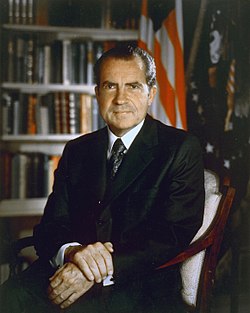
President Richard Nixon suspended the dollar's convertibility into gold, beginning the Nixon shock. Because oil was priced internationally in dollars, subsequent dollar depreciation reduced the real value of producers' oil revenues and encouraged demands for higher prices.
Image source: Nixon shock
Dec 7, 1971
Muammar Gaddafi's government nationalized British Petroleum's Libyan operations. The move demonstrated that producing countries could impose tougher terms on foreign oil companies and helped shift negotiating power toward governments controlling reserves.
Image source: Libya

1973
By 1973, the United States was importing roughly one-third of the petroleum it consumed. This dependence made the country especially vulnerable to supply disruptions and price decisions made by OPEC and Arab oil exporters.
Image source: 1973 oil crisis
Oct 6, 1973 - Oct 25, 1973
Egypt and Syria launched a surprise attack on Israel on Yom Kippur, beginning the fourth Arab-Israeli war. The conflict provided the immediate political context for Arab oil sanctions against states supporting Israel.
Image source: Yom Kippur War
Oct 14, 1973 - Nov 14, 1973
The United States conducted Operation Nickel Grass, a large airlift of weapons and supplies to Israel during the Yom Kippur War. The operation reinforced Arab governments' decision to target the United States with oil restrictions.
Oct 16, 1973
At a meeting in Kuwait, OPEC members raised the posted price of Arabian Light crude from about $3 to $5.12 per barrel. The increase was a major assertion of producer power and became one of the immediate shocks associated with the crisis.
Oct 17, 1973 - Nov 1973
Arab oil exporters initially reduced production by about five percent and threatened further monthly cuts. The reductions tightened an already constrained market and increased pressure on importing governments and consumers.
Oct 17, 1973 - Mar 18, 1974
Arab members of OAPEC announced production cuts and an embargo against the United States and other countries judged to support Israel. The restrictions transformed a price dispute into a global energy and geopolitical crisis.
Nov 1973
Japan, which depended heavily on imported Middle Eastern oil, declared an energy emergency and urged conservation. The crisis exposed the vulnerability of Japan's rapidly industrializing economy to overseas energy disruptions.
Nov 5, 1973
Arab oil ministers expanded the embargo to the Netherlands, a major European supporter and logistical hub for the United States. The decision demonstrated that the sanctions were aimed beyond the United States and could affect European allies.
Dec 23, 1973
At a meeting in Tehran, OPEC agreed to raise the price of Arabian Light crude to approximately $11.65 per barrel effective January 1974. Compared with prices before the crisis, the increase represented roughly a fourfold escalation.
Mar 18, 1974
Arab oil ministers lifted the embargo against the United States after diplomatic progress and the establishment of negotiations concerning Arab-Israeli disengagement. The end of the embargo did not reverse the new, much higher oil-price structure.
Nov 1973 - 1974
The prospect of gasoline rationing became a central political issue in the United States as shortages and long queues appeared. Although nationwide mandatory rationing was not enacted, several states used odd-even purchasing rules and other local restrictions.
Nov 1973 - 1974
European Community governments introduced coordinated and national conservation policies, including limits on driving, reduced heating, and restrictions on lighting. The measures reflected Europe's exposure to imported oil and the need to manage scarce supplies.
Nov 7, 1973
President Nixon announced Project Independence, a program intended to make the United States energy independent by 1980. It emphasized domestic oil and gas production, coal, nuclear power, conservation, and the development of alternative energy sources.
Dec 4, 1973
The Nixon administration created the Federal Energy Office to coordinate the national response to shortages and disruptions. The agency managed fuel allocation, conservation initiatives, and emergency energy policy during the crisis.
Jan 1, 1974 - Mar 7, 1974
The British government restricted most commercial electricity users to three days of operation per week to conserve fuel during an energy shortage. The measure was imposed alongside industrial unrest and contributed to severe economic disruption.
Image source: Three-Day Week
Jan 2, 1974
The Emergency Highway Energy Conservation Act established a national maximum speed limit of 55 miles per hour. The policy sought to reduce gasoline consumption and became one of the most visible domestic responses to the oil crisis.
Jan 6, 1974 - Oct 27, 1974
The United States adopted year-round daylight saving time under the Emergency Daylight Saving Time Energy Conservation Act. The measure was intended to reduce energy consumption, although public opposition led to its early termination for part of the year.
Jan 18, 1974
Egypt and Israel signed a disengagement agreement in Geneva-mediated negotiations. The diplomatic movement toward a settlement helped create conditions for the lifting of the oil embargo against the United States.
Feb 11, 1974 - Feb 13, 1974
Twenty-four consuming countries met in Washington, D.C., to discuss the oil emergency and cooperation among importers. The conference helped lay the groundwork for a permanent organization focused on energy security.
Nov 15, 1974
The Organisation for Economic Co-operation and Development created the International Energy Agency in response to the crisis. Its members committed to emergency oil stocks, coordinated responses to supply disruptions, and long-term energy cooperation.
Image source: International Energy Agency
1974 - 1981
Oil-exporting countries accumulated enormous dollar revenues and deposited much of them in Western banks or invested them abroad. The resulting petrodollar recycling increased international lending and contributed to debt accumulation in developing countries.
1974 - 1978
After the crisis, OPEC maintained prices far above their pre-1973 levels and became the central force in the international oil market. Producer states captured a much larger share of petroleum revenues and used them to expand government spending and development programs.
Dec 22, 1975
The United States authorized the Strategic Petroleum Reserve through the Energy Policy and Conservation Act. Underground storage sites were developed to provide emergency crude supplies during future embargoes or major disruptions.
Jun 20, 1977
The Trans-Alaska Pipeline System began carrying North Slope crude to the port of Valdez. The project was accelerated by concerns about U.S. import dependence and became a major domestic response to the energy vulnerabilities revealed by the crisis.
Image source: Trans-Alaska Pipeline System
Oct 1, 1977
The Department of Energy began operations by consolidating federal energy programs. Its creation reflected the enduring importance of energy security, conservation, nuclear policy, and alternative-fuel research after the oil crisis.
Image source: United States Department of Energy
1978 - 1979
Political upheaval in Iran sharply reduced the country's oil exports and triggered another major price shock. The disruption showed that the structural vulnerabilities exposed in 1973 remained even after the Arab embargo ended.
Image source: Iranian Revolution
1979 - 1980
The Iranian Revolution and the Iran-Iraq War contributed to a second oil shock. Prices rose sharply again, reinforcing conservation efforts, accelerating non-OPEC production, and contributing to economic recessions in many industrial countries.
Image source: 1979 oil crisis
1985 - 1986
Conservation, improved efficiency, recession, expanded non-OPEC production, and competition among producers created an oil glut. Prices collapsed in 1986, demonstrating that the producer leverage achieved during the 1970s could be weakened by demand reduction and new supply.
Or browse the full history timeline directory, with more than 2,500 topics.
This 1973 Oil Crisis timeline was generated with the help of AI, using information found on the internet.
We work hard to keep these timelines accurate, but mistakes do get through. If you spot one, email us at [email protected] and we'll fix it for future visitors.
Generate yours with AI or build it from scratch, for free.
Export your timeline, add your own events, edit or remove AI-generated events, and much more
No credit card required.
Cancel anytime.
Cancel anytime.
You can create an unlimited number of timelines with up to 10 events on each one, customize how they look, export them to PDF, PNG, PowerPoint, CSV, and Excel, and share them with a link. Paid plans raise the event limit and add features like spreadsheet imports and collaborators.
Yes. You can cancel your subscription from your account page at any time, and you will not be charged again. Your subscription stays active for the rest of the period you already paid for.
Yes. We will email you a reminder before the annual renewal, and we will also email you a receipt.
Yes. You can email us within 15 days of any payment, and we will issue you a full refund.
Check out our pricing docs or send us an email anytime: [email protected].