
-
Use Cases
-
Resources
-
Pricing
The Exxon Valdez oil spill occurred on March 24, 1989, when the tanker Exxon Valdez struck Bligh Reef in Prince William Sound, Alaska, spilling approximately 11 million gallons of crude oil. It became one of the most devastating environmental disasters in U.S. history, killing hundreds of thousands of seabirds and marine animals, prompting massive cleanup efforts, and leading to significant changes in oil transportation regulations, including the Oil Pollution Act of 1990. More Less
Nov 26, 1984
% complete
On November 26, 1984, a significant personnel change occurred aboard the Exxon Valdez, the tanker that would later become infamous for causing one of the most devastating oil spills in history in Alaska's Prince William Sound.
Image source: Exxon Valdez
Jun 1, 1990
% complete
In June 1990, the tanker, renamed Exxon Mediterranean, left the harbor after $30 million of repairs, beginning a long post-spill career under successive names and owners far from Alaskan waters.
Jan 1, 1995
% complete
In the 1995 film Waterworld, Exxon Valdez is the flagship of the Deacon, the leader of a band of scavenging raiders, a darkly satirical reference to the vessel's role in the famous environmental disaster.
Image source: Waterworld
Mar 22, 1989
% complete
The legislation included a clause that prohibits any vessel that, after March 22, 1989, has caused an oil spill of more than 1 million US gallons (3,800 m3) in any marine area, from operating in Prince William Sound, effectively barring the Exxon Valdez from returning.
Image source: Oil Pollution Act of 1990
Oct 1, 1989
% complete
In October 1989, Exxon filed a suit against the State of Alaska, claiming that the state had interfered with Exxon's attempts to clean up the spill by refusing to approve the use of dispersant chemicals until the night of the 26th.
Image source: Exxon Valdez oil spill
Jan 1, 1990 - Dec 31, 1990
% complete
Hazelwood was charged with criminal mischief, reckless endangerment, and piloting a vessel while intoxicated, but in a 1990 trial, he was cleared of the three charges, though he was later convicted on a lesser misdemeanor charge related to the discharge of oil.
Image source: Joseph Hazelwood
Jan 1, 1990 - Dec 31, 1990
% complete
In response to the spill, the United States Congress passed the Oil Pollution Act of 1990 (OPA), which strengthened regulations on oil transportation, expanded federal response capabilities, and imposed new liability requirements on responsible parties.
Oct 1, 1990
% complete
Exxon filed claims in October 1990 against the Coast Guard, asking to be reimbursed for cleanup costs and damages awarded to plaintiffs in any lawsuits filed by the State of Alaska or the federal government against Exxon.
Jan 1, 1991
% complete
Also, in 1991, Exxon made a quiet, separate financial settlement of damages with a group of seafood producers known as the Seattle Seven for the disaster's effect on the Alaskan seafood industry.
Dec 1, 1994
% complete
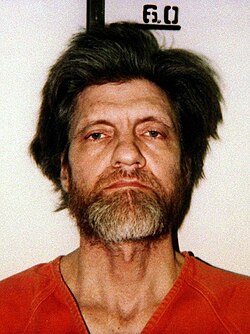
In December 1994, the Unabomber assassinated Burson-Marsteller executive Thomas J. Mosser, whose firm had been hired by Exxon to manage its public image following the Exxon Valdez oil spill.
Image source: Ted Kaczynski
Apr 1, 1998
% complete
In April 1998, the company argued in a legal action against the federal government that the ship should be allowed back into Alaskan waters, challenging the ban imposed by the Oil Pollution Act of 1990.
Jan 1, 2002
% complete
As of 2002, OPA had prevented 18 ships from entering Prince William Sound, demonstrating the lasting regulatory impact of the legislation passed in response to the Exxon Valdez disaster.
Jan 1, 2002
% complete
In 2002, the 9th Circuit Court of Appeals ruled against Exxon, upholding the prohibition on the former Exxon Valdez entering Prince William Sound under the Oil Pollution Act.
Dec 6, 2002
% complete
On December 6, 2002, Holland announced that he had reduced the damages to $4 billion, which he concluded was justified by the facts of the case and was not grossly excessive, continuing years of litigation over punitive damages owed to spill victims.
Dec 1, 2006
% complete
After more appeals, in December 2006 the damages award was cut to $2.5 billion, further reducing the punitive damages that thousands of plaintiffs affected by the spill hoped to recover.
May 23, 2007
% complete
On May 23, 2007, the 9th Circuit Court of Appeals denied ExxonMobil's request for a third hearing and let stand its ruling that Exxon owed $2.5 billion in punitive damages.
Feb 27, 2008
% complete
On February 27, 2008, the Supreme Court heard oral arguments in the case, weighing whether the massive punitive damages award against Exxon for the spill violated maritime law.
Image source: Exxon Shipping Co. v. Baker
Jun 25, 2008
% complete
In a decision issued June 25, 2008, written by Justice David Souter, the court vacated the $2.5 billion award and remanded the case back to the lower court, finding that the damages were excessive with respect to maritime common law.
Jun 25, 2008
% complete
The Court's ruling was that maritime punitive damages should not exceed the compensatory damages, supported by a precedent dating from 1818, a decision with far-reaching implications for maritime liability cases.
Dec 15, 2009
% complete
As of December 15, 2009, Exxon had paid the entire $507.5 million in punitive damages, including lawsuit costs, plus interest, which were further distributed to thousands of plaintiffs, closing out two decades of litigation.
Mar 23, 1989
% complete
The tanker left the terminal at 9:12 p.m., March 23, 1989 (the deck log shows that it was clear of the dock at 9:21 p.m.), loaded with 53,094,510 gallons (1,264,155 barrels) of crude oil bound for California.
Mar 24, 1989
% complete
The Exxon Valdez oil spill was a major environmental disaster that occurred in Alaska's Prince William Sound on March 24, 1989. It became the largest oil spill in U.S. waters until the 2010 Deepwater Horizon oil spill in terms of volume of oil released, devastating the region's pristine ecosystem and wildlife.
Mar 24, 1989 - Dec 31, 1989
% complete
A 1989 report by the Coast Guard's U.S. authorities examined the circumstances of the grounding and the subsequent cleanup efforts, contributing to the official understanding of how the disaster unfolded and what failures allowed it to happen.
Jan 1, 2009
% complete
In 2009, Captain Hazelwood offered a "heartfelt apology" to the people of Alaska, suggesting he had been wrongly blamed for the disaster: "The true story is out there for anybody who wants to look at the facts, but that's not the sexy story and that's not the easy story," he said.
Jan 1, 1991
% complete
In 1991, following the collapse of populations of local marine species (particularly clams, herring, and seals), the Chugach Alaska Corporation, an Alaska Native Corporation, filed for Chapter 11 bankruptcy protection, illustrating the economic devastation wrought on local communities.
Jan 1, 1992
% complete
In 1992, Exxon released a video titled Scientists and the Alaska Oil Spill for distribution to schools, part of the company's public relations effort to shape public perception of the spill and its aftermath.
Jan 1, 2001
% complete
A study by the National Marine Fisheries Service, NOAA in Juneau, determined that by 2001 approximately 90 tonnes of oil remained on beaches in Prince William Sound in the sandy soil of the contaminated shoreline, with annual loss rates declining from 68% per year prior to 1992, to 4% per year after 2001.
Jan 1, 2010
% complete
In 2010, CNN reported on studies concluding that many oil spill cleanup workers involved in the Exxon Valdez response had subsequently become sick, and warned those exposed to the Deepwater Horizon oil spill to take heed.
Jan 1, 2010
% complete
According to a report by David Kirby for TakePart, the main component of the Corexit formulation used during cleanup, 2-butoxyethanol, was identified as "one of the agents that caused liver, kidney, lung, nervous system, and blood disorders among cleanup crews in Alaska following the 1989 Exxon Valdez spill."
Image source: Corexit
Jan 1, 2012
% complete
As of 2012, the indirect and long-term sublethal effects of oil on shorebirds had been measured in relatively few studies, leaving gaps in scientific understanding of the spill's lingering ecological consequences.
Jan 1, 2012
% complete
Although the volume of oil has declined considerably, with oil remaining only about 0.14–0.28% of the original spilled volume, studies suggest that the area of oiled beach has changed little since 1992, showing how persistent the contamination proved to be.
Mar 24, 2014
% complete
On March 24, 2014, the twenty-fifth anniversary of the spill, NOAA scientists reported that some species seem to have recovered, with the sea otter the latest creature to return to pre-spill numbers, offering cautious optimism about the ecosystem's recovery.
Or browse the full history timeline directory, with more than 2,000 topics.
This Exxon Valdez Oil Spill timeline was generated with the help of AI, using information found on the internet.
We work hard to keep these timelines accurate, but mistakes do get through. If you spot one, email us at [email protected] and we'll fix it for future visitors.
Generate yours with AI or build it from scratch, for free.
Export your timeline, add your own events, edit or remove AI-generated events, and much more
No credit card required.
Cancel anytime.
Cancel anytime.
You can create an unlimited number of timelines with up to 10 events on each one, customize how they look, export them to PDF, PNG, PowerPoint, CSV, and Excel, and share them with a link. Paid plans raise the event limit and add features like spreadsheet imports and collaborators.
Yes. You can cancel your subscription from your account page at any time, and you will not be charged again. Your subscription stays active for the rest of the period you already paid for.
Yes. We will email you a reminder before the annual renewal, and we will also email you a receipt.
Yes. You can email us within 15 days of any payment, and we will issue you a full refund.
Check out our pricing docs or send us an email anytime: [email protected].