
-
Use Cases
-
Resources
-
Pricing
1799
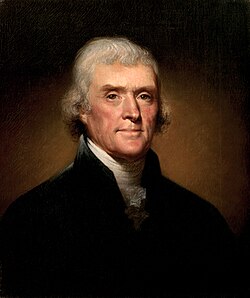
Kentucky's supplementary resolutions of 1799 used the word nullification and asked states to declare objectionable acts void and without force while appealing to Congress.
Image source: Kentucky and Virginia Resolutions
1800
The election of 1800 replaced the Federalists with Jefferson's Democratic-Republicans. Although the party had championed states' rights, the period from 1800 to 1817 saw federal judicial power increase under Chief Justice John Marshall.
1800
A committee chaired by James Madison issued a book-length Report on the Resolutions of 1798, published in 1800 after several states had criticized those resolutions.
1809
In 1809, Madison used national troops to enforce a Supreme Court decision in Pennsylvania, appointed Joseph Story to the Supreme Court, signed legislation creating the Second Bank of the United States, and supported a constitutional amendment concerning internal improvements.
1812 - 1815
Opposition to the War of 1812 was concentrated in New England, where critics challenged Madison's war policy and contributed to renewed disputes about federal and state authority.
Image source: War of 1812

Dec 1814
Delegates met in Hartford, Connecticut, in December 1814 to consider a New England response to Madison's wartime policies.
Image source: Hartford Convention

1815
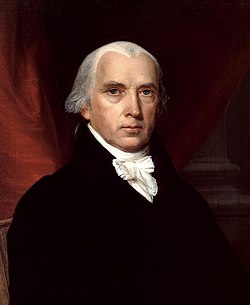
Madison's 1815 annual message to Congress argued that the war had reinforced mainstream Republicanism and moved it away from its earlier localist assumptions.
Image source: James Madison
1819
The nation's first major financial panic occurred in 1819. The political turmoil of the following decade intensified debate over the nature of American federalism.
Image source: Panic of 1819

1830
Robert Hayne's Senate speech in early 1830 prompted Daniel Webster's response. The debate expanded from western lands into a broader argument over the nature of the United States and federalism.
Image source: Webster–Hayne debate

Aug 28, 1830
In a letter intended for publication, James Madison disputed Calhoun's claim that nullification rested on the Kentucky and Virginia Resolutions. Madison said Jefferson had meant a revolutionary, not constitutional, right.
This Nullification Crisis timeline was generated with the help of AI, using information found on the internet.
We work hard to keep these timelines accurate, but mistakes do get through. If you spot one, email us at [email protected] and we'll fix it for future visitors.
Generate yours with AI or build it from scratch, for free.


