-
Use Cases
-
Resources
-
Pricing
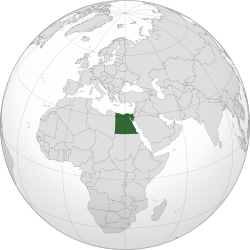
The Suez Crisis of 1956 was a major international confrontation triggered when Egyptian President Gamal Abdel Nasser nationalized the Suez Canal. Israel, Britain, and France launched a joint military intervention, but diplomatic pressure from the United States and the Soviet Union forced their withdrawal. The crisis marked the decline of British and French influence in the Middle East and the rise of the United States and USSR as dominant Cold War powers. More Less
Jul 26, 1956
% complete
On 26 July 1956, in a speech in Alexandria, Egyptian President Gamal Abdel Nasser announced the nationalisation of the Suez Canal, seizing control of the strategically vital waterway from the Suez Company. The move stunned Britain and France and set the Suez Crisis in motion.
Image source: Suez Crisis
Jul 26, 1956
% complete
Egypt blockaded the Gulf of Aqaba, cutting off Israeli shipping through the Straits of Tiran. This was widely seen as a contravention of the Constantinople Convention of 1888 and, by many, also a violation of the 1949 Armistice Agreements.
Jul 26, 1956
% complete
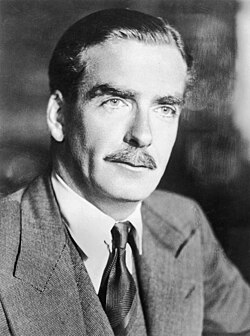
British Prime Minister Anthony Eden began planning for an invasion of Egypt in July 1956 in response to Nasser's nationalisation of the canal, setting in motion what would become Operation Musketeer.
Image source: Operation Musketeer (1956)
Jul 26, 1956
% complete
In July 1956, IDF chief of staff General Moshe Dayan advised Prime Minister David Ben-Gurion that Israel should attack Egypt at the first chance, though Ben-Gurion stated he preferred to attack Egypt only with the aid of France.
Image source: Moshe Dayan
Jul 29, 1956
% complete
On 29 July 1956, the French Cabinet decided upon military action against Egypt in alliance with Israel, committing France to a joint operation following Nasser's nationalisation of the canal.
Sep 25, 1956
% complete
In late September 1956, French Prime Minister Guy Mollet decided to attack Egypt with Britain, and if the British backed out—as Mollet believed they might—with Israel alone.
Image source: Guy Mollet
Sep 30, 1956
% complete
On 30 September 1956, secret Franco-Israeli talks started in Paris based on Britain's non-involvement, laying groundwork for coordinated military action against Egypt.
Image source: Protocol of Sèvres
Oct 22, 1956 - Oct 24, 1956
% complete
During discussions held between 22 and 24 October 1956 at Sèvres, France, Britain, France and Israel reached a secret agreement regarding political and military cooperation to overthrow Nasser and de-nationalise the Suez Canal.
Aug 10, 1956
% complete
In two letters sent on 3 and 10 August 1956, Labour leader Hugh Gaitskell condemned Nasser but warned Prime Minister Eden that he would not support any action that violated the United Nations Charter, including an armed attack.
Image source: Hugh Gaitskell
Sep 10, 1956
% complete
In a letter to the British Ambassador on 10 September 1956, Ivone Kirkpatrick, Permanent Under-Secretary at the Foreign Office, warned that if Britain sat back while Nasser consolidated his position and gained control of the oil-bearing countries, Nasser was resolved to wreck Britain.
Image source: Ivone Kirkpatrick
Oct 1, 1956
% complete
Eden's obsession with secrecy meant that the British government did nothing in the months running up to the attack to explain to the British people or to reservists called up for National Service why the war was necessary.
Image source: Anthony Eden
Oct 1, 1956
% complete
In October 1956, Nasser brought in sweeping regulations abolishing civil liberties, allowing mass arrests without charge and stripping citizenship from any group the state desired; these measures were mostly directed against the Jews of Egypt.
Nov 1, 1956
% complete
Stormy and violent debates in the House of Commons on 1 November 1956 almost degenerated into fist-fights after several Labour MPs compared Prime Minister Anthony Eden to Hitler.
Nov 1, 1956
% complete
The Suez Crisis played a key role in reconciling the Gaitskellite and Bevanite factions of the Labour Party, which had been divided since the 1955 leadership election, as both condemned the invasion of Egypt.
Nov 4, 1956
% complete
On 4 November 1956, an anti-war rally in Trafalgar Square attended by 30,000 people—easily the biggest rally in London since 1945—heard Labour MP Aneurin Bevan accuse the government of 'a policy of bankruptcy and despair'.
Nov 7, 1956
% complete
On 7 November 1956, an emergency session of the United Nations General Assembly in New York passed Resolution 1002, again calling for the immediate withdrawal of Israeli troops behind the armistice lines and the immediate withdrawal of British and French troops from Egyptian territory.
Aug 11, 1956
% complete
On 11 August 1956, General Charles Keightley was appointed commander of Operation Musketeer, the planned invasion of Egypt, with French Admiral Pierre Barjot serving as his deputy commander.
Image source: Charles Keightley
Aug 25, 1956
% complete
In late August 1956, Admiral Pierre Barjot suggested that Port Said once again be made the main invasion target, which lessened the number of troops needed and reduced the interval between sending forces to the eastern Mediterranean and launching the invasion.
Sep 8, 1956
% complete
On 8 September 1956, the revised invasion plan known as 'Revise' was approved by both the British and French cabinets, finalising preparations for the assault on Egypt.
Oct 1, 1956 - Mar 1, 1957
% complete
As a result of the crisis, the Suez Canal was closed from October 1956 to March 1957, disrupting global trade until it was fully reopened to shipping on 24 April 1957.
Oct 29, 1956
% complete
The fighting of the Suez Crisis began on 29 October 1956, when Israeli forces invaded Egypt's Sinai Peninsula, beginning the second Arab–Israeli war, known in Israel as the Sinai War and in the Arab world as the Tripartite Aggression.
Oct 29, 1956 - Mar 1, 1957
% complete
Israel's four-month-long occupation of the Egyptian-occupied Gaza Strip and Egypt's Sinai Peninsula enabled it to attain freedom of navigation through the Straits of Tiran, which Egypt had closed since 1950.
Image source: United Arab Republic occupation of the Gaza Strip
Nov 7, 1956
% complete
On 7 November 1956, David Ben-Gurion addressed the Knesset and declared a great victory, saying that the 1949 armistice agreement with Egypt was dead and buried, and that the armistice lines were no longer valid and could not be restored.
Image source: David Ben-Gurion
Dec 22, 1956
% complete
Without further guarantees, the Anglo-French Task Force had to finish withdrawing from Egypt by 22 December 1956, to be replaced by Danish and Colombian units of the United Nations Emergency Force (UNEF).
Dec 22, 1956
% complete
Following the Anglo-French withdrawal on 22 December 1956, Danish and Colombian units of the United Nations Emergency Force took their place, marking an early milestone for UN peacekeeping born of Lester Pearson's initiative.
Image source: United Nations Emergency Force
Jan 1, 1957
% complete
Following Nasser's repressive measures introduced in October 1956, which were mostly directed against the Jews of Egypt, the Jewish population of Egypt had fallen to 15,000 by 1957.
Image source: History of the Jews in Egypt
Jan 5, 1957
% complete
To prevent further Soviet expansion in the region, President Eisenhower asked Congress on 5 January 1957 for authorisation to use military force if requested by any Middle Eastern nation to check aggression, and to set aside $200 million to aid Middle Eastern countries—the basis of the Eisenhower Doctrine.
Image source: Eisenhower Doctrine
Jan 9, 1957
% complete
Anthony Eden was accused of misleading parliament over the Suez invasion and resigned from office on 9 January 1957, ending his premiership and handing power to Harold Macmillan.
Feb 15, 1957
% complete
In the context of the massive Soviet armament of Egypt via Czechoslovakia, Israel had been expecting an Egyptian invasion in either March or April 1957, as well as a Soviet invasion of Syria, neither of which occurred after the war.
Mar 1, 1957
% complete
The Israelis refused to host any UN force on Israeli-controlled territory and withdrew from the Sinai and Gaza in March 1957, ending their four-month occupation of the territories captured during the war.
Or browse the full history timeline directory, with more than 2,000 topics.
This Suez Crisis timeline was generated with the help of AI, using information found on the internet.
We work hard to keep these timelines accurate, but mistakes do get through. If you spot one, email us at [email protected] and we'll fix it for future visitors.
Generate yours with AI or build it from scratch, for free.
Export your timeline, add your own events, edit or remove AI-generated events, and much more
No credit card required.
Cancel anytime.
Cancel anytime.
You can create an unlimited number of timelines with up to 10 events on each one, customize how they look, export them to PDF, PNG, PowerPoint, CSV, and Excel, and share them with a link. Paid plans raise the event limit and add features like spreadsheet imports and collaborators.
Yes. You can cancel your subscription from your account page at any time, and you will not be charged again. Your subscription stays active for the rest of the period you already paid for.
Yes. We will email you a reminder before the annual renewal, and we will also email you a receipt.
Yes. You can email us within 15 days of any payment, and we will issue you a full refund.
Check out our pricing docs or send us an email anytime: [email protected].