-
Use Cases
-
Resources
-
Pricing
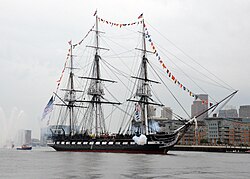
USS Constitution, nicknamed 'Old Ironsides,' is a three-masted heavy frigate of the United States Navy launched in 1797. Famous for her victories in the War of 1812, including defeats of HMS Guerriere and HMS Java, she is the oldest commissioned warship afloat in the world and now serves as a museum ship at the Charlestown Navy Yard in Boston. More Less
Mar 27, 1794
% complete
Following attacks on American merchant shipping by Barbary pirates, Congress passed the Naval Act of 1794, authorizing the construction of six heavy frigates. The USS Constitution would be one of these ships, marking the rebirth of the United States Navy.
Image source: Original six frigates of the United States Navy
Jun 1795
% complete
The keel of the USS Constitution was laid at Edmund Hartt's shipyard in Boston's North End. Designed by Joshua Humphreys, the ship was built with dense live oak and white pine planking up to seven inches thick, giving her exceptional strength.
Image source: USS Constitution
Oct 21, 1797
% complete
The USS Constitution slid into Boston Harbor on October 21, 1797, before a crowd of thousands. She was one of the largest warships of her day, armed with 44 guns and built to outfight any frigate and outrun any ship of the line.
Feb 1798
% complete
The Constitution put to sea in early 1798 to patrol for French privateers during the Quasi-War, an undeclared naval conflict between the United States and France. She escorted American merchant convoys and captured several prizes.
Image source: Quasi-War
Aug 1803 - Sep 1804
% complete
Under Captain Edward Preble, the Constitution served as flagship in the Mediterranean during the First Barbary War against Tripoli. She bombarded Tripoli and blockaded its harbor, helping force the Barbary states into peace treaties with the United States.
Image source: First Barbary War
Aug 3, 1804 - Sep 4, 1804
% complete
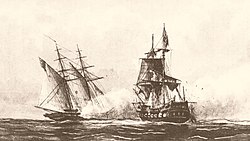
The Constitution led a squadron in a series of bombardments of Tripoli Harbor, supporting American efforts to end piracy and ransom captured sailors from the Philadelphia crew. The sustained pressure contributed to Tripoli signing peace terms in 1805.
Image source: Second Battle of Tripoli Harbor
Jul 17, 1812 - Jul 19, 1812
% complete
Shortly after the War of 1812 began, the Constitution escaped a pursuing squadron of five British warships over two days by kedging—rowing anchors ahead and hauling the ship forward—in calm winds, demonstrating remarkable seamanship under Captain Isaac Hull.
Image source: USS Constitution vs HMS Guerriere
Aug 19, 1812
% complete
Off the coast of Nova Scotia, Captain Isaac Hull led the Constitution to a decisive victory over the British frigate HMS Guerriere. British cannonballs reportedly bounced off her thick hull, earning her the enduring nickname "Old Ironsides."
Dec 29, 1812
% complete
Commanded by William Bainbridge, the Constitution defeated the British frigate HMS Java off the coast of Brazil after a fierce three-hour engagement. Java was too badly damaged to salvage and was burned, while the victory further boosted American morale.
Image source: HMS Java (1811)
Mar 27, 1813 - Apr 1813
% complete
While attempting to leave Boston, the Constitution narrowly evaded the British frigate HMS Shannon and retreated to port. After repairs, she slipped past the blockade and continued raiding British shipping through the spring of 1813.
Image source: HMS Shannon (1806)
Dec 24, 1814
% complete
The signing of the Treaty of Ghent ended the War of 1812. The Constitution's string of victories over Royal Navy frigates had become symbols of American resilience and helped establish the young United States Navy's reputation worldwide.
Image source: Treaty of Ghent
Feb 20, 1815
% complete
In the final action of the War of 1812, Captain Charles Stewart fought and defeated both HMS Cyane and HMS Levant simultaneously near Madeira. Though the Treaty of Ghent had already been signed, news had not yet reached the combatants at sea.
Image source: Capture of HMS Cyane and HMS Levant
Apr 1815 - 1829
% complete
After the Second Barbary War ended Algiers' practice of attacking American shipping, the Constitution served repeatedly as flagship of the Mediterranean Squadron, protecting American commerce and diplomatic interests throughout the region.
Image source: Second Barbary War
Mar 1844
% complete
Under Commodore John Percival, the Constitution embarked on a circumnavigation of the globe, visiting ports including Brazil, Madagascar, Singapore, China, and Hawaii. She returned to Boston in 1846 after nearly three years away.
1846 - 1848
% complete
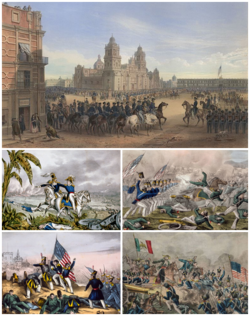
During the Mexican–American War, the Constitution patrolled off California and Mexico's Pacific coast as flagship of the Pacific Squadron, supporting blockade operations and protecting American interests during the conflict.
Image source: Mexican–American War
1853 - 1855
% complete
The Constitution served with the Africa Squadron, intercepting slave ships along the West African coast as part of the United States' effort to suppress the transatlantic slave trade following the Webster–Ashburton Treaty.
Image source: Africa Squadron
Apr 1861
% complete
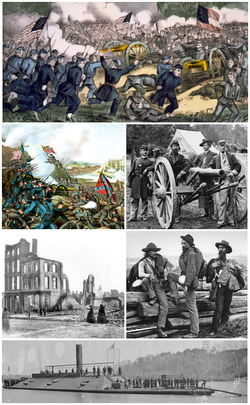
As the Civil War began, the aging Constitution was towed from Norfolk to New York, then later moved to Newport, Rhode Island, where she served as a training ship for Naval Academy midshipmen displaced from Annapolis.
Image source: American Civil War
May 1861 - 1865
% complete
Throughout the Civil War, the Constitution trained hundreds of future Union naval officers at Newport, Rhode Island, playing an important supporting role while newer steam-powered ironclads fought the major battles of the war.
Image source: United States Naval Academy
Sep 14, 1830
% complete
When a Navy report suggested the worn-out Constitution might be scrapped, Oliver Wendell Holmes Sr. published the poem "Old Ironsides" in protest. Public outrage saved the ship, establishing an early landmark moment in American historic preservation.
Image source: Old Ironsides (poem)
1871 - 1877
% complete
The Constitution underwent an extensive rebuild beginning in 1871, though much of the original timber was replaced. Poor workmanship meant she remained largely unfit for sea duty afterward, but the project kept the vessel alive as a national symbol.
Oct 1897 - Feb 1898
% complete
To celebrate her centennial, the Constitution toured East Coast cities from Maine to Virginia, drawing enormous crowds who came to see the famous frigate that had become a beloved symbol of the United States Navy's heritage.
1907
% complete
In 1907, the Constitution was opened to public visitors in Boston as a museum ship, ending her active cruising days. She became one of the first US Navy vessels established specifically for public display and education.
Jul 1, 1931 - May 1, 1934
% complete
Restored with funds raised partly by schoolchildren's penny donations, the Constitution undertook a national tour of 90 ports along the Atlantic, Gulf, and Pacific coasts, greeting millions of visitors and cementing her status as a national icon.
May 1, 1934
% complete
After the 1931–34 tour, the Constitution returned to Boston and was moored permanently at the Charlestown Navy Yard, now part of the Boston National Historical Park, where she remains open to millions of visitors each year.
Image source: Boston National Historical Park
1992 - 1996
% complete
A major multi-year restoration prepared the Constitution for her 200th anniversary. Shipwrights used traditional techniques and materials to restore her hull and rigging, returning her closer to her War of 1812 appearance.
Jul 21, 1997
% complete
For her 200th birthday, the Constitution sailed under her own canvas power for the first time since 1881, briefly setting sail off Marblehead, Massachusetts—a moving moment witnessed by thousands and broadcast nationwide.
Oct 28, 2009
% complete
Congress formally designated the USS Constitution as "America's Ship of State," a ceremonial role recognizing her unique place as the world's oldest commissioned warship still afloat.
Aug 19, 2012
% complete
On the 200th anniversary of her victory over HMS Guerriere, the Constitution sailed once more under her own power in Boston Harbor, turning around her berth and firing salutes to commemorate her most famous battle.
2015 - Jul 2017
% complete
A three-year restoration replaced more than 2,600 hull planks and many deck beams using white oak sourced from across America. Completed in 2017, it ensured the ship's structural integrity for decades to come.
2017
% complete
Today the USS Constitution remains an actively commissioned US Navy warship, crewed by active-duty sailors who give tours, conduct educational programs, and perform the annual July 4th turnaround cruise—the oldest commissioned warship still afloat anywhere in the world.
Or browse the full history timeline directory, with more than 2,000 topics.
This USS Constitution timeline was generated with the help of AI, using information found on the internet.
We work hard to keep these timelines accurate, but mistakes do get through. If you spot one, email us at [email protected] and we'll fix it for future visitors.
Generate yours with AI or build it from scratch, for free.
Export your timeline, add your own events, edit or remove AI-generated events, and much more
No credit card required.
Cancel anytime.
Cancel anytime.
You can create an unlimited number of timelines with up to 10 events on each one, customize how they look, export them to PDF, PNG, PowerPoint, CSV, and Excel, and share them with a link. Paid plans raise the event limit and add features like spreadsheet imports and collaborators.
Yes. You can cancel your subscription from your account page at any time, and you will not be charged again. Your subscription stays active for the rest of the period you already paid for.
Yes. We will email you a reminder before the annual renewal, and we will also email you a receipt.
Yes. You can email us within 15 days of any payment, and we will issue you a full refund.
Check out our pricing docs or send us an email anytime: [email protected].