-
Use Cases
-
Resources
-
Pricing
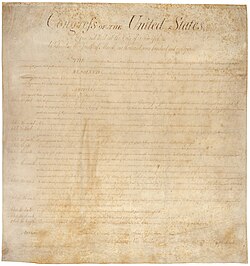
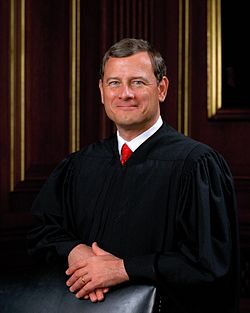
The United States Constitution is the supreme law of the United States, drafted at the Constitutional Convention in Philadelphia in 1787 and ratified in 1788. Establishing the framework of the federal government with its three branches—legislative, executive, and judicial—it has endured for over two centuries and is the oldest written national constitution still in use. The Bill of Rights and subsequent amendments have expanded and refined its principles over time. More Less
1606
% complete
The Virginia Charter of 1606 enabled the King in Parliament to give those born in the colonies all rights and liberties as though they were born in England, planting early seeds of English legal rights in America that would later influence the Constitution.
Image source: Virginia Company
1689
% complete
Following the Glorious Revolution of 1688, the English Bill of Rights was enacted and served as an inspiration for the American Bill of Rights, establishing precedents for enumerated liberties against governmental overreach.
Image source: Bill of Rights 1689
1700
% complete
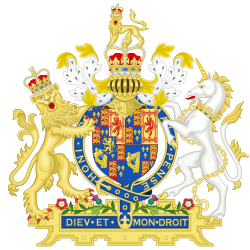
The idea of Separation of Powers inherent in the Constitution was largely inspired by eighteenth-century Enlightenment philosophers such as Montesquieu and John Locke. Montesquieu emphasized balanced forces pushing against each other to prevent tyranny, reflecting Polybius's 2nd century BC treatise on the checks and balances of the Roman Republic. James Madison frequently referenced Blackstone, Locke, and Montesquieu.
1760
% complete
Historian Daniel Walker Howe notes that Benjamin Franklin greatly admired David Hume, an eighteenth-century Scottish philosopher, and had studied many of his works while at Edinburgh in 1760, contributing to the intellectual foundations of American constitutional thought.
Image source: David Hume
Sep 5, 1774
% complete
Delegates to the First Continental Congress in 1774 were chosen largely from the revolutionary committees of correspondence in various colonies rather than through the colonial governments of the Thirteen Colonies, marking a first step toward unified colonial governance.
Image source: First Continental Congress
May 10, 1775 - Mar 1, 1781
% complete
From September 5, 1774, to March 1, 1781, the Second Continental Congress, convened in Philadelphia in what is now Independence Hall, functioned as the provisional government of the United States. Its delegates from 1775 to 1781 were chosen largely from the revolutionary committees of correspondence.
Image source: Second Continental Congress
1776
% complete
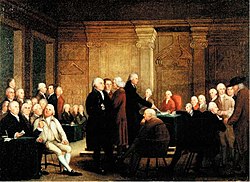
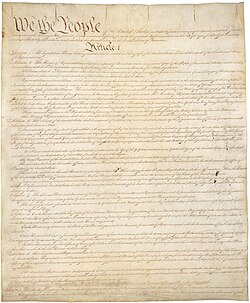
Greene maintains that by 1776 the founders drew heavily upon Magna Carta and the later writings of 'Enlightenment rationalism' and English common law, forming the intellectual basis for American constitutional government.
Image source: Constitution of the United States
Jun 1777 - Nov 1777
% complete
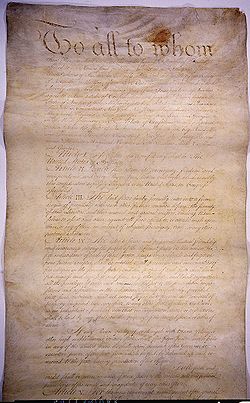
The Articles of Confederation, the nation's first constitution, was drafted by a committee appointed by the Second Continental Congress in mid-June 1777 and adopted by the full Congress in mid-November of that year.
Mar 1, 1781
% complete
Ratification of the Articles of Confederation by the 13 colonies took more than three years and was completed on March 1, 1781, formally establishing the nation's first constitution and ending the Second Continental Congress.
Image source: Articles of Confederation
Sep 3, 1783
% complete
Although the Treaty of Paris in 1783 was signed between Britain and the U.S., and named each of the American states, various states proceeded to violate it, exposing weaknesses in the national government under the Articles of Confederation.
Image source: Treaty of Paris (1783)
1786
% complete
By 1786, the United States was facing default on its outstanding debts, demonstrating the financial weakness of the federal government under the Articles of Confederation and fueling calls for constitutional reform.
Aug 1786 - Jun 1787
% complete
During Shays' Rebellion (August 1786 – June 1787) in Massachusetts, Congress could provide no money to support an endangered constituent state, highlighting the inability of the national government under the Articles to respond to domestic crises.
Image source: Shays' Rebellion
Sep 1786
% complete
In September 1786, during the inter-state Annapolis convention to discuss reversing the protectionist trade barriers that each state had erected, James Madison questioned whether the Articles of Confederation was a binding compact or even a viable government.
Feb 21, 1787
% complete
On February 21, 1787, the Confederation Congress called a convention of state delegates in Philadelphia to propose revisions to the Articles of Confederation, setting the stage for the drafting of a new constitution.
May 25, 1787 - Sep 17, 1787
% complete
On May 14, 1787, only the Virginia and Pennsylvania delegations were present, and the convention's opening meeting was postponed for lack of a quorum; it officially assembled May 25 and met through September 17, 1787. The drafting of the Constitution by many of the nation's Founding Fathers, often referred to as its framing, was completed at Independence Hall in Philadelphia.
Jun 19, 1787
% complete
On June 19, 1787, delegates rejected the New Jersey Plan with three states voting in favor, seven against, and one divided. The convention had also considered proposals resembling New York's Constitution of 1777, which called for a 'Council of Revision' by the governor and justices of the state supreme court empowered to review and veto passed legislation.
Image source: Constitutional Convention (United States)
Sep 17, 1787
% complete
The signing of the United States Constitution occurred on September 17, 1787, when 39 delegates endorsed the constitution created during the convention, completing its drafting at Independence Hall in Philadelphia.
Image source: Signing of the United States Constitution
Sep 20, 1787
% complete
Within three days of its signing on September 17, 1787, the Constitution was submitted to the Congress of the Confederation, then sitting in New York City, the nation's temporary capital.
Jan 1788
% complete
As 1788 began, Connecticut and Georgia followed Delaware's lead with almost unanimous votes, but the outcome became less certain as leaders in key states such as Virginia, New York, and Massachusetts expressed concerns over the lack of protections for people's rights.
Jun 2, 1788 - Jun 27, 1788
% complete
John Marshall (Virginia), who would become the fourth chief justice, had served in the Virginia Ratification Convention in 1788, supporting the adoption of the Constitution.
Image source: Virginia Ratifying Convention
Jun 21, 1788
% complete
On June 21, 1788, New Hampshire became the ninth state to ratify the Constitution, achieving the threshold required to establish the new government.
Sep 13, 1788
% complete
Three months after New Hampshire's ratification, on September 17, the Congress of the Confederation certified the ratification of eleven states and passed resolutions setting dates for choosing the first senators and representatives (January 7, 1789), electing the first president (February 4), and starting the new government (March 4) when the first Congress would convene in New York City.
Image source: Congress of the Confederation
Mar 4, 1789
% complete
The Constitution superseded the Articles of Confederation, the nation's first constitution, on March 4, 1789, when the new federal government officially began operations with the first Congress convening in New York City.
1789
% complete
Since the Constitution became operational in 1789, it has been amended 27 times, ranging from the Bill of Rights in 1791 to the Twenty-seventh Amendment in 1992, reflecting the document's capacity for evolution over more than two centuries.
1789
% complete
The precedent for proposing Constitutional amendments by Congress was set in 1789, when Congress considered and proposed the first several Constitutional amendments, including the Congressional Apportionment Amendment, which would have established a formula for determining the size of the House of Representatives.
1791
% complete
The first ten Amendments introduced, known as the Bill of Rights, were added to the Constitution in 1791, as supporters of the Constitution had promised critics during the debates of 1788. The Tenth Amendment further defined the balance of power between the federal government and the states.
Image source: United States Bill of Rights
1800
% complete
When first established as the nation's capital in 1800, the District of Columbia's five thousand residents had neither a local government nor the right to vote in federal elections. By 1960 the population had grown to over 760,000, fueling demands for representation.
Jan 1, 1808
% complete
Clauses 4 and 9 of Article One, Section 9 were explicitly shielded from Constitutional amendment prior to 1808. Section 9, Clause 1 prevented Congress from restricting the importation of slaves prior to 1808. On January 1, 1808, the first day it was permitted to do so, Congress approved legislation prohibiting the importation of slaves into the country.
1810
% complete
The Titles of Nobility Amendment, proposed in 1810, would, if ratified, strip United States citizenship from any citizen who accepted a title of nobility from a foreign country. It remains pending as it contained no time limit for ratification.
1861
% complete
The Corwin Amendment, proposed in 1861, would, if ratified, shield 'domestic institutions' of the states, which in 1861 included slavery, from the constitutional amendment process and from abolition or interference by Congress.
1865
% complete
The Thirteenth Amendment (1865) abolished slavery and involuntary servitude, except as punishment for a crime, and authorized Congress to enforce abolition. Though millions of slaves had been declared free by the 1863 Emancipation Proclamation, their post-Civil War status was unclear until this amendment.
1868
% complete
The Fourteenth Amendment (1868) granted United States citizenship to former slaves and to all persons born or naturalized subject to U.S. jurisdiction, fundamentally redefining citizenship and equality before the law.
1870
% complete
The Fifteenth Amendment (1870) prohibits the use of race, color, or previous condition of servitude in determining which citizens may vote. Together with the Thirteenth and Fourteenth, these Reconstruction Amendments were adopted between 1865 and 1870, though they did not prohibit discrimination in voting based on sex.
Feb 3, 1913
% complete
With ratification of the Sixteenth Amendment, Congress gained the authority to levy an income tax without apportioning it among the states or basing it on the United States Census, removing apportionment constraints of Article 1, Section 9, Clause 4 and overturning the 1895 Pollock v. Farmers' Loan & Trust decision.
1919
% complete
The Eighteenth Amendment (1919) prohibited the making, transporting, and selling of alcoholic beverages nationwide, ushering in the Prohibition era.
1920
% complete
It took the Nineteenth Amendment, ratified in 1920, for the Constitution to prohibit any United States citizen from being denied the right to vote on the basis of sex, since the Reconstruction Amendments did not include such a prohibition.
1924
% complete
The Child Labor Amendment, proposed in 1924, would, if ratified, specifically authorize Congress to limit, regulate and prohibit labor of persons less than eighteen years of age, responding to Supreme Court decisions like Hammer v. Dagenhart (1918) and Bailey v. Drexel Furniture Co. (1922) that found federal child labor laws unconstitutional.
Image source: Child Labor Amendment
1933
% complete
Prohibition came to an end in 1933, when the Twenty-first Amendment repealed the Eighteenth Amendment and returned the regulation of alcohol to the states.
Jun 25, 1938
% complete
A federal statute approved June 25, 1938 regulated the employment of those under 16 or 18 years of age in interstate commerce. In United States v. Darby (1941), the Supreme Court found this law constitutional, effectively overturning Hammer v. Dagenhart.
Image source: Fair Labor Standards Act of 1938
1940 - 1944
% complete
Franklin D. Roosevelt was elected to a third term as president in 1940 and in 1944 to a fourth, an unprecedented break with tradition that contributed to the push for the Twenty-second Amendment limiting presidential terms.
1972
% complete
The Equal Rights Amendment, proposed in 1972, would have prohibited deprivation of equality of rights by the federal or state governments on account of sex, but it ultimately fell short of ratification.
1978
% complete
The District of Columbia Voting Rights Amendment, proposed in 1978, would have granted the District full representation in Congress as if it were a state, repealed the Twenty-third Amendment, granted unconditional Electoral College voting rights, and allowed its participation in amending the Constitution. It expired unratified.
1992
% complete
The Twenty-seventh Amendment (1992) prevents members of Congress from granting themselves pay raises during the current session. It affected Article One, Section 6, Clause 1 and remained pending for over two centuries as it contained no time limit for ratification.
Sep 24, 1789
% complete
The Judiciary Act of 1789 saw Congress's first exercise of its power to establish the federal court system below the Supreme Court, laying the foundation of the American judicial branch.
1796
% complete
John Rutledge (South Carolina) was appointed by Washington in 1795 as a recess appointment but was not confirmed by the Senate. Resigning later that year, he was succeeded in 1796 by the third chief justice, Oliver Ellsworth (Connecticut).
Image source: Oliver Ellsworth
1801
% complete
When John Marshall followed Oliver Ellsworth as chief justice of the Supreme Court in 1801, the federal judiciary had been established by the Judiciary Act, but there were few cases. Marshall would transform the Court's role in interpreting the Constitution.
Image source: John Marshall
1819
% complete
In McCulloch v. Maryland (1819), the Supreme Court read the Necessary and Proper Clause to permit the federal government to take action that would enable it to perform the high duties assigned to it by the Constitution in the manner most beneficial to the people, even if not itself within the enumerated powers.
Image source: McCulloch v. Maryland
1857
% complete
The Supreme Court did not declare another act of Congress unconstitutional after Marbury until the controversial Dred Scott decision in 1857, held after the voided Missouri Compromise statute had already been repealed.
1864 - 1873
% complete
Salmon Chase was a Lincoln appointee, serving as chief justice from 1864 to 1873, presiding over the Court during the era of the Civil War and Reconstruction Amendments.
Image source: Salmon P. Chase
1883
% complete
The Civil Rights Cases (1883) were a group of five landmark cases in which the Supreme Court held that the Thirteenth and Fourteenth Amendments did not empower Congress to outlaw racial discrimination by private individuals. This holding would be overturned in the 1968 case Jones v. Alfred H. Mayer Co., while the Fourteenth Amendment-related decision has never been overturned.
1925
% complete
As chief justice, William Taft advocated for the Judiciary Act of 1925 that brought the Federal District Courts under the administrative jurisdiction of the Supreme Court. That year the Taft Court also issued a ruling overturning a Marshall Court ruling on the Bill of Rights.
Image source: William Howard Taft
1935 - 1936
% complete
A crisis arose when, in 1935 and 1936, the Supreme Court handed down twelve decisions voiding acts of Congress relating to the New Deal, prompting President Roosevelt to consider changes to the Court.
Image source: Judicial Procedures Reform Bill of 1937
1953 - 1969
% complete
Earl Warren was an Eisenhower nominee, chief justice from 1953 to 1969. In 1954, the Warren Court overturned a landmark Fuller Court ruling interpreting racial segregation as permissible providing 'separate but equal' services. Warren built a coalition of justices after 1962 that developed the idea of natural rights as guaranteed in the Constitution.
Image source: Earl Warren
1964
% complete
In Heart of Atlanta Motel, Inc. v. United States (1964), the Supreme Court upheld Congress's power under the Fourteenth Amendment and Commerce Clause to outlaw racial discrimination in public accommodations, reinforcing federal civil rights authority.
1966
% complete
In 1966, the Supreme Court ruled that, with the Fifth Amendment, the Sixth Amendment requires what has become known as the Miranda warning, ensuring criminal suspects are informed of their rights upon arrest.
1968
% complete
The holding that the Thirteenth Amendment did not empower the federal government to punish racist acts done by private citizens was overturned by the Supreme Court in Jones v. Alfred H. Mayer Co. (1968), expanding federal power against private racial discrimination.
1986 - 2005
% complete
William Rehnquist was a Reagan-appointed chief justice, serving from 1986 to 2005. Following Bush v. Gore, he built a coalition of Justices after 1994 that developed the idea of federalism as provided for in the Tenth Amendment.
Image source: William Rehnquist
2005
% complete
John Roberts was appointed Chief Justice of the United States in 2005, succeeding William Rehnquist and leading the Supreme Court into a new era of constitutional interpretation.
Image source: John Roberts
1985
% complete
Custody of the Constitution has been held by the secretary of state, then by the administrator of General Services between 1949 and 1985, after which oversight passed to the National Archives, where the document is preserved and displayed.
Image source: National Archives and Records Administration
2006
% complete
Sanford Levinson wrote in 2006 that the U.S. Constitution has been the most difficult constitution in the world to amend since the fall of Yugoslavia, reflecting longstanding criticism of its rigidity.
2012
% complete
According to a 2012 study by David Law and Mila Versteeg published in the New York University Law Review, the U.S. Constitution's influence on other nations' constitutions had declined, part of ongoing scholarly debate about its legacy.
Or browse the full history timeline directory, with more than 2,000 topics.
This US Constitution timeline was generated with the help of AI, using information found on the internet.
We work hard to keep these timelines accurate, but mistakes do get through. If you spot one, email us at [email protected] and we'll fix it for future visitors.
Generate yours with AI or build it from scratch, for free.
Export your timeline, add your own events, edit or remove AI-generated events, and much more
No credit card required.
Cancel anytime.
Cancel anytime.
You can create an unlimited number of timelines with up to 10 events on each one, customize how they look, export them to PDF, PNG, PowerPoint, CSV, and Excel, and share them with a link. Paid plans raise the event limit and add features like spreadsheet imports and collaborators.
Yes. You can cancel your subscription from your account page at any time, and you will not be charged again. Your subscription stays active for the rest of the period you already paid for.
Yes. We will email you a reminder before the annual renewal, and we will also email you a receipt.
Yes. You can email us within 15 days of any payment, and we will issue you a full refund.
Check out our pricing docs or send us an email anytime: [email protected].