-
Use Cases
-
Resources
-
Pricing
Apple Inc. is an American multinational technology company founded in 1976 by Steve Jobs, Steve Wozniak, and Ronald Wayne. Known for pioneering personal computers with the Apple I and II, Apple revolutionized multiple industries with products like the Macintosh (1984), iPod (2001), iPhone (2007), iPad (2010), and Apple Watch (2015). After near-bankruptcy in the 1990s, Steve Jobs' return sparked one of the greatest corporate turnarounds in history. Today, under CEO Tim Cook, Apple is one of the world's most valuable companies, known for innovation, design, and its ecosystem of hardware, software, and services. More Less
Apr 1, 1976
% complete
Steve Jobs, Steve Wozniak, and Ronald Wayne founded Apple Computer Company in Cupertino, California, to develop and sell Wozniak's Apple I personal computer. Ronald Wayne sold his 10% stake just 12 days later for $800, a decision that would later be regarded as one of the costliest in business history.
Image source: Apple Inc.
Jul 1976
% complete
The Apple I, designed by Steve Wozniak, went on sale as one of the first fully assembled personal computers with a single circuit board. Priced at $666.66, it was demonstrated at the Homebrew Computer Club and helped establish Apple as an early player in the nascent personal computer industry.
Image source: Apple I
Apr 16, 1977
% complete
Apple unveiled the Apple II, one of the first highly successful mass-produced microcomputers. With color graphics, an integrated keyboard, and expandability, it became a staple in homes and schools and drove Apple's rapid growth through the late 1970s.
Image source: Apple II
Dec 12, 1980
% complete
Apple Computer held its initial public offering, generating more capital than any IPO since Ford Motor Company in 1956. The offering instantly created hundreds of millionaires among employees and cemented Apple's status as a major technology company.
Image source: Apple Inc.
Jan 19, 1983
% complete
Apple launched the Lisa, one of the first commercial personal computers with a graphical user interface and mouse. Despite its innovations, its high price of nearly $10,000 limited sales, but it laid important groundwork for the Macintosh.
Image source: Apple Lisa
May 1985
% complete
CEO John Sculley, whom Jobs had recruited from PepsiCo, stripped Jobs of his operational duties following months of internal conflict. The board backed Sculley, prompting Jobs's eventual departure and beginning a turbulent era for Apple without its visionary co-founder.
Image source: John Sculley
Sep 1985
% complete
After losing a power struggle with CEO John Sculley, Steve Jobs resigned from Apple and founded NeXT, a computer company whose software technologies would later become foundational to macOS when Apple acquired NeXT in 1997.
Image source: NeXT

Feb 2, 1996
% complete
Gil Amelio took over as CEO of Apple as the company faced mounting losses, declining market share, and a struggling product lineup. His tenure saw deep cost-cutting and the pivotal decision to acquire NeXT, bringing Steve Jobs back into the company.
Dec 20, 1996
% complete
Apple purchased Steve Jobs's company NeXT for approximately $400 million, acquiring the NeXTSTEP operating system that became the foundation for Mac OS X. The deal marked Jobs's return to Apple, first as an advisor and soon as de facto leader.
Image source: NeXT
Aug 6, 1997
% complete
At Macworld Boston, Steve Jobs announced a landmark $150 million investment from Microsoft along with continued Office development for Mac, while he assumed day-to-day leadership as interim CEO. The same year, Apple launched the 'Think Different' campaign to revive its brand.
Image source: Think different
Jan 24, 1984
% complete
Apple introduced the Macintosh, featuring a graphical user interface and mouse, alongside Ridley Scott's iconic '1984' Super Bowl commercial directed against conformity. The Macintosh redefined personal computing and became a cultural landmark.
Image source: Macintosh 128K
Nov 20, 1985
% complete
Microsoft released Windows 1.0, a graphical operating environment that competed directly with the Macintosh. This began a long rivalry between Apple and Microsoft over graphical interfaces, including Apple's ultimately unsuccessful lawsuit alleging Windows copied the Mac look and feel.
Mar 17, 1988
% complete
Apple filed a copyright infringement lawsuit against Microsoft, claiming Windows copied the Macintosh's graphical user interface. After years of litigation, the court ruled largely in Microsoft's favor in 1994, shaping the legal landscape around interface design.
Image source: Apple Computer, Inc. v. Microsoft Corp.
Oct 1991
% complete
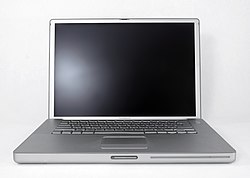
Apple introduced the PowerBook line of laptop computers, which set the ergonomic template for modern laptops with a built-in trackball positioned centrally behind the keyboard. The PowerBooks were commercially successful and helped restore Apple's reputation for innovative design.
Image source: PowerBook
Aug 3, 1993
% complete
Apple released the Newton MessagePad, an early personal digital assistant featuring handwriting recognition. Though commercially disappointing and famously mocked, the Newton pioneered concepts that later influenced the iPhone and iPad.
Image source: Apple Newton
Aug 15, 1998
% complete
Designed under Jony Ive, the translucent Bondi Blue iMac G3 combined computer and monitor in a striking all-in-one design. It became a massive commercial success, saving Apple from financial decline and signaling the company's design-led rebirth.
Image source: IMac G3
Mar 24, 2001
% complete
Apple released Mac OS X 10.0, a completely rebuilt operating system based on NeXT technology with a Unix core and Aqua interface. It replaced the aging classic Mac OS and provided the stable foundation for two decades of Apple software.
Image source: Mac OS X 10.0
Jun 6, 2005 - Aug 2020
% complete
Steve Jobs announced at WWDC that Apple would shift the Macintosh line from IBM PowerPC chips to Intel processors, completed by 2006. The transition enabled better performance, Boot Camp dual-booting with Windows, and paved the way for iOS development tools.
Image source: Mac transition to Intel processors
May 19, 2001
% complete
Apple opened its first two retail stores in Virginia and California, defying skeptics who doubted a computer maker could succeed in retail. The stores became enormously successful showcases for Apple products and a key driver of brand loyalty.
Image source: Apple Store
Oct 23, 2001
% complete
Apple unveiled the original iPod, a portable music player with a 5 GB hard drive and distinctive click wheel navigation. The iPod transformed the music industry and became the cornerstone of Apple's resurgence in the early 2000s.
Image source: IPod Touch (6th generation)
Apr 28, 2003
% complete
Apple launched the iTunes Music Store, offering legal downloads of individual songs for 99 cents. It revolutionized the music industry, becoming the largest music vendor in the world and establishing Apple's model of integrated hardware-software-services.
Image source: ITunes Store
Oct 16, 2003
% complete
Apple released iTunes for Microsoft Windows, dramatically expanding the potential market for the iPod beyond Mac owners. This strategic move helped make the iPod the dominant portable music player worldwide.
Image source: ITunes
Jan 9, 2007
% complete
At Macworld Expo, Steve Jobs announced the company was changing its name from Apple Computer, Inc. to Apple Inc., reflecting its transformation from a computer maker into a broader consumer electronics and services company.
Jan 9, 2007
% complete
Steve Jobs introduced the iPhone at Macworld, combining a phone, iPod, and internet communicator with a revolutionary multi-touch screen. It went on sale in June 2007 and fundamentally reshaped the mobile phone industry and modern life.
Image source: IPhone (1st generation)
Jul 10, 2008
% complete
Apple opened the App Store with roughly 500 apps, allowing third-party developers to distribute software to iPhones. It created an entirely new app economy, spawning billion-dollar companies and transforming how people use mobile devices.
Image source: App Store (Apple)
Jan 27, 2010
% complete
Steve Jobs unveiled the iPad, a tablet computer with a 9.7-inch multi-touch display. Despite initial skepticism, it sold millions of units rapidly, created the mainstream tablet market, and expanded Apple's ecosystem into media consumption, education, and productivity.
Image source: IPad (1st generation)
Aug 24, 2011
% complete
Steve Jobs stepped down as CEO due to his declining health, naming Tim Cook as his successor. Jobs remained chairman until his death on October 5, 2011. Cook led Apple into a new era focused on services, wearables, and supply chain excellence.
Image source: Tim Cook
Oct 4, 2011
% complete
Apple introduced Siri, a voice-activated intelligent assistant, with the iPhone 4S. Acquired from a 2010 purchase, Siri brought natural-language voice control to millions of consumers and kicked off the era of mainstream virtual assistants.
Image source: Siri
Apr 24, 2015
% complete
Under Tim Cook, Apple released its first major new product category since the iPad: the Apple Watch. Combining fitness tracking, notifications, and health features, it became the best-selling smartwatch in the world and a pillar of Apple's wearables business.
Image source: Apple Watch
Dec 13, 2016
% complete
Apple released AirPods, wireless earbuds with seamless pairing via its custom W1 chip. Initially mocked for their design, they became a massive cultural and commercial success, dominating the true wireless earbud market and boosting Apple's accessories revenue.
Image source: AirPods
Feb 9, 2018
% complete
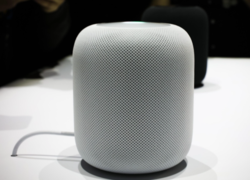
Apple launched the HomePod, a high-fidelity smart speaker powered by Siri, aiming to compete with Amazon Echo and Google Home. While not a sales blockbuster, it established Apple's presence in the smart home audio space.
Image source: HomePod
Aug 2, 2018
% complete
Apple's stock price pushed its market capitalization above $1 trillion, making it the first publicly traded U.S. company to reach that milestone. It underscored Apple's extraordinary growth from near-bankruptcy in the 1990s to global dominance.
Image source: Silicon Valley
Aug 20, 2019
% complete
Apple partnered with Goldman Sachs to launch Apple Card, a credit card integrated with the Wallet app emphasizing privacy, no fees, and daily cash back. It marked Apple's deeper push into financial services.
Image source: Apple Card
Jun 22, 2020
% complete
At WWDC, Apple announced it would move the Mac away from Intel processors to its own Apple silicon, starting with the M1 chip. The M1-powered MacBook Air, MacBook Pro, and Mac mini launched in November 2020, delivering dramatic performance and battery-life gains.
Image source: Apple silicon
Aug 19, 2020
% complete
Just two years after hitting $1 trillion, Apple became the first U.S. company to reach a $2 trillion market capitalization, driven by strong iPhone sales, surging services revenue, and investor confidence during the pandemic-era tech boom.
Or browse the full history timeline directory, with more than 2,000 topics.
This History of Apple timeline was generated with the help of AI, using information found on the internet.
We work hard to keep these timelines accurate, but mistakes do get through. If you spot one, email us at [email protected] and we'll fix it for future visitors.
Generate yours with AI or build it from scratch, for free.
Export your timeline, add your own events, edit or remove AI-generated events, and much more
No credit card required.
Cancel anytime.
Cancel anytime.
You can create an unlimited number of timelines with up to 10 events on each one, customize how they look, export them to PDF, PNG, PowerPoint, CSV, and Excel, and share them with a link. Paid plans raise the event limit and add features like spreadsheet imports and collaborators.
Yes. You can cancel your subscription from your account page at any time, and you will not be charged again. Your subscription stays active for the rest of the period you already paid for.
Yes. We will email you a reminder before the annual renewal, and we will also email you a receipt.
Yes. You can email us within 15 days of any payment, and we will issue you a full refund.
Check out our pricing docs or send us an email anytime: [email protected].