-
Use Cases
-
Resources
-
Pricing
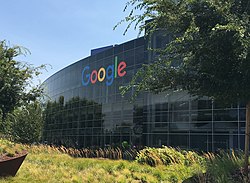
Google is an American technology company founded in 1998 by Larry Page and Sergey Brin while they were Ph.D. students at Stanford University. Beginning as a search engine built on the innovative PageRank algorithm, Google rapidly expanded into advertising, email (Gmail), video (YouTube), mobile operating systems (Android), cloud computing, and artificial intelligence. In 2015, Google restructured under a new parent company, Alphabet Inc., becoming one of the most valuable and influential corporations in the world. More Less
1995
% complete
Larry Page and Sergey Brin met at Stanford University, where Brin was assigned to show Page around campus. Their shared intellectual curiosity and complementary skills laid the foundation for a partnership that would eventually create one of the world's most influential technology companies.
Image source: History of Google
Jan 1996
% complete
Page and Brin began working on a search engine called BackRub that operated on Stanford servers. The project analyzed backlinks to rank web pages, an approach that would evolve into the revolutionary PageRank algorithm and eventually become Google.
Sep 15, 1997
% complete
The domain name google.com was registered, a play on the word 'googol' representing the vast amount of information the founders intended to organize. This marked the public-facing birth of the brand that would become synonymous with internet search.
Sep 4, 1998
% complete
Google was officially incorporated as a company with a $100,000 check from Sun Microsystems co-founder Andy Bechtolsheim. The company initially operated from Susan Wojcicki's garage in Menlo Park, California, a humble start for what would become a global giant.
Jun 7, 1999
% complete
Google announced a $25 million equity funding round led by Sequoia Capital and Kleiner Perkins, two of Silicon Valley's most prominent venture capital firms. The investment gave Google the resources to scale its infrastructure and hire key executives like Eric Schmidt.
Mar 2001
% complete
Veteran technologist Eric Schmidt was appointed CEO, joining founders Larry Page and Sergey Brin in what became known as the 'triumvirate.' Schmidt brought adult supervision and operational experience, guiding Google through rapid growth while the founders focused on products.
Image source: Eric Schmidt
Feb 17, 2003
% complete
Google acquired Pyra Labs, the company behind Blogger, one of the first dedicated blog-publishing platforms. The acquisition marked Google's first major purchase and signaled its ambition to expand beyond search into user-generated content.
Aug 19, 2004
% complete
Google went public using an unconventional Dutch auction process, raising $1.67 billion at $85 per share and valuing the company at roughly $23 billion. The IPO made many employees wealthy overnight and cemented Google's status as a Silicon Valley powerhouse.
Image source: Initial public offering of Facebook

Jul 2005
% complete
Google quietly acquired Android Inc., a small startup developing software for mobile devices, for an estimated $50 million. The move proved prescient, as Android would become the world's most widely used mobile operating system within a decade.
Image source: Android (operating system)
Oct 9, 2006
% complete
Google purchased YouTube, the fast-growing video-sharing site, for $1.65 billion in stock. Widely questioned at the time due to copyright concerns, the deal proved visionary: YouTube became the dominant video platform and a massive revenue generator through advertising.
Image source: History of YouTube
Apr 4, 2011
% complete
Co-founder Larry Page took over as CEO from Eric Schmidt, who transitioned to executive chairman. Page reorganized Google into a leaner structure focused on core products, streamlining management and pushing bold initiatives like self-driving cars.
Image source: Larry Page
Aug 10, 2015 - Oct 2, 2015
% complete
Google announced a sweeping corporate restructuring creating Alphabet Inc. as a holding company overseeing Google and separate ventures like Waymo, Verily, and DeepMind. Sundar Pichai became CEO of Google while Larry Page led Alphabet, enabling greater focus across diverse businesses.
Image source: Alphabet Inc.
Dec 3, 2019
% complete
Sundar Pichai was elevated to CEO of Alphabet, replacing co-founder Larry Page, while also retaining his role leading Google. The leadership change consolidated power under Pichai as founders Page and Brin stepped back from day-to-day operations.
Image source: Sundar Pichai
Oct 23, 2000
% complete
Google launched AdWords, a self-service advertising platform allowing businesses to place targeted text ads alongside search results. AdWords became the cornerstone of Google's business model, generating the vast majority of the company's revenue for decades.
Image source: Google Ads
Sep 2002
% complete
Google News launched as an automated news aggregation service following the September 11 attacks, when engineers built a tool to compile related news stories. It demonstrated Google's ability to organize information beyond web search results.
Image source: Google News
Apr 1, 2004
% complete
Google launched Gmail with an unprecedented 1 gigabyte of free storage, dwarfing competitors like Hotmail and Yahoo Mail. Initially available by invitation only, Gmail's generous storage, powerful search, and clean interface redefined expectations for web-based email.
Image source: Gmail
Feb 8, 2005
% complete
Google Maps debuted as a web mapping service featuring draggable maps, satellite imagery, and local business search. Its innovative AJAX interface set a new standard for interactive web applications and later spawned the mobile navigation revolution.
Image source: Google Maps
Feb 15, 2005
% complete
As online video began exploding in popularity, Google launched its own video service while YouTube emerged as an independent competitor. The video landscape would soon prompt one of Google's most consequential acquisitions.
Image source: YouTube
Oct 11, 2006
% complete
Google combined Writely, acquired earlier that year, with its own spreadsheet product to launch Google Docs & Spreadsheets. The browser-based office suite pioneered real-time collaboration and challenged Microsoft's desktop software dominance.
Image source: Google Docs
May 25, 2007
% complete
Google introduced Street View, offering panoramic street-level imagery captured by specially equipped camera cars. Starting with five U.S. cities, the feature expanded globally and sparked both fascination and privacy debates worldwide.
Image source: Google Street View
Sep 2, 2008
% complete
Google released Chrome, a minimalist, speed-focused web browser built around the V8 JavaScript engine. Chrome rapidly gained market share, eventually becoming the world's most popular browser and anchoring Google's control over web standards.
Image source: Google Chrome
Oct 22, 2008
% complete
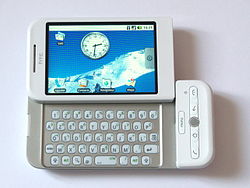
The T-Mobile G1, manufactured by HTC, became the first commercially available smartphone running the Android operating system. It launched Google's open-source challenge to Apple's iPhone and initiated Android's march toward global market dominance.
Image source: HTC Dream
Jan 5, 2010
% complete
Google released the Nexus One, sold directly to consumers online and showcasing a pure version of Android. The Nexus program continued for years, serving as reference devices that shaped Android development before being succeeded by Pixel phones.
Image source: Nexus One
Jun 28, 2011
% complete
Google launched Google+, its ambitious attempt to compete with Facebook, featuring 'Circles' for organizing contacts. Despite aggressive integration across Google products, the network never achieved critical mass and was eventually shut down in 2019.
Apr 24, 2012
% complete
Google Drive launched, offering 5 GB of free cloud storage integrated with Google Docs. The service unified Google's productivity apps under one roof and became a central pillar of Google's consumer and enterprise ecosystems.
Image source: Google Drive
Jun 27, 2012
% complete
Sergey Brin dramatically unveiled Google Glass, an augmented reality headset worn like eyeglasses, with skydivers live-streaming onto the Moscone Center stage. Though a cultural phenomenon, Glass failed commercially and was discontinued for consumers in 2015.
Image source: Google Glass
May 8, 2018
% complete
Google stunned audiences at its I/O developer conference by demonstrating Duplex, an AI system capable of making natural phone calls to book appointments. The demo raised both excitement about conversational AI and ethical questions about disclosure.
Image source: Google Assistant
Mar 22, 2010
% complete
After discovering sophisticated cyberattacks originating from China targeting Gmail accounts of human rights activists, Google announced it would stop censoring search results and redirected Chinese users to its uncensored Hong Kong site, withdrawing from the mainland market.
Jun 27, 2017
% complete
The European Commission fined Google a record €2.42 billion for abusing its dominance by favoring its own comparison shopping service in search results. The ruling opened a decade-long regulatory battle between Google and European authorities.
Jul 18, 2018
% complete
The European Commission fined Google €4.34 billion for allegedly illegal practices tied to Android, including pre-installing Google Search and Chrome on devices. The penalty highlighted intensifying global scrutiny of Big Tech's market power.
Apr 2, 2019
% complete
Google permanently shut down Google+ after disclosing a bug that exposed data of hundreds of thousands of users. The closure ended Google's eight-year social networking experiment and underscored growing concerns about data privacy practices.
Oct 20, 2020
% complete
The U.S. Department of Justice filed a landmark antitrust suit alleging Google illegally maintained its search monopoly through exclusive deals. The case marked the biggest federal antitrust action against a tech company since Microsoft in the 1990s.
Image source: United States v. Google LLC (2020)
Or browse the full history timeline directory, with more than 2,000 topics.
This History of Google timeline was generated with the help of AI, using information found on the internet.
We work hard to keep these timelines accurate, but mistakes do get through. If you spot one, email us at [email protected] and we'll fix it for future visitors.
Generate yours with AI or build it from scratch, for free.
Export your timeline, add your own events, edit or remove AI-generated events, and much more
No credit card required.
Cancel anytime.
Cancel anytime.
You can create an unlimited number of timelines with up to 10 events on each one, customize how they look, export them to PDF, PNG, PowerPoint, CSV, and Excel, and share them with a link. Paid plans raise the event limit and add features like spreadsheet imports and collaborators.
Yes. You can cancel your subscription from your account page at any time, and you will not be charged again. Your subscription stays active for the rest of the period you already paid for.
Yes. We will email you a reminder before the annual renewal, and we will also email you a receipt.
Yes. You can email us within 15 days of any payment, and we will issue you a full refund.
Check out our pricing docs or send us an email anytime: [email protected].