-
Use Cases
-
Resources
-
Pricing
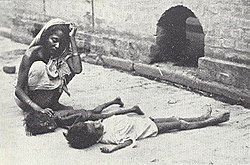
The Bengal Famine of 1943 was a catastrophic famine that struck the Bengal province of British India (present-day Bangladesh and West Bengal) during World War II. An estimated 2 to 3 million people died from starvation, malnutrition, and disease. The disaster resulted from a combination of wartime inflation, Japanese occupation of Burma cutting off rice imports, British colonial policies including food exports and denial of boats, natural disasters like cyclones and fungal crop disease, and the failure of authorities to respond adequately to early warnings. More Less
Mar 22, 1793
% complete
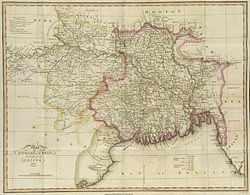
Lord Cornwallis's Permanent Settlement fixed land revenue demands on zamindars (landlords), creating a rigid agrarian structure that concentrated rural power, burdened peasants with high rents, and left cultivators vulnerable to exploitation and crop failures.
Image source: Permanent Settlement
Nov 1, 1858
% complete
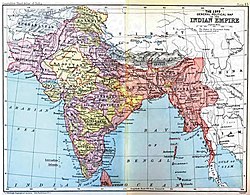
Following the Indian Rebellion of 1857, the British Crown took direct control of Bengal from the East India Company, establishing colonial administrative structures that would shape the province's economy, agriculture, and disaster response for decades to come.
Image source: Bengal Presidency
1900
% complete
By the early twentieth century, Bengal was one of the world's largest rice producers while also devoting vast acreage to jute for export. The shift toward cash crops reduced local food self-sufficiency and made the province dependent on rice imports from Burma.
Image source: Economy of West Bengal
Oct 16, 1942
% complete
A severe cyclone and accompanying storm surge battered coastal Midnapore, killing thousands, destroying rice crops ready for harvest, ruining stored grain, and washing away homes — compounding the region's worsening food crisis.
Image source: 1940s North Indian Ocean cyclone seasons
Dec 1942
% complete
Outbreaks of brown spot disease, caused by the fungus Helminthosporium oryzae, further damaged the 1942 aman rice crop across Bengal, reducing yields at precisely the moment supplies were already critically short.
Image source: Cochliobolus miyabeanus
1981
% complete
In his landmark analysis, economist Amartya Sen argued that the famine resulted not from an absolute food shortage but from a collapse in people's ability to command food through wages, trade, and entitlements — especially among rural laborers and fishermen.
Image source: Famine
Sep 3, 1939
% complete
Britain declared war on Germany on behalf of India without consulting Indian leaders. The war effort soon placed enormous demands on Indian resources, manpower, shipping, and food supplies, setting the stage for economic disruption across the subcontinent.
Image source: India in World War II
Mar 1942 - Aug 1942
% complete
British military planners implemented scorched-earth measures in eastern Bengal, including removal of transport assets and stocks, to deny resources to a potential Japanese advance. These measures devastated the economies of rural districts near the front.
Image source: Scorched earth
Mar 8, 1942
% complete
Japanese forces captured Rangoon, severing Bengal's principal external source of rice. Burma had supplied a significant share of Bengal's grain, and its loss created an immediate supply gap that provincial authorities failed to adequately address.
Image source: Japanese invasion of Burma
May 1942 - Dec 1942
% complete
Anticipating a Japanese invasion from Burma, British authorities confiscated or destroyed thousands of country boats and removed surplus rice stocks from coastal districts of Bengal, crippling fishing communities' livelihoods and local food distribution networks.
Image source: Denialism
Aug 8, 1942 - Sep 1942
% complete
Gandhi's Quit India campaign triggered mass protests and a harsh crackdown by British authorities, arresting Congress leaders and destabilizing political institutions just as Bengal's food situation began deteriorating sharply.
Image source: Quit India Movement
Jan 1943 - Mar 1943
% complete
Bengal's ministry, led by Premier A.K. Fazlul Huq and later Khawaja Nazimuddin, underestimated the shortfall and resisted declaring a famine, delaying procurement, imports, and relief measures during crucial early months of 1943.
1943
% complete
The colonial government maintained relatively well-stocked shops for Calcutta's essential workers and civil servants to keep wartime industry running, effectively diverting available grain away from the starving countryside — a policy later widely condemned.
Aug 1943
% complete
Despite repeated appeals from Viceroy Lord Linlithgow and officials in India, Winston Churchill's War Cabinet repeatedly declined or delayed allocating shipping to carry grain to Bengal, citing wartime priorities — decisions historians have fiercely debated ever since.
Image source: Bengal famine of 1943
May 1942 - 1943
% complete
The boat confiscation policy left fishing families unable to fish or trade, destroying their income just as food prices soared. Fishing communities became among the hardest-hit groups during the ensuing famine.
Feb 1943 - Jun 1943
% complete
Rice prices rose relentlessly through spring 1943, eventually reaching several times pre-war levels. Speculation, hoarding, and panic buying by consumers and traders accelerated the spiral, placing grain beyond the reach of the poor.
Apr 1943 - Oct 1943
% complete
As starving villagers abandoned their homes in search of food, cholera, malaria, dysentery, and other diseases spread rapidly through crowded cities and along roads and railways, killing hundreds of thousands beyond those who died directly of starvation.
Jul 1943 - Oct 1943
% complete
Hundreds of thousands of starving rural migrants poured into Calcutta seeking relief, dying in large numbers on the city's streets. Their visible suffering shocked residents and journalists even as authorities sought to remove them from view.
Aug 1943 - Sep 1943
% complete
Municipal and military authorities forcibly cleared dying beggars from Calcutta's streets ahead of visits by officials and dignitaries, transporting them to camps and dumping grounds outside the city where many perished unrecorded.
Aug 1943 - Nov 1943
% complete
Mortality reached its height in late 1943, with estimates ranging from about 800,000 to more than 3 million dead. Starvation and disease ravaged villages, leaving orphaned children and depopulated communities across the province.
Aug 1943 - Dec 1943
% complete
Newspapers such as Amrita Bazar Patrika and The Statesman published harrowing photographs and reports of emaciated victims, breaking official censorship and galvanizing public outrage in India and abroad.
Aug 22, 1943
% complete
The Calcutta-based newspaper The Statesman ran a series of devastating photographs of famine victims, defying censorship pressures. The images drew international attention and embarrassed the colonial government into greater action.
1943 - 1944
% complete
Groups including the Indian Red Cross, religious charities, women's organizations, and political activists organized fundraising, food distribution, and orphan care, filling gaps left by inadequate official relief efforts.
Oct 1943 - Dec 1943
% complete
Under Wavell's pressure, the army was deployed to distribute food and establish gruel kitchens in rural Bengal. Relief efforts expanded significantly, though they came months after deaths had peaked in many districts.
Oct 20, 1943
% complete
Field Marshal Archibald Wavell replaced Lord Linlithgow as Viceroy of India and immediately demanded military transport and imports to relieve the famine, famously calling it 'one of the greatest disasters that has befallen any people under British rule.'
Image source: Archibald Wavell, 1st Earl Wavell
Nov 1943 - 1944
% complete
Through late 1943 and 1944, government and volunteer organizations operated thousands of free kitchens feeding millions daily, while vaccination drives and medical teams combated the epidemics sweeping the province.
1944 - 1945
% complete
With increased imports, improved procurement, and better distribution, rice prices gradually fell and mortality declined through 1944–45, bringing the acute phase of the crisis to an end, though malnutrition lingered for years.
1944 - 1947
% complete
The catastrophe discredited British rule in the eyes of millions of Indians, becoming a powerful symbol of colonial indifference. It strengthened support for independence, achieved in August 1947, and shaped postcolonial food security policy.
Image source: Indian independence movement
May 1944
% complete
The Government of India established a commission chaired by Sir John Woodhead to investigate the causes of the famine. Its 1945 report documented administrative failures but stopped short of assigning blame to senior officials.
Image source: Famine Inquiry Commission
2010
% complete
Madhusree Mukerjee's 'Churchill's Secret War' argued that Churchill's cabinet decisions and racial attitudes significantly worsened the famine, reigniting scholarly and public debate about imperial responsibility for the disaster.
Image source: Churchill's Secret War
Or browse the full history timeline directory, with more than 2,000 topics.
This Bengal Famine timeline was generated with the help of AI, using information found on the internet.
We work hard to keep these timelines accurate, but mistakes do get through. If you spot one, email us at [email protected] and we'll fix it for future visitors.
Generate yours with AI or build it from scratch, for free.
Export your timeline, add your own events, edit or remove AI-generated events, and much more
No credit card required.
Cancel anytime.
Cancel anytime.
You can create an unlimited number of timelines with up to 10 events on each one, customize how they look, export them to PDF, PNG, PowerPoint, CSV, and Excel, and share them with a link. Paid plans raise the event limit and add features like spreadsheet imports and collaborators.
Yes. You can cancel your subscription from your account page at any time, and you will not be charged again. Your subscription stays active for the rest of the period you already paid for.
Yes. We will email you a reminder before the annual renewal, and we will also email you a receipt.
Yes. You can email us within 15 days of any payment, and we will issue you a full refund.
Check out our pricing docs or send us an email anytime: [email protected].