-
Use Cases
-
Resources
-
Pricing
Mahatma Gandhi (1869–1948) was an Indian lawyer, civil rights activist, and leader of India's independence movement against British rule. Known for his philosophy of nonviolent resistance (satyagraha), Gandhi inspired movements for civil rights and freedom across the world and is honored as the Father of the Nation in India. More Less
1857
% complete
In 1857, Gandhi's father Karamchand sought his third wife's permission to remarry and that year married Putlibai (1844–1891), who came from Junagadh and was from a Pranami Vaishnava family. Karamchand served as the dewan (chief minister) of Porbandar state.
Image source: Mahatma Gandhi
Oct 2, 1869
% complete
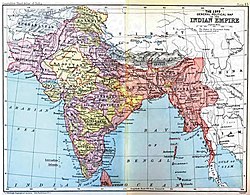
Mohandas Karamchand Gandhi, the fourth child of Karamchand and Putlibai, was born on 2 October 1869 in Porbandar, a coastal town on the Kathiawar Peninsula then part of the small princely state of Porbandar in the British Raj.
1874
% complete
In 1874, Gandhi's father Karamchand left Porbandar for the smaller state of Rajkot, where he became a counsellor to its ruler, the Thakur Sahib. In 1876 he became diwan of Rajkot, succeeded in Porbandar by his brother Tulsidas.
May 1883
% complete
In May 1883, the 13-year-old Gandhi was married to 14-year-old Kasturbai Gokuldas Kapadia in an arranged marriage according to the custom of the region at that time. The Gandhis later had four sons: Harilal, Manilal, Ramdas, and Devdas.
Image source: Kasturba Gandhi
1885
% complete
In late 1885, Gandhi's father Karamchand died, leaving the family without its patriarch. That same year, the family had moved into their home Kaba Gandhi No Delo in Rajkot.
Nov 1887
% complete
In November 1887, the 18-year-old Gandhi graduated from high school in Ahmedabad. In January 1888, he enrolled at Samaldas College in Bhavnagar State, then the sole degree-granting institution of higher education in the region.
Aug 10, 1888
% complete
On 10 August 1888, aged 18, Gandhi left Porbandar for Mumbai and sailed to London, where he attended University College and took classes in English literature with Henry Morley during 1888–1889.
Jun 1891
% complete
At age 22, Gandhi was called to the bar in June 1891 and left London for India, where he learned that his mother had died while he was away. He spent two uncertain years unable to start a successful law practice.
Apr 1893
% complete
In 1893, a Muslim merchant named Dada Abdullah contacted Gandhi, offering £105 plus travel expenses. In April 1893, aged 23, Gandhi set sail for South Africa to represent Abdullah's cousin in a lawsuit.
1894
% complete
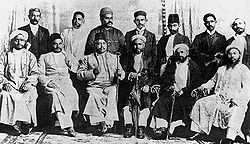
Gandhi helped found the Natal Indian Congress in 1894, and through this organisation moulded the Indian community of South Africa into a unified political force.
Image source: Natal Indian Congress
May 1894
% complete
The Abdullah case that had brought him to South Africa concluded in May 1894, and the Indian community organised a farewell party as Gandhi prepared to return to India. Instead, he stayed to advocate for Indian rights.
Jan 1897
% complete
In January 1897, when Gandhi landed in Durban after returning from India, a mob of white settlers attacked him, reflecting hostility toward his advocacy for Indian rights.
1900
% complete
During the Boer War, Gandhi volunteered in 1900 to form a group of stretcher-bearers as the Natal Indian Ambulance Corps, demonstrating his commitment to service even within colonial conflicts.
1903
% complete
In 1903, Gandhi started Indian Opinion, a journal carrying news of Indians in South Africa and India with articles on social, moral, and intellectual subjects. By 1910 it also covered discrimination against Africans by the colonial regime.
Image source: Indian Opinion
1906
% complete
Gandhi began experiments with self-discipline, and in 1906 at age 37, although married, he vowed to abstain from sexual relations. In 1912 he also began abstaining from cow's milk even when doctors advised otherwise.
1906
% complete
In 1906, the Transvaal government promulgated an Act compelling registration of the colony's Indian and Chinese populations. When the Bambatha Rebellion broke out that year, Gandhi encouraged Indians to form a volunteer stretcher-bearer unit despite sympathising with Zulu rebels.
1910
% complete
In 1910, Gandhi established with his friend Hermann Kallenbach an idealistic community they named Tolstoy Farm near Johannesburg, which became a base for his experiments in communal living and nonviolence.
Image source: Tolstoy Farm
1909
% complete
With his book Hind Swaraj, published in Gujarati in 1909, Gandhi, aged 40, declared that British rule was established in India only through Indian co-operation. It became 'the intellectual blueprint' for India's independence movement.
Image source: Hind Swaraj or Indian Home Rule
1915
% complete
At the request of Gopal Krishna Gokhale, Gandhi returned to India in 1915, bringing lessons from South Africa. Aged 45, he soon organised peasants, farmers, and urban labourers to protest against discrimination and excessive land tax.
1917
% complete
Gandhi's first major achievement came in 1917 with the Champaran agitation in Bihar, where he championed oppressed farmers and demonstrated the power of nonviolent protest against exploitative practices.
Image source: Champaran Satyagraha
1918 - May 1918
% complete
In 1918, Kheda was hit by floods and famine and the peasantry demanded relief from taxes. After five months, by the end of May 1918, the government gave way on important provisions and relaxed tax conditions until the famine ended.
Image source: Kheda Satyagraha of 1918
Apr 1918 - Jul 1918
% complete
In April 1918, the Viceroy invited Gandhi to a War Conference in Delhi. Unlike earlier ambulance work, this time he attempted to recruit combatants, writing 'Appeal for Enlistment'. By July 1918 he admitted he could not persuade even one individual to enlist.
Feb 1919
% complete
In February 1919, Gandhi cautioned the Viceroy that the Rowlatt Act would result in civil disobedience. In 1919 he sought Muslim co-operation by supporting the defeated Ottoman Empire, launching the Khilafat Movement.
Image source: Rowlatt Act
Sep 1920
% complete
The first formulation of satyagraha as a political principle occurred in 1920, when Gandhi tabled his 'Resolution on Non-cooperation' before a session of the Indian Congress. In 1921 he assumed leadership of the Indian National Congress, leading campaigns for easing poverty, women's rights, religious amity, ending untouchability, and swaraj.
Image source: Non-cooperation movement
Mar 10, 1922 - 1924
% complete
Gandhi was arrested on 10 March 1922, tried for sedition, and sentenced to six years' imprisonment. The Khilafat Movement collapsed following the end of the non-cooperation movement and his arrest. After release in 1924, he continued pursuing swaraj.
Dec 1928
% complete
Gandhi pushed through a resolution at the Calcutta Congress in December 1928 calling on the British government to grant India dominion status or face further non-cooperation.
Jan 26, 1930
% complete
Gandhi led Congress in a celebration on 26 January 1930 of India's Independence Day in Lahore, escalating demands until the Indian National Congress declared the independence of India.
Mar 1930 - Apr 1930
% complete
Gandhi launched a new Satyagraha against the British salt tax in March 1930, condemning British rule in a letter to the viceroy. Leading common Indians, he challenged the salt tax with the 400 km (250 mi) Dandi Salt March. On 5 May, he was interned under a regulation dating from 1827.
Image source: Salt March
Mar 1931
% complete
The Gandhi–Irwin Pact was signed in March 1931. During the Round Table Conferences over 1931–32, Gandhi sought constitutional reforms preparing for the end of colonial British rule. The Second Round Table conference was the only time he left India between 1914 and his death in 1948.
1934
% complete
In 1934, Gandhi resigned from Congress party membership, though he returned to active politics in 1936 with the Nehru presidency and the Lucknow session of the Congress.
1938
% complete
Gandhi clashed with Subhas Chandra Bose, who had been elected Congress president in 1938 and had previously expressed a lack of faith in nonviolence as a means of protest.
Image source: Subhas Chandra Bose
Aug 1942 - May 6, 1944
% complete
In August 1942, Gandhi explicitly called for the British to quit India in a speech in Mumbai and urged complete non-co-operation. The British imprisoned him and tens of thousands of Congress leaders. He was released on 6 May 1944 due to failing health and necessary surgery.
Image source: Quit India Movement
Sep 1944 - Aug 16, 1946
% complete
Gandhi and Jinnah corresponded extensively and met several times in September 1944, but Jinnah rejected Gandhi's proposal and called for Direct Action Day on 16 August 1946 to press Muslims to support partition of the subcontinent.
Aug 15, 1947
% complete
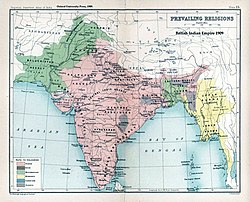
In August 1947, Britain granted independence but partitioned the British Indian Empire into Hindu-majority India and Muslim-majority Pakistan, terms Gandhi disapproved. On 15 August 1947 he spent the day fasting and spinning in Calcutta rather than celebrating, appealing for peace.
Image source: Partition of India
Jan 13, 1948 - Jan 18, 1948
% complete
Gandhi's final fast took place from 13–18 January 1948, begun in Delhi on 12 January when he was 78, appealing for peace among countrymen just days before his assassination.
Jan 30, 1948
% complete
On 30 January 1948, while walking with grandnieces in the garden of Birla House on his way to a prayer meeting, Nathuram Godse, a militant Hindu nationalist from Pune, assassinated Gandhi by firing three bullets into his chest at close range.
Image source: Assassination of Mahatma Gandhi
Feb 12, 1948
% complete
Most of Gandhi's ashes were immersed at the Sangam at Allahabad on 12 February 1948, but some were secretly taken away. Trial of his assassin began on 27 May 1948, concluding with Justice Atma Charan's final order on 10 February 1949.
1994
% complete
In the years after black South Africans gained the right to vote in 1994, Gandhi was proclaimed a national hero in South Africa with numerous monuments honouring his legacy there.
1997
% complete
In 1997, Tushar Gandhi immersed the contents of one urn of Gandhi's ashes, found in a bank vault and reclaimed through the courts, at the Sangam at Allahabad. On 30 January 2008, contents of another urn were immersed at Girgaum Chowpatty.
Aug 2026
% complete
In August 2026, a collection of handwritten notes by Gandhi, reported to be rare, was auctioned in Mumbai for USD 1.69 Million, reflecting enduring global interest in his legacy.
Or browse the full history timeline directory, with more than 2,000 topics.
This Mahatma Gandhi timeline was generated with the help of AI, using information found on the internet.
We work hard to keep these timelines accurate, but mistakes do get through. If you spot one, email us at [email protected] and we'll fix it for future visitors.
Generate yours with AI or build it from scratch, for free.
Export your timeline, add your own events, edit or remove AI-generated events, and much more
No credit card required.
Cancel anytime.
Cancel anytime.
You can create an unlimited number of timelines with up to 10 events on each one, customize how they look, export them to PDF, PNG, PowerPoint, CSV, and Excel, and share them with a link. Paid plans raise the event limit and add features like spreadsheet imports and collaborators.
Yes. You can cancel your subscription from your account page at any time, and you will not be charged again. Your subscription stays active for the rest of the period you already paid for.
Yes. We will email you a reminder before the annual renewal, and we will also email you a receipt.
Yes. You can email us within 15 days of any payment, and we will issue you a full refund.
Check out our pricing docs or send us an email anytime: [email protected].