-
Use Cases
-
Resources
-
Pricing
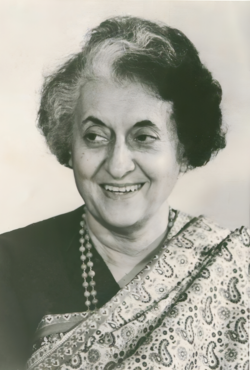
Indira Gandhi (1917–1984) was the first and only female Prime Minister of India, serving from 1966 to 1977 and again from 1980 until her assassination in 1984. The daughter of Jawaharlal Nehru, she was a dominant figure in Indian politics, known for centralizing power, nationalizing banks, winning the 1971 war that created Bangladesh, imposing a controversial state of emergency (1975–1977), and launching Operation Blue Star, which led to her assassination by her Sikh bodyguards. More Less
Nov 19, 1918
% complete
Indira Priyadarshini Nehru was born in Allahabad, India, to Jawaharlal Nehru, a prominent nationalist leader who would later become India's first prime minister, and Kamala Nehru. She was born into the heart of India's independence movement.
Image source: Indira Gandhi
1930
% complete
As a teenager, Indira helped organize the Vanar Sena ('Monkey Army'), a children's organization supporting the civil disobedience movement against British rule, distributing messages and flags for the Indian National Congress.
1937 - 1941
% complete
Indira attended Somerville College, Oxford, studying history. Her time in Europe was interrupted by illness, but it broadened her worldview before she returned to India amid World War II.
Mar 26, 1942
% complete
Despite family objections over their different backgrounds, Indira married Feroze Gandhi, a journalist and fellow freedom fighter. The marriage drew public attention since they shared no relation to Mahatma Gandhi despite the surname.
Image source: Feroze Gandhi
Sep 11, 1942 - May 13, 1943
% complete
Both Indira and her husband were arrested by British authorities for their participation in the Quit India Movement. She spent several months in prison, deepening her commitment to the independence cause.
Image source: Quit India Movement
Aug 20, 1944 - Dec 14, 1946
% complete
Indira gave birth to Rajiv Gandhi in 1944 and Sanjay Gandhi in December 1946, both of whom would later play significant roles in Indian politics.
Image source: Rajiv Gandhi
Sep 8, 1960
% complete
Feroze Gandhi died of a heart attack at age 48, leaving Indira a widow as she continued her political ascent within the Congress Party.
1947 - 1964
% complete
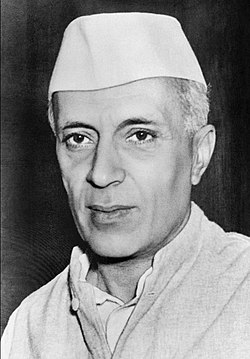
After her mother's death in 1936 and India's independence in 1947, Indira served as her father's official hostess at Teen Murti Bhavan, accompanying him on numerous foreign trips and gaining international exposure and political experience.
Image source: Jawaharlal Nehru
1959 - 1960
% complete
Indira was elected President of the Indian National Congress in 1959, demonstrating her growing influence within the party that had led India's independence struggle.
Image source: Indian National Congress
1964 - 1966
% complete
Under Prime Minister Lal Bahadur Shastri, Indira served as Minister of Information and Broadcasting, overseeing state media and gaining cabinet-level experience.
Image source: Ministry of Information and Broadcasting (India)
1966 - 1975
% complete
Her government championed the Green Revolution through high-yield seeds, irrigation, and fertilizers, dramatically boosting grain production and ending chronic dependence on food imports.
Image source: Green Revolution in India
Jan 24, 1966
% complete
Following Lal Bahadur Shastri's sudden death in Tashkent, Indira Gandhi won a party leadership contest against Morarji Desai and became India's first female prime minister, then the world's second female head of government.
Jul 19, 1969
% complete
In a bold socialist-leaning move, Indira Gandhi nationalized fourteen major commercial banks overnight, aiming to extend credit to rural areas and the poor while consolidating her populist image.
Image source: Central Bank of India
Mar 1, 1971 - Mar 10, 1971
% complete
Campaigning on the slogan 'Garibi Hatao' (Abolish Poverty), Indira split from the old Congress establishment and won a massive electoral mandate, cementing her personal dominance over Indian politics.
Image source: 1971 Indian general election
May 18, 1974
% complete
Codenamed Smiling Buddha, India detonated its first nuclear device under Indira Gandhi's leadership, making India the sixth nuclear-capable nation and asserting its regional power.
Image source: Smiling Buddha
Jan 14, 1980
% complete
Exploiting the Janata government's infighting and collapse, Indira Gandhi led her Congress (I) faction to a decisive victory and returned as prime minister for a fourth term.
Image source: 1980 Indian general election
Dec 3, 1971 - Dec 17, 1971
% complete
Indira Gandhi decisively led India in the 1971 war with Pakistan, intervening on behalf of Bengali independence fighters. India's swift victory resulted in the creation of Bangladesh, earning her widespread acclaim.
Image source: Indo-Pakistani War of 1971
Jun 12, 1975
% complete
The Allahabad High Court found electoral malpractices in her 1971 campaign and invalidated her parliamentary seat, triggering a political crisis and mass protests demanding her resignation.
Image source: The Emergency (India)
Jun 25, 1975 - Mar 21, 1977
% complete
Facing political turmoil, Indira Gandhi suspended civil liberties, censored the press, jailed opposition leaders, and ruled by decree for nearly two years — the most controversial period of her career.
Image source: The Emergency (India)
1976 - 1977
% complete
During the Emergency, her son Sanjay Gandhi spearheaded aggressive forced sterilization drives targeting poor communities, causing widespread outrage and contributing to her electoral defeat.
Image source: Compulsory sterilization
Mar 1977
% complete
Voters punished the excesses of the Emergency, sweeping the Janata Party coalition to power and ousting Indira Gandhi from office after eleven years of continuous rule.
Image source: 1977 Indian general election
Oct 1977 - Nov 1977
% complete
The new Janata government arrested and briefly imprisoned Indira Gandhi on charges related to the Emergency, but public sympathy grew as the arrests were widely seen as politically motivated.
Jun 23, 1980
% complete
Sanjay Gandhi, her politically ambitious younger son and heir apparent, died when his aerobatic plane crashed near Delhi, leaving Indira personally devastated.
Image source: Sanjay Gandhi
Apr 13, 1984
% complete
Indian troops seized control of the Siachen Glacier region disputed with Pakistan, securing one of the world's highest battlegrounds and beginning an enduring military presence there.
Image source: Operation Meghdoot
Jun 1, 1984 - Jun 10, 1984
% complete
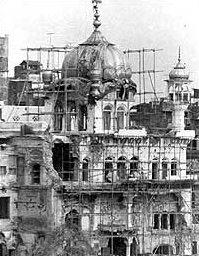
Indian forces launched a military operation to remove Sikh separatists led by Jarnail Singh Bhindranwale from the Golden Temple complex in Amritsar. The operation caused heavy casualties and deeply alienated many Sikhs.
Image source: Operation Blue Star
1984
% complete
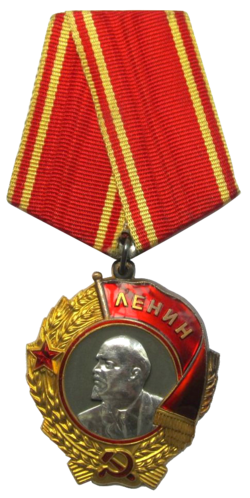
Indira Gandhi received posthumous honors including the Soviet Union's Order of Lenin, recognizing her role in strengthening Indo-Soviet relations during the Cold War.
Image source: Order of Lenin
Oct 31, 1984
% complete
Beant Singh and Satwant Singh, two members of her Sikh security detail, shot Indira Gandhi in her Delhi garden in retaliation for Operation Blue Star. She died hours later in hospital.
Image source: Assassination of Indira Gandhi
Oct 31, 1984 - Nov 3, 1984
% complete
Following her assassination, days of violence targeted Sikh communities, particularly in Delhi, killing thousands and leaving a lasting scar on Indian society and politics.
Image source: 1984 anti-Sikh riots
Oct 31, 1984
% complete
Hours after his mother's assassination, Rajiv Gandhi was sworn in as prime minister, continuing the Nehru-Gandhi family dynasty's grip on Indian politics.
1985 - 2021
% complete
Indira Gandhi remains one of history's most consequential women leaders: praised for bold leadership, the creation of Bangladesh, and agricultural self-sufficiency, yet criticized for authoritarianism, the Emergency, and democratic erosion.
Or browse the full history timeline directory, with more than 2,000 topics.
This Indira Gandhi timeline was generated with the help of AI, using information found on the internet.
We work hard to keep these timelines accurate, but mistakes do get through. If you spot one, email us at [email protected] and we'll fix it for future visitors.
Generate yours with AI or build it from scratch, for free.
Export your timeline, add your own events, edit or remove AI-generated events, and much more
No credit card required.
Cancel anytime.
Cancel anytime.
You can create an unlimited number of timelines with up to 10 events on each one, customize how they look, export them to PDF, PNG, PowerPoint, CSV, and Excel, and share them with a link. Paid plans raise the event limit and add features like spreadsheet imports and collaborators.
Yes. You can cancel your subscription from your account page at any time, and you will not be charged again. Your subscription stays active for the rest of the period you already paid for.
Yes. We will email you a reminder before the annual renewal, and we will also email you a receipt.
Yes. You can email us within 15 days of any payment, and we will issue you a full refund.
Check out our pricing docs or send us an email anytime: [email protected].