-
Use Cases
-
Resources
-
Pricing
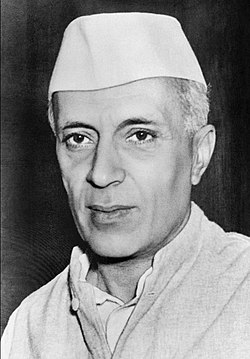
Jawaharlal Nehru (1889–1964) was India's first Prime Minister and a central figure in the country's struggle for independence from British rule. A close associate of Mahatma Gandhi, he served as Prime Minister from 1947 until his death in 1964, shaping modern India's democratic institutions, secular policies, and non-aligned foreign policy. More Less
Nov 14, 1889
% complete
Jawaharlal Nehru was born in Allahabad, British India, into a wealthy Kashmiri Pandit family. His father, Motilal Nehru, was a prominent lawyer and later a leader of the Indian National Congress. Jawaharlal grew up surrounded by privilege but also by the political ferment of late colonial India.
Image source: Jawaharlal Nehru
May 1905 - 1907
% complete
Nehru traveled to England to study at Harrow School, one of Britain's most prestigious public schools. There he absorbed Western ideas of liberalism and nationalism that would shape his political thought, while also developing an enduring interest in science and history.
Image source: Harrow School
Oct 1907 - 1910
% complete
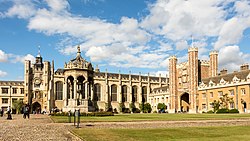
Nehru earned an honors degree in natural sciences at Trinity College, Cambridge, where he read widely in politics, economics, and literature. He became acquainted with Fabian socialism and Irish nationalism, influences that deepened his anti-colonial convictions.
Image source: Trinity College, Cambridge
1910
% complete
After completing his studies at Cambridge, Nehru trained as a barrister at London's Inner Temple and was called to the bar in 1912. He returned to India shortly afterward to practice law alongside his father in Allahabad.
Image source: Inner Temple
Feb 8, 1916
% complete
Nehru married Kamala Kaul, a young woman from Delhi, in an arranged marriage. Kamala later became active in the independence movement herself, participating in protests and boycotts, though she suffered chronic ill health until her death in 1936.
Image source: Kamala Nehru
Nov 19, 1917
% complete
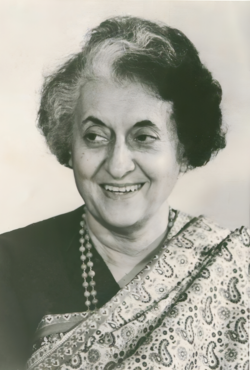
The Nehrus' only child, Indira Priyadarshini, was born in Allahabad. She would later become Indira Gandhi and serve as Prime Minister of India, continuing the family's central role in Indian politics.
Image source: Indira Gandhi
1929
% complete
From prison, Nehru wrote a series of letters to his young daughter Indira explaining natural history, world civilizations, and human progress. Published in 1932, they revealed his scientific outlook and humanist worldview.
Image source: Letters from a Father to His Daughter
Feb 28, 1936
% complete
Kamala Nehru died of tuberculosis in Lausanne, Switzerland, after years of ill health. Nehru was deeply affected by her death, which occurred while he was abroad accompanying her for treatment.
Aug 15, 1946
% complete
Completed during his final imprisonment at Ahmednagar Fort, this sweeping work traced India's history and civilization from antiquity. It articulated Nehru's inclusive vision of India as a pluralistic, tolerant civilization united through its diversity.
Image source: The Discovery of India
1912
% complete
Nehru attended his first session of the Indian National Congress in 1912 and soon committed himself fully to nationalist politics. Inspired by leaders like Gopal Krishna Gokhale and later Mahatma Gandhi, he devoted himself to ending British rule.
Image source: Indian National Congress
Feb 1920
% complete
Nehru met Mohandas K. Gandhi at a Congress gathering and was profoundly influenced by his philosophy of nonviolent resistance. Gandhi's leadership of the struggle against British rule gave Nehru both a mentor and a cause, and he embraced Gandhi's program of satyagraha.
Image source: Mahatma Gandhi
Sep 1920 - Feb 1922
% complete
Nehru threw himself into Gandhi's Non-Cooperation Movement against British rule, urging Indians to boycott schools, courts, and foreign goods. The campaign galvanized millions across India before it was suspended following violence at Chauri Chaura.
Image source: Non-cooperation movement
Dec 6, 1921
% complete
Nehru was arrested for the first time for his participation in the Non-Cooperation Movement. Over his career he would spend more than nine years in prison, periods he used for writing and reflection, including drafting parts of his autobiography.
Dec 31, 1929 - Jan 2, 1930
% complete
As president of the Indian National Congress, Nehru presided over the historic Lahore session where the Congress declared complete independence (Purna Swaraj) as its goal and January 26, 1930 as India's Independence Day, marking him as Gandhi's chosen heir.
Image source: Purna Swaraj
Apr 14, 1930
% complete
Following Gandhi's Salt March, Nehru joined the Civil Disobedience Movement and was arrested again. He spent time in Naini Central Prison, where he wrote extensively about India's past and future, sharpening his vision of a free, secular nation.
Image source: Salt March
1936
% complete
Written largely during his imprisonments, Nehru's autobiography offered a vivid account of his life and of India's freedom struggle. It became an international bestseller and introduced global audiences to the Indian independence movement.
Image source: An Autobiography (Nehru)
Aug 9, 1942 - Jun 15, 1945
% complete
When the Congress launched the Quit India Movement demanding immediate British withdrawal, Nehru was arrested along with other leaders. He remained imprisoned at Ahmednagar Fort for nearly three years, the longest continuous incarceration of his life.
Image source: Quit India Movement
Sep 2, 1946 - Aug 15, 1947
% complete
Nehru accepted the post of de facto head of the interim government of India, serving as vice-president of the Viceroy's Executive Council. He managed the transition toward independence amid communal violence and negotiations with the British.
Image source: Viceroy's Executive Council
1947 - 1961
% complete
Nehru prioritized science and higher education, founding the Atomic Energy Commission, CSIR labs, and the Indian Institutes of Technology beginning at Kharagpur in 1951. He appointed scientists like Homi Bhabha and Vikram Sarabhai to lead research efforts.
Image source: Indian Institutes of Technology
Aug 14, 1947
% complete
On the eve of independence, Nehru addressed India's Constituent Assembly with his famous speech declaring that India would awake to life and freedom at midnight. The address is regarded as one of the great orations of the twentieth century.
Image source: Tryst with Destiny
Aug 15, 1947
% complete
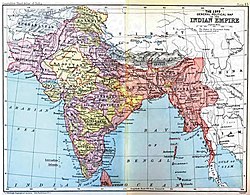
Nehru took office as India's first prime minister as the subcontinent gained independence from Britain. He inherited enormous challenges: partition violence, mass migration between India and Pakistan, economic distress, and princely states awaiting integration.
Image source: First Nehru ministry
Aug 15, 1947 - 1948
% complete
The partition of British India into two dominions triggered one of history's largest migrations, with sectarian violence killing hundreds of thousands. Nehru worked to restore order, protect minorities, and rebuild trust between communities.
Image source: Partition of India
Aug 15, 1947 - 1950
% complete
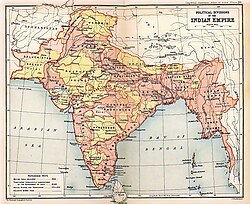
Working with Deputy Premier Sardar Patel, Nehru oversaw the integration of hundreds of princely states into the Indian union. Diplomacy and occasional force, notably in Hyderabad and Junagadh, consolidated the new nation's territorial unity.
Image source: Political integration of India
Jan 30, 1948
% complete
Gandhi was assassinated in New Delhi by a Hindu nationalist. Nehru mournfully broadcast to the nation, saying the light had gone out of their lives. He strengthened secular governance and moved to curb extremist organizations.
Image source: Assassination of Mahatma Gandhi
Jan 26, 1950
% complete
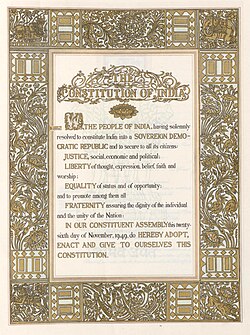
India's Constituent Assembly adopted a constitution drafted under B.R. Ambedkar, making India a sovereign democratic republic on January 26, 1950. Nehru's government enshrined universal suffrage, fundamental rights, and secularism.
Image source: Constitution of India
Apr 1, 1951 - 1956
% complete
Inspired by Soviet planning and Fabian socialism, Nehru launched India's First Five-Year Plan emphasizing agriculture and irrigation, followed by plans focused on heavy industry. State-led industrialization aimed at self-reliance and modernization.
Image source: Five-Year Plans of India
Nov 1951 - 1963
% complete
Nehru championed massive multipurpose dam projects such as Bhakra-Nangal, Hirakud, and Damodar Valley, calling them the 'temples of modern India.' These projects provided irrigation, power, and flood control central to his development vision.
Image source: Bhakra Dam
Oct 27, 1947 - 1964
% complete
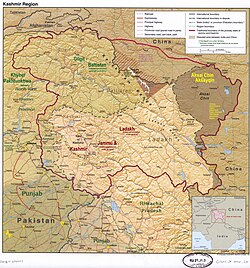
Nehru's handling of Jammu and Kashmir, including its accession to India and special constitutional status, defined one of South Asia's most enduring disputes. War broke out with Pakistan in 1947–48 and a ceasefire line divided the territory.
Image source: Insurgency in Jammu and Kashmir
Apr 29, 1954
% complete
Nehru signed the Panchsheel Agreement with China codifying five principles of peaceful coexistence, reflecting his hopes for Sino-Indian friendship encapsulated in 'Hindi-Chini bhai bhai.' The optimism proved short-lived as border tensions grew.
Image source: Five Principles of Peaceful Coexistence
Apr 18, 1955 - Apr 24, 1955
% complete
At the Bandung Conference in Indonesia, Nehru helped shape the principles of non-alignment and Afro-Asian solidarity among newly decolonized nations. Along with Tito, Nasser, and Sukarno, he became a leading voice of the Non-Aligned Movement.
Image source: Bandung Conference
Oct 20, 1962 - Nov 21, 1962
% complete
Chinese forces attacked along disputed Himalayan borders, inflicting a humiliating defeat on India. The war shattered Nehru's health and reputation, forcing a rearmament drive and a reassessment of India's defense posture.
Image source: Sino-Indian War
May 27, 1964
% complete
Nehru died in New Delhi after suffering a heart attack, having served as prime minister for nearly seventeen years. Millions lined the streets as his ashes were scattered over the fields and rivers of India, and he left behind a legacy of democracy, secularism, and non-alignment.
Image source: Death and state funeral of Jawaharlal Nehru
Or browse the full history timeline directory, with more than 2,000 topics.
This Jawaharlal Nehru timeline was generated with the help of AI, using information found on the internet.
We work hard to keep these timelines accurate, but mistakes do get through. If you spot one, email us at [email protected] and we'll fix it for future visitors.
Generate yours with AI or build it from scratch, for free.
Export your timeline, add your own events, edit or remove AI-generated events, and much more
No credit card required.
Cancel anytime.
Cancel anytime.
You can create an unlimited number of timelines with up to 10 events on each one, customize how they look, export them to PDF, PNG, PowerPoint, CSV, and Excel, and share them with a link. Paid plans raise the event limit and add features like spreadsheet imports and collaborators.
Yes. You can cancel your subscription from your account page at any time, and you will not be charged again. Your subscription stays active for the rest of the period you already paid for.
Yes. We will email you a reminder before the annual renewal, and we will also email you a receipt.
Yes. You can email us within 15 days of any payment, and we will issue you a full refund.
Check out our pricing docs or send us an email anytime: [email protected].